
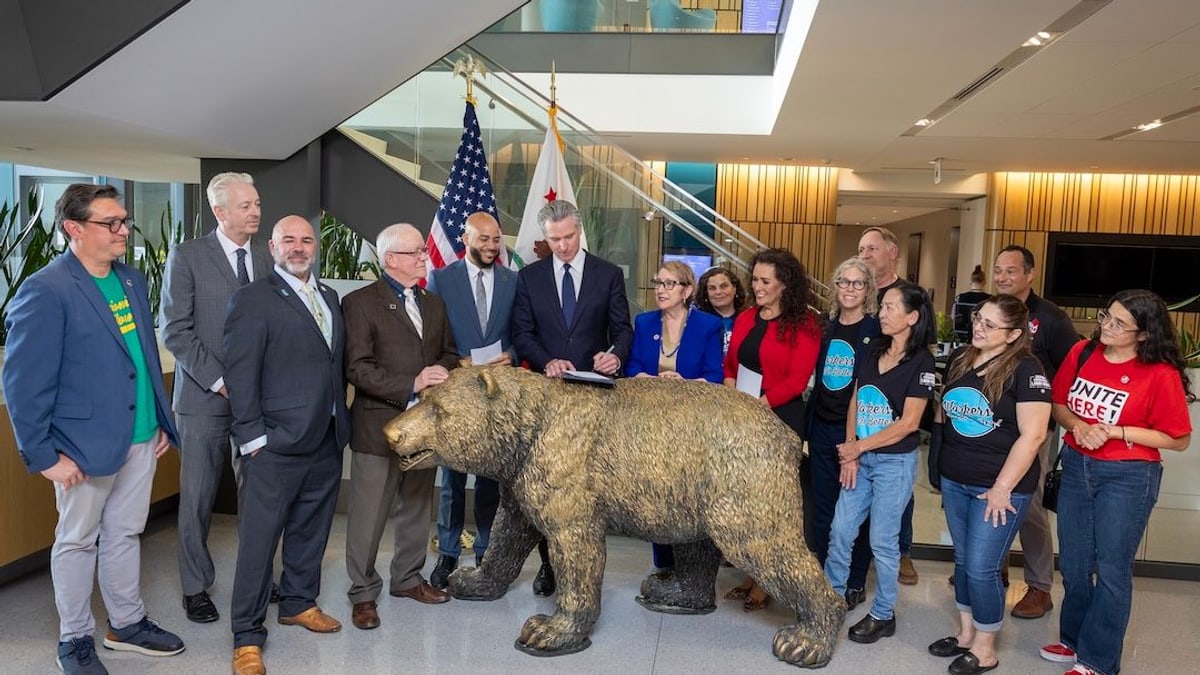
California Gov. Gavin Newsom on Sept. 30 signed a set of laws that limit how employers can use artificial intelligence on their workers. The main one, SB 947, says an employer may not rely only on an automated decision system when it disciplines or fires someone. The law defines that as software built with AI, statistics or data analysis that turns data into a score, ranking or recommendation used to help or replace a person's judgment. Spam filters, antivirus software, calculators and databases don't count.
When an employer leans mainly on such a system, a person must check the decision against other information, such as a manager's evaluations, personnel files, the worker's own work or peer reviews. If the person can't confirm the software's result, or finds it wrong, incomplete or misleading, the employer can't use it to discipline or fire anyone. When the worker is told of the decision, they get a written notice saying the employer relied mainly on the system and that a person checked its result, with someone to contact, and can ask for a description of their own data the system used. The rules start July 1, 2027. The state Labor Commissioner and public prosecutors can enforce them, with a $500 civil penalty for each violation.
A second law, SB 951, builds on California's existing rule that an employer must give 60 days' written notice before a mass layoff, relocation or shutdown at a site with 75 or more workers. When AI or other automation causes all or a large part of the cuts, the notice must now say "This notice is for a technology displacement" at the top, list how many and which jobs are affected, name the tasks being automated and the kind of technology. The state employment department will post a statewide summary every quarter. Two more laws ban workplace surveillance tools in restrooms and bar AI-powered surveillance tools from guessing a worker's emotions or collecting neural data, measurements of the activity of a person's nervous system.
Newsom vetoed an earlier version of the firing rules in October 2025, saying it would have forced any business using even the most harmless tools to warn workers in advance. The new law drops that advance warning, and it covers only employees, so gig drivers who work as independent contractors fall outside it, according to a news report. Newsom said AI "should expand opportunity" and should "not come at the expense of workers and families." Lorena Gonzalez, president of the California Federation of Labor Unions, said the laws put "guardrails on AI at work."
Newsom has already asked lawmakers to fix both surveillance laws, saying one lacks key definitions and the other may get in the way of systems workers use to open locked doors. Chamber of Progress, a tech industry group that urged a veto, says SB 947's main duties apply when an employer "primarily relies" on such software, a phrase the law never defines. How the Labor Commissioner and courts read that phrase will decide how many everyday decisions the law actually reaches. Unions can also waive the rules in a contract that gives workers their own protections.