
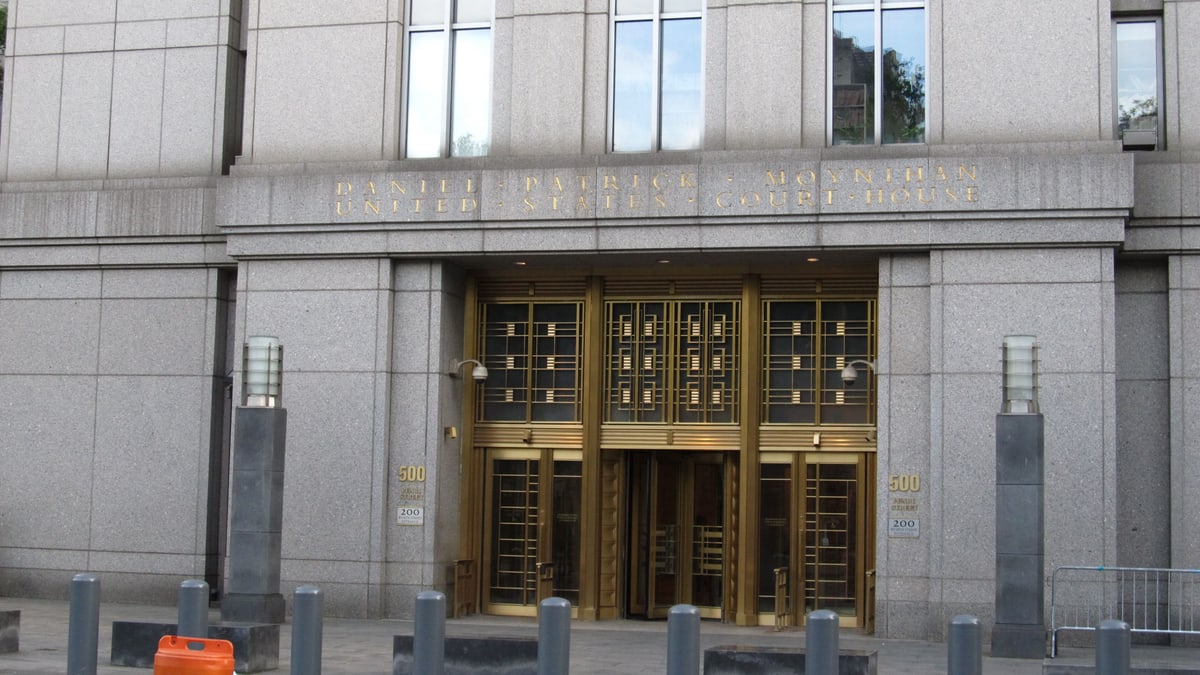
A federal judge in Manhattan on Tuesday, Oct. 6, sentenced Michael Smith, 54, of Cornelius, North Carolina, to 18 months in prison for a scheme that used AI-made songs and fake listener accounts to collect more than $8 million in music royalties. The Justice Department calls it its first criminal case of streaming fraud carried out with the help of AI. Smith pleaded guilty in March to one count of conspiracy to commit wire fraud. Judge John G. Koeltl also ordered two years of court supervision after his release and ordered him to give up $8,091,843.64, the loss figure both sides agreed on, according to a news report.
The scheme worked because of how streaming services pay. They set aside a share of their revenue as a pool for royalties and divide it by each song's share of all plays, the Copyright Office says. Fake plays don't make that pool any bigger. They only give the fraudster a larger slice of it, so every fake play leaves a little less for the artists and songwriters whose music real people played on the same service. Smith's lawyers argued that no artist or songwriter lost any appreciable amount, according to a news report.
From 2017 to 2024, prosecutors say, Smith created thousands of fake accounts on services such as Amazon Music, Apple Music, Spotify and YouTube Music, at times running as many as 10,000 at once, and used software to play his own songs on them nonstop. He spread the plays across so many songs that no single one stood out. He used AI to make hundreds of thousands of tracks, which his accounts played billions of times, and wrote in an email that he needed "a TON of songs fast" to get around the services' "anti fraud policies." In April 2023, the department says, his accounts played his AI music 80.9 million times through YouTube Music family plans, the shared subscriptions for a household, while Taylor Swift's entire catalog drew 9.3 million family-plan plays there that month.
According to a news report, prosecutors had asked for at least 46 months, nearly four years, the bottom of the range federal sentencing guidelines suggested for the crime. Court probation officials recommended 24 months, and Smith's lawyers asked for probation with no prison time.
Washington is also looking at the wider problem. On Oct. 7, the U.S. Copyright Office, responding to a May 21 letter from Rep. Scott Fitzgerald of the House Judiciary Committee, opened a public inquiry into music streaming fraud: how common it is, how it affects the music business, and what fixes might help, from steps the industry takes on its own to new laws or regulations. One of its questions asks what is known about the link between streaming fraud and AI-generated music. Anyone can send comments until Nov. 23, with replies due Dec. 21.
The inquiry is a request for information meant to help Congress understand the problem, not a new rule. It is not yet clear what Congress will do with the answers, how much streaming fraud today relies on AI-made music, or whether any of the money Smith forfeits will go back to artists and songwriters.