
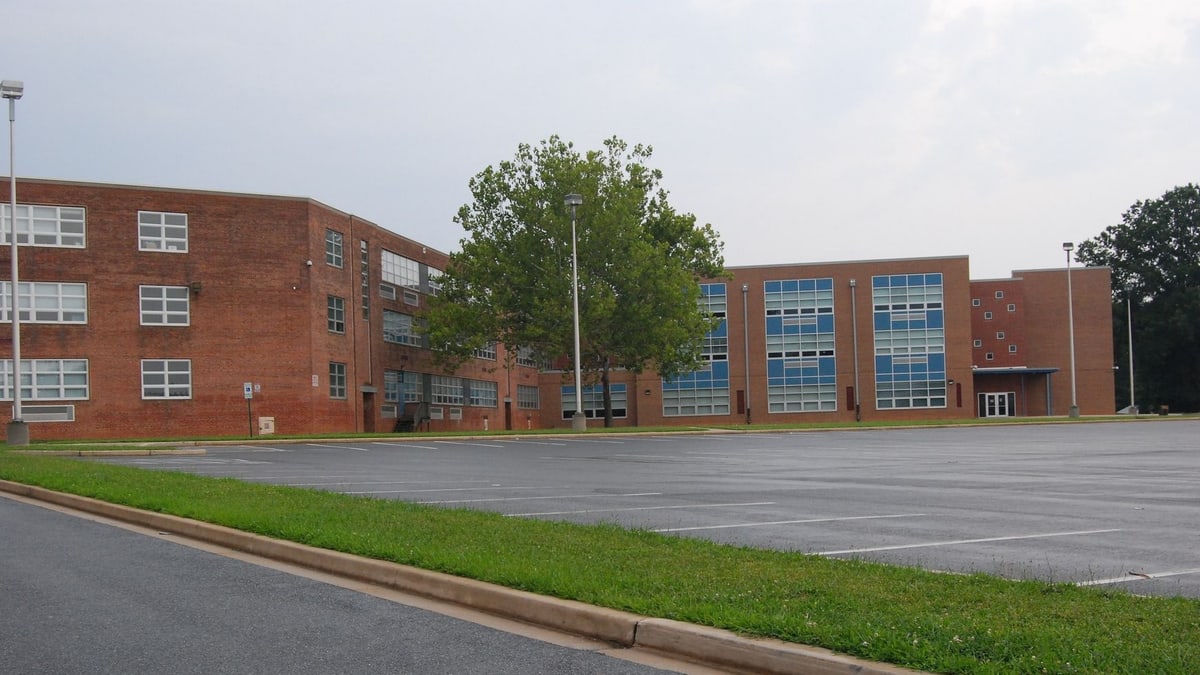
Four Black current and former students at Kenwood High School in Baltimore County, Maryland, sued the county's school system, the county police, several school and police officials and Omnilert, the company behind the schools' AI gun-detection system, on Nov. 17, more than a year after the stop. The Lawyers' Committee for Civil Rights Under Law, a national civil rights group, filed the case for them in a Baltimore County court. The students say armed officers handcuffed and searched them outside the school on Oct. 20, 2025, after the system took a bag of Doritos for a gun. The suit asks the court to stop the county and its schools from using the system, or one like it, until they have rules for checking alerts, passing on cancellations and training staff.
Omnilert Gun Detect watches security cameras for anything that looks like a gun, and Omnilert's own staff check the images the software rates most likely to be one. In Baltimore County, if they agree it may be a threat, a text alert with the picture goes to school safety leaders, principals and a group of county police. The school system put the software on more than 7,000 cameras at its 165 schools in 2023 and 2024, the complaint says. It has set aside $560,000 a year for the monitoring service, Maryland's inspector general for education, a state watchdog over school systems, found in a November 2025 report.
According to the complaint, the four, all on the football team, were waiting outside the school for a ride home after practice. The software gave the chip bag in Taki Allen's hand a 90% score for being a gun, the complaint says, and Omnilert's reviewers missed the mistake and sent the alert on. Within two minutes, school and police safety officials looked at the picture, saw no gun and canceled the alert.
More than ten minutes after the cancellation, the complaint says, the principal sent a screenshot of the alert to the school's police officer, who passed it to county police. The students say at least six police cars arrived, and officers, many with guns drawn, ordered them to their knees, handcuffed them and searched them, finding nothing. The principal told the inspector general she noticed the cancellation only after police told her they had cleared the school grounds. The students say the stop violated their constitutional rights and that the school system, police and Omnilert were negligent. They seek money for the harm, plus punitive damages, which are meant to punish.
The inspector general's report on the stop, published Nov. 25, 2025, found no bias in the software and said it does not take race into account. It found that the software and Omnilert's reviewers worked as designed, and that the alert came from the student's hand position and an unidentified object he held near his hip, not from a chip bag alone. After Omnilert's filtering, the school system gets about 12 alerts a day to review, and from November 2023 to November 2025, fewer than 1% of the alerts Omnilert passed on needed police.
The report found gaps in how alerts are called off. Zooming in on the alert's picture or watching its video on a phone can make it easy to miss the cancellation text, and other people who got an alert could get around a cancellation with a call or text to police. Something similar happened on Nov. 7, 2025, at Parkville High School, where people outside the school system kept the threat response going after staff canceled an alert. The report recommended that school staff check each alert first and tell police once a threat is confirmed, or straight away if staff can't respond quickly. It also suggested sending alerts through Omnilert's app instead of texts, with training twice a year for school leaders and police.
In statements to news reporters, Omnilert said what the four students went through should not have happened and that it is truly sorry for the fear they and their families felt, and said a canceled alert must stay canceled; it said it will respond in court. The school system and the county police said they had no comment on the suit. After the stop, the school system said it would add Omnilert reminders to yearly safety training and that county police would remind school police officers of after-hours rules. In August 2026, it said it would keep using Omnilert. Whether it has made the report's specific changes is not clear, and no court has tested the students' claims.