
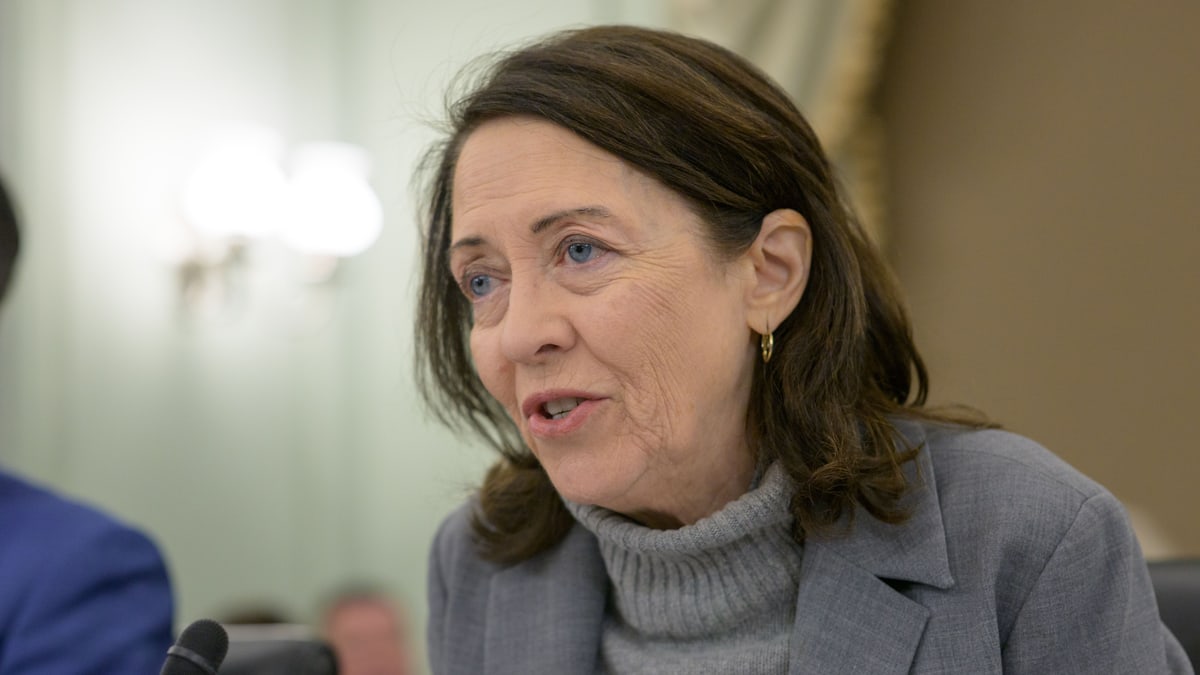
Sen. Maria Cantwell, a Washington Democrat and the senior Democrat on the Senate Commerce Committee, on Wednesday, Oct. 7, released a six-part plan for how the U.S. should govern frontier AI, the most capable AI models, ones that match or beat the best that exist today. Its central idea is that federal experts, not the companies building these systems, should write their safety rules, and that government and outside testers should check that they are kept. "To manage risks from advanced AI systems we need clear safety standards, continuous testing, and reporting of serious failures," she said.
Under the plan, experts at the National Institute of Standards and Technology (NIST), the federal agency that sets technical standards, would write measurable safety standards for AI that could cause catastrophic harm. Those standards would have to cover AI-enabled cyberattacks, threats involving chemical, biological, radiological or nuclear weapons, and people losing control of an AI system. They would also have to cover AI agents, AI that can carry out tasks on its own, such as using apps and websites, instead of only answering questions, breaking out of the secure settings where they are tested. Models the rules cover could not be released until an independent audit confirmed they meet the standards, and audit firms would check AI developers the way outside auditors check a company's financial statements. The plan does not say which models would count.
Developers would also have to let qualified outside testers examine their systems, publish plain-language warnings about serious safety risks and how they are reduced, modeled on the warnings public companies give investors, and promptly report serious incidents. Those include losing control of an AI agent and AI that keeps improving itself or other AI without human instruction in unsafe ways. Employees and contractors who raise safety concerns would be protected from retaliation, and companies would remain liable under civil and criminal law for foreseeable harm their AI causes.
The plan goes beyond testing. It asks leading AI companies to share computing power, expertise and defensive tools with small businesses and public institutions, and says AI products children use should protect their safety and healthy development. When AI helps make decisions about people's jobs, health care or credit, a person would have to oversee it, and people could challenge the outcome and have a qualified person review it. It also proposes a secure line to China, which the plan likens to the Soviet-era "red phone," for quick contact if a serious AI failure could threaten either country.
The plan is a set of principles, not the text of a bill. According to a news report, the plan stands in contrast to the White House and some Republicans in Congress, who have focused on voluntary standards and companies policing themselves. The same report says Senate Majority Leader John Thune, a Republican, has said he is writing his own AI bill, and that Cantwell is not part of those talks. Republicans control the Senate, and the committee's chair, Republican Sen. Ted Cruz of Texas, has said he wants a role for independent judges in AI safety and a federal standard that would deal with the growing patchwork of state laws. The report also quoted a Democratic aide on the committee as saying the plan could become more than one bill, with the aim of winning support from both parties, and that how the rules would be enforced is still to be worked out, possibly with civil or criminal penalties. Cantwell could chair the committee again if Democrats win control of the Senate in the midterm elections.