
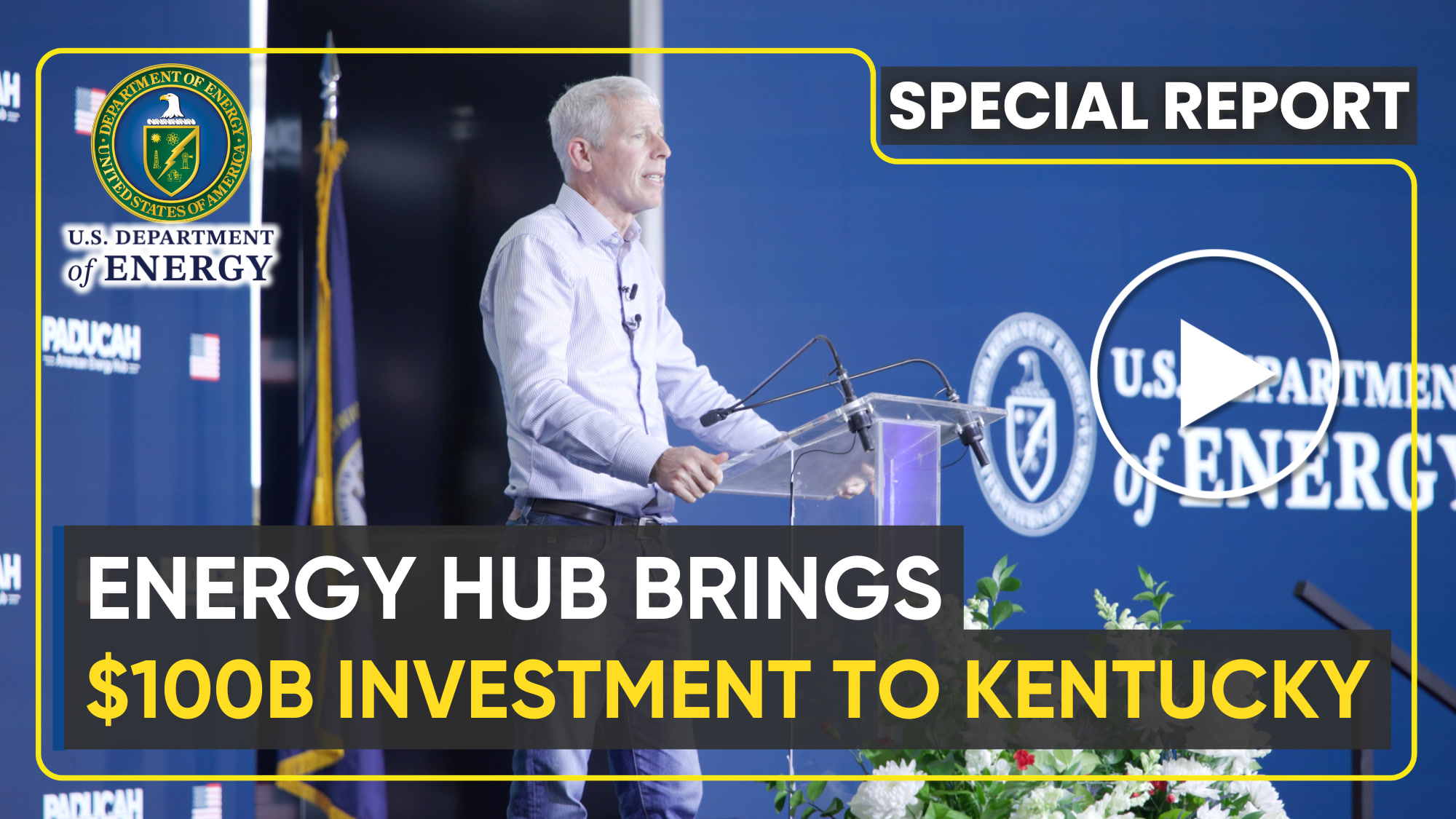
The U.S. Department of Energy said on July 29, 2026, that Brookfield will develop and operate a privately funded artificial intelligence and high-performance computing campus at the department's Paducah Site in Kentucky, with NextEra Energy building dedicated power for it. Paducah was one of four sites in the first round of the department's push to put AI infrastructure on its land, and the project pairs a planned 1.8-gigawatt computing campus with new gas generation and batteries meant to supply the regional grid as well.
DOE described the package as a more than $100 billion privately funded investment and one of the largest in Kentucky's history. It expects about 8,000 construction jobs and 600 permanent jobs. Those dollar and job figures are projections from DOE and its partners.
Under the plan, NextEra would build 2 gigawatts of new natural gas-fired generation connected to the grid, upgrade transmission lines, and install up to 2.6 gigawatts of battery storage to support the campus. DOE says the generation and storage would exceed the campus's own needs, so surplus power can reach the regional grid. A later note from DOE's Environmental Management office says the lease covers about 785 acres, with construction expected to finish in 2031.
The selection follows a request for offers for Paducah that DOE issued in November 2025. It grew out of an April 2025 request for information on building AI infrastructure on DOE land, which listed 16 possible sites. In July 2025, DOE narrowed the first round to Idaho National Laboratory, Oak Ridge Reservation, Paducah and Savannah River Site.
Big Rivers Electric Power Corporation is set to provide wholesale power, Jackson Purchase Energy Cooperative retail service, and Paducah Power System will serve as a community partner. DOE says the power service agreement still needs approval from the Kentucky Public Service Commission. A news report also noted that the final lease and development agreements had not been fully signed when the project was announced.
The announcement did not name a tenant for the campus. It is not yet clear whether state approval and final contracts will keep the project on schedule, how much steady power the campus can count on when the grid is under strain, or how its reliance on natural gas compares with plans at the other DOE sites.