
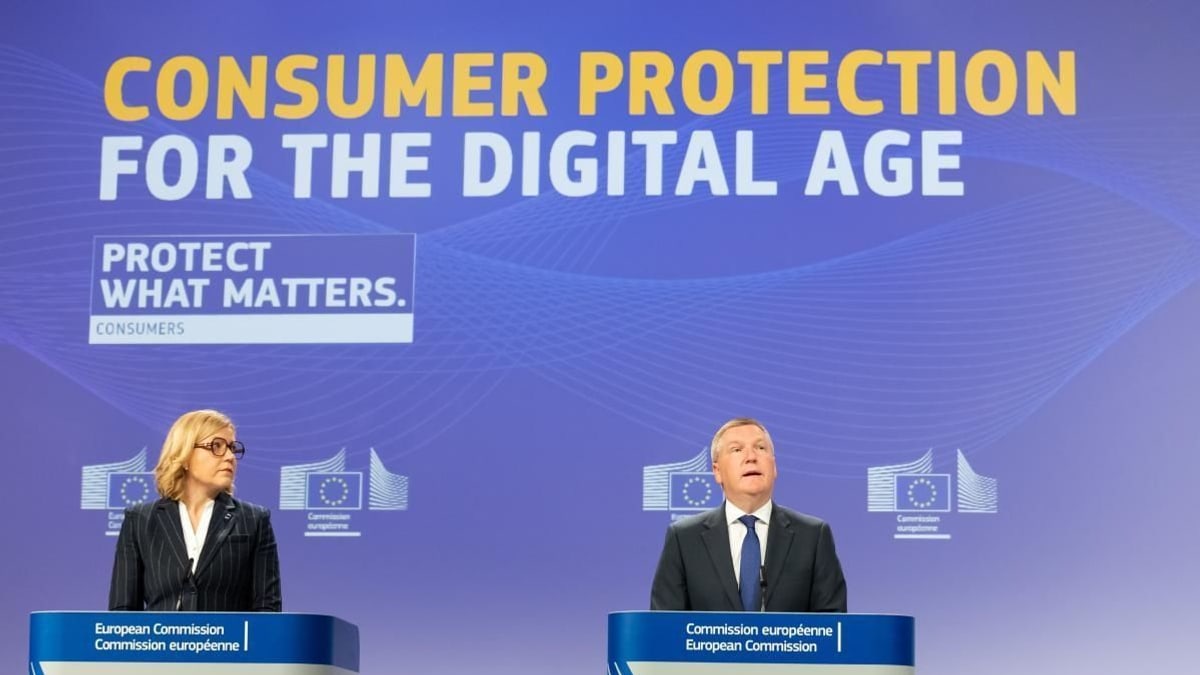
The European Commission proposed the Digital Fairness Act on Wednesday, Nov. 11. Michael McGrath, the EU commissioner whose brief includes consumer protection, called it "the most ambitious reform of EU consumer protection rules in a generation." Much of it goes after familiar online tricks, such as fake claims that a product is almost sold out, subscriptions that are hard to cancel and game features that let children pay to get ahead. It also sets rules for AI agents that shop for people. These are AI tools that can carry out tasks on their own, such as using apps and websites, instead of only answering questions. The proposal covers software that can make a purchase without a person stepping in.
Under the proposal, a company that offers people software able to make purchases and other deals for them and see them through, with that company or with other sellers, would have to ask each user on first use to pick one of three settings. The user could confirm every purchase before it is binding, or confirm only some, under rules the user sets, including a maximum price and how long those rules stay in force. Or the user could confirm none, which would not mean giving up their existing consumer rights. Users could change that choice at any time, and the company would have to send them a confirmation of it that they can keep.
The agent would also have to tell users when the company behind it is paid to propose a deal, or has a conflict of interest with the seller. In that case the user would have to confirm the purchase, whatever setting they chose. Sellers could not design their websites or apps so that customers have to use an agent to visit or buy from them. These rules would not cover financial services.
Two other parts reach online customer service and app design. When a company runs online customer service after someone signs up or buys, a customer who asks would have to be able to reach a human being when other ways of getting help have not worked. The proposal says that help should be free and come without undue delay during business hours; investment services are left out. Companies whose apps and other digital products are designed in a way meant or likely to encourage compulsive use would have to let adults switch off the features behind it. Those include autoplay and features that keep people engaged by imitating a relationship, such as repeated prompts to keep chatting with an automated system.
Each EU country would set its own penalties. In cases that several countries' authorities pursue together, the top fine would have to be at least 4% of a company's yearly sales in those countries, or at least €2 million when sales figures aren't available. A separate proposal published the same day would let the Commission investigate and fine a large company itself when a breach likely reaches consumers in at least two-thirds of EU countries, home to at least two-thirds of its people. Those fines could reach 6% of the company's worldwide yearly sales. The Commission estimates the changes could save EU consumers up to €13.7 billion a year.
None of this is law yet. The European Parliament and the Council, where EU governments sit, must now agree on the text, so the agent rules could still change. Under the proposal, companies would have to follow the rules a year after it becomes law. BusinessEurope, a lobby group for European companies, said the draft risks adding unnecessary and overlapping requirements that undermine legal certainty, according to a news report.