
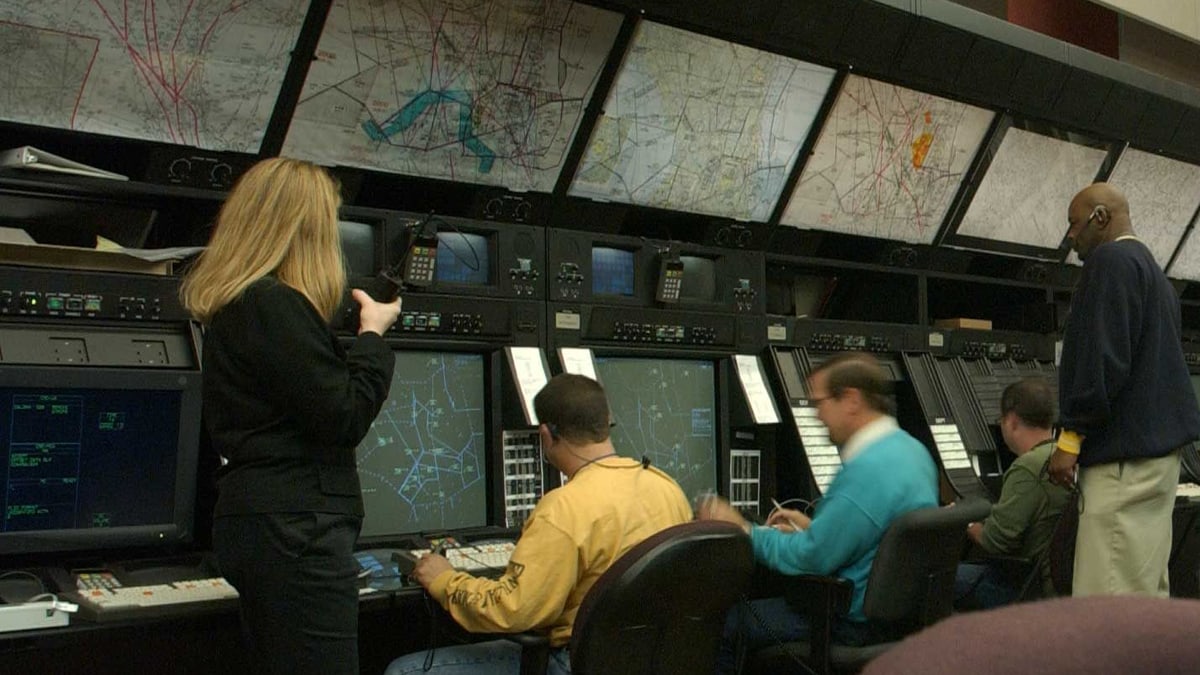
The Federal Aviation Administration (FAA) held flights on the ground at every U.S. airport on Friday, Nov. 13, after what it called communication issues at several of its Air Route Traffic Control Centers, which guide planes between airports. Transportation Secretary Sean Duffy said radar and communications became unstable at 3:36 p.m. at those centers and at the facilities one step out from airport towers. More than 3,500 planes were in the air when the stop began, he said, and they came in to land under the FAA's usual procedures for such incidents; by the time he spoke, fewer than 400 were still flying. The department says the FAA stopped flights as a precaution, after on-and-off telecom outages that unsettled the radio and radar systems controllers use. Duffy said the airspace reopened at 8:15 p.m. Eastern time but that flights would restart slowly, and that it would take time to unwind the delays. According to a news report, the last time the FAA stopped flights nationwide was on Jan. 11, 2023, for 90 minutes.
According to a news report, the FAA had widened its use of SMART, an AI-supported tool for planning air traffic, to all 22 of the country's air traffic regions by Nov. 10, three days before the stop. Duffy said the tool had nothing to do with the outage. "SMART is completely disconnected," he said. "This is not even plugged in." He said SMART gives a person a suggestion on how to get around weather or plan flight paths, and the person decides whether to accept it. "So, there's no possible way SMART would have impacted what happened," he said.
The FAA unveiled SMART, short for Strategic Management of Airspace, Routes and Trajectories, on Sept. 21 and started it in a limited way in the airspace around Washington, D.C. It pulls 200 streams of data, including weather, flight paths, traffic flow and controller staffing, into one system. The FAA says its AI-supported engine then shows where planes are going, how much traffic the airspace can handle and where congestion or weather could cause trouble, so staff can plan hours, days or even weeks ahead. The FAA says SMART cannot replace air traffic controllers or take control of a plane, that its staff review all of the tool's recommendations, and that local leaders at air traffic facilities can accept or pass on them.
Duffy blamed the stop on old equipment. He said the air traffic control system still runs on what he called analog telecom. Switches and routers "got overloaded with data" and began giving inconsistent data, "and because of that we shut the system down," he said. He added that the FAA did not lose all its radar or telecom. Newer digital switches that have already replaced some of the old ones did not fail, he said. He asked Congress to pay for a full new air traffic control system, calling the $12.5 billion down payment the department already has only partial funding.
The FAA calls its short statement on the stop preliminary and says its technicians are investigating. It has not yet said why the equipment failed, or published its own finding on whether any new system played a part.