
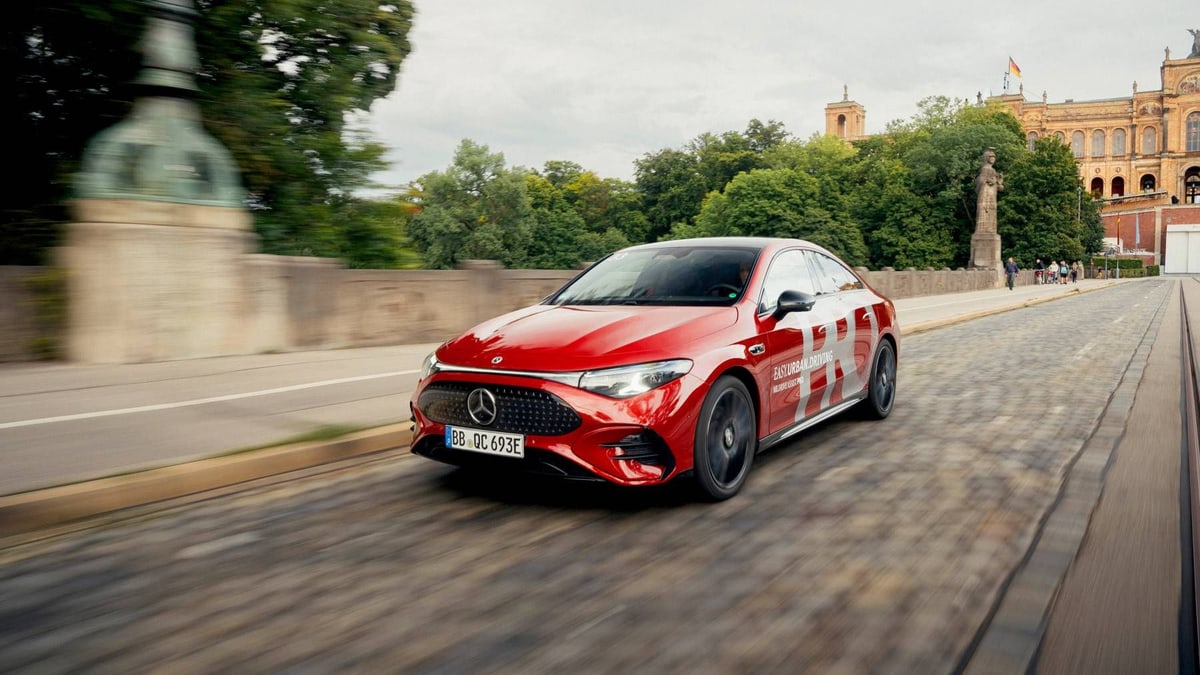
On Friday, Nov. 20, Mercedes-Benz said Germany's Federal Motor Transport Authority, known as the KBA, had approved MB.DRIVE ASSIST PRO, software that helps drive a car along a whole navigation route, including in busy city traffic. Mercedes says it is the first carmaker to get approval in Germany for this kind of start-to-finish help. It says the approval followed extensive testing and rests on UN Regulation No. 171, a set of United Nations safety rules for systems that help drivers steer and control speed. The rule itself is not new in Germany: BMW said in November 2025 that it was the first carmaker approved there under it, for assistants that help on motorways and that it said would also stop at red lights and pull away on green in town.
Mercedes says its cars already help on motorways, and this system carries that help onto city streets, from leaving the motorway to driving through dense traffic. With the car's navigation running, the driver switches it on with a button on the steering wheel. It then helps the driver change lanes, merge into the correct lane, turn at junctions, and brake and pull away at traffic lights. Mercedes says the system watches the road with 27 sensors, including 10 cameras, five radar sensors and 12 ultrasonic sensors. It says it developed the version for Western markets with NVIDIA, the computing and AI company it calls its most important partner in automated driving.
Mercedes calls it a Level 2 system, on an industry scale where higher levels mean the car does more of the driving. Under the UN rule, Level 2 software handles only part of the driving, and the driver must do the rest and keep watching both the system and the road. The rule says these systems assist the driver but never replace them, so the driver stays responsible for the car. It also warns that such systems may not recognize some conditions on the road, and that they may not always manage to follow every traffic rule, which the driver's involvement is meant to make up for. The better such a system works, the rule says, the more drivers may be tempted to trust it too much.
The rule also requires such systems to check that the driver is paying attention, with hands on the wheel, eyes on the road or both. If the driver stops paying attention, the rule says the system must give clear warnings, and if the driver still doesn't respond, it must bring the car to a complete stop. The rule notes that this monitoring can spot physical signs that a driver has stopped paying attention, but it can't yet directly tell whether their mind has wandered. Mercedes says the driver can still steer while the system is on.
Selected customers in Germany can try it from December 2026 in an early access program, starting in Stuttgart and Munich. Mercedes says the program is meant to gather feedback before the wider launch. Mercedes plans to offer it in Germany in the first half of 2027, adding it step by step to its cars and vans whatever their engine or motor, though it says availability will vary by model and market. Owners of eligible cars can add it later through a software update sent over the air. Mercedes says it will give models and prices before each launch.
Mercedes says a common framework built on the UN rule is expected to take effect in January 2027, which could let it offer the system in other countries that apply the rule. It also plans to bring the system to the U.S. in the first half of 2027, with early access starting in California. Mercedes says a version built with a different partner, Momenta, which Mercedes has backed since 2017, has been available in China since it launched the new CLA. Mercedes has not said which other countries come next, and it has not published the results of the testing behind the approval.