
Switzerland's National Cyber Security Centre, the federal office known by its German initials BACS, said on Tuesday, Nov. 24, that it had confirmed its first cases of cyberattacks in Switzerland carried out with AI agents, AI that can carry out tasks on its own. All were reported to it in recent days. The attacks hit companies and operators of critical infrastructure, the essential services a country runs on, in at least two sectors.
The office's statement says the AI agents helped the attackers get into the victims' computer systems in every attack it knew of. Two days later, according to a news report, the office's director, Florian Schütz, put the count at five confirmed cases, with systems broken into in four of them. He said three of the targets run critical infrastructure, essential services such as power, water and phone networks, and that small businesses that reported attacks were also hacked. The office has not explained the difference between the two accounts.
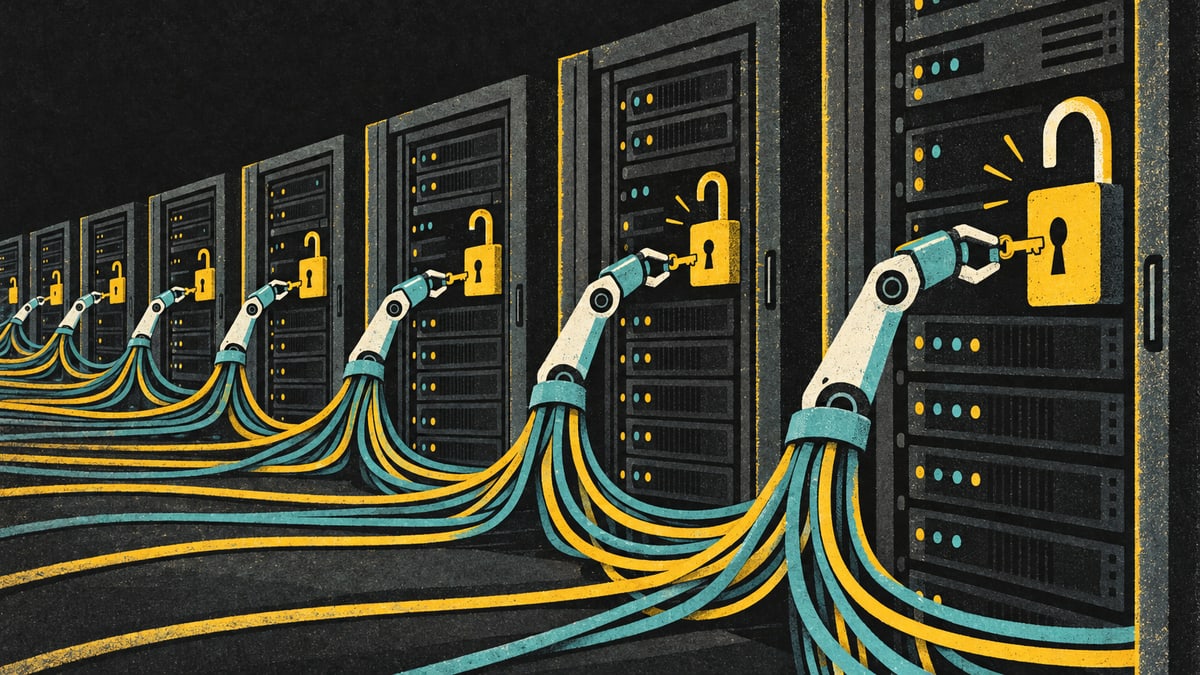
The office says the attackers used AI agents that can, for example, search for weak spots on their own, choose tools to attack them, judge the results, and plan and carry out the next steps. Security specialists can use the same kind of agent to test systems for weak spots, and attackers can use it to break into networks, the office says.
The agents exploit ordinary gaps such as default or easily guessed passwords, and known flaws in software and in systems connected to the internet. The office says AI agents often need only a fraction of the time a person would to find such systems and break in, and they can switch to other known methods when they meet a defense. That leaves companies much less time to spot an attack and respond.
The office says the number of such agents freely available online, such as ARTEX and CyberStrikeAI, has almost doubled since October, and it expects more fast, successful attacks, which can hit any kind of organization. Switzerland is not alone. Italy's national cybersecurity agency said in a bulletin dated Nov. 23 that its emergency response team had found mass break-in campaigns in Italy run by AI agents. It named ARTEX, CyberStrikeAI and other tools, and said that in cases it watched directly, many systems were taken over within a few hours.
The Swiss office urges companies to install critical security updates for systems reachable from the internet as soon as possible, and within 24 hours of their release at the latest. It also asks them to keep as few systems exposed online as they can. Webmail, the remote connections staff use to reach work systems from outside, and other internal services reachable from the internet should all need more than a password to sign in, through multi-factor sign-in or passkeys. The office also advises companies to test their own systems for weak spots regularly, and it shares technical clues that help spot these attacks with critical infrastructure operators.
The office has not named the companies that were hit. According to a news report, it says the victims have the right to speak for themselves, the attacks caused no major outages, and it is not yet clear who is behind them.