
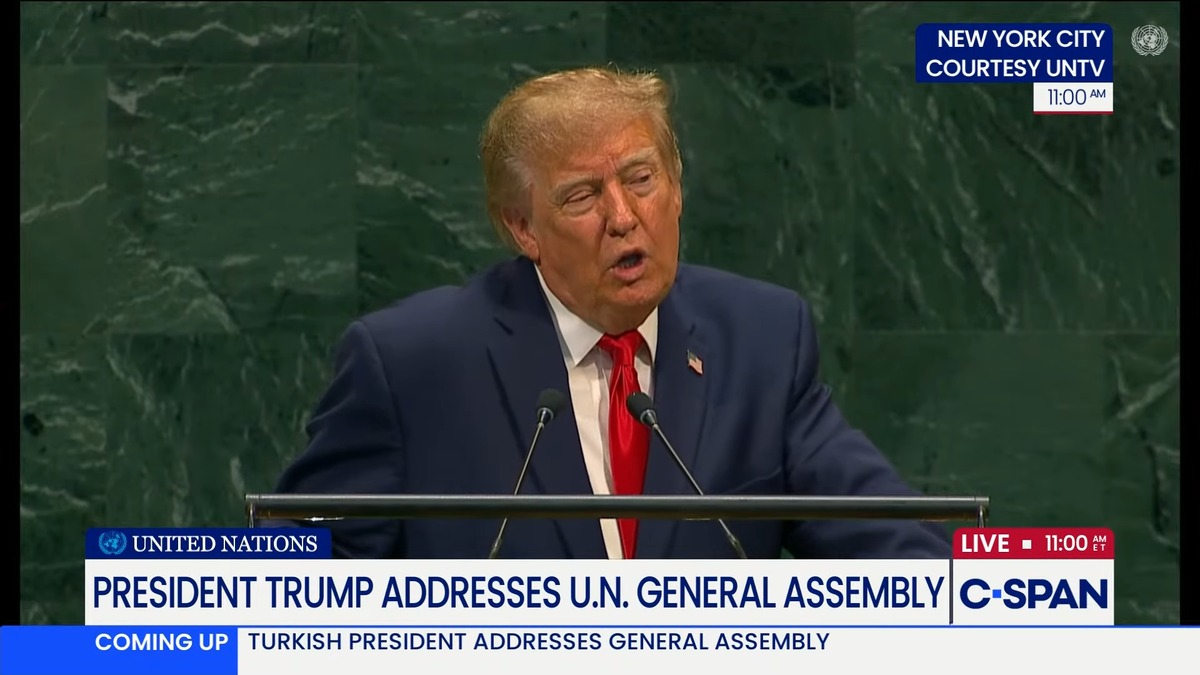
President Donald Trump told the 81st session of the United Nations General Assembly on Sept. 22, 2026, that the United States "totally rejects any attempt to construct a globalist scheme of control" for artificial intelligence, which he said would hereinafter be officially called "Super Intelligence," according to a White House release summarizing the address. The remarks matter because a U.S. president used the U.N. stage to reject international AI-control frameworks while rebranding the technology in U.S. documents, a posture that lands against European pushes for binding advanced-AI safety measures.
The confusion to clear: Trump did not argue absolute deregulation in a single line. PBS reported that while he said "we have to be careful," the United States is "going to encourage it, not rein it in," and that he would not "stifle growth of something that will be bigger than the industrial revolution." The Verge's extended quote block pairs that growth line with a Justice Department watch: law-enforcement bodies "will rein things in if we have to," even as "we will only encourage super intelligence" and "watch it closely through the Department of Justice." Both beats are in the speech record and should be held together.
UN News reported that Trump argued AI should be called superintelligence because "artificial" makes intelligence sound fake, and that he declared "Whoever wins superintelligence wins," while saying the United States would encourage development and monitor potential risks. The White House page is a curated highlight reel rather than a full verbatim transcript; PBS and The Verge supply fuller quote blocks for the encourage-versus-rein tension.
Channel NewsAsia, carrying Reuters-origin coverage, placed the remarks against a backdrop in which leaders of more than 20 mostly European countries had urged binding safety measures for advanced AI ahead of the assembly, and noted that AI powers China and the United States did not endorse that idea. Renaming AI to "super intelligence" in U.S. documents was asserted from the podium; whether that becomes executive-order text or agency guidance is not confirmed in this reporting pack.
What remains open is how agencies implement the rename and the encourage-with-DOJ-watch posture, whether European binding-safety talks advance without U.S. endorsement, and how other governments answer the "whoever wins" framing on the record. Until implementing documents appear, treat the U.N. speech as a geopolitical signal that pairs growth encouragement with a reserved law-enforcement backstop, not as proof that U.S. AI oversight has been abolished.