
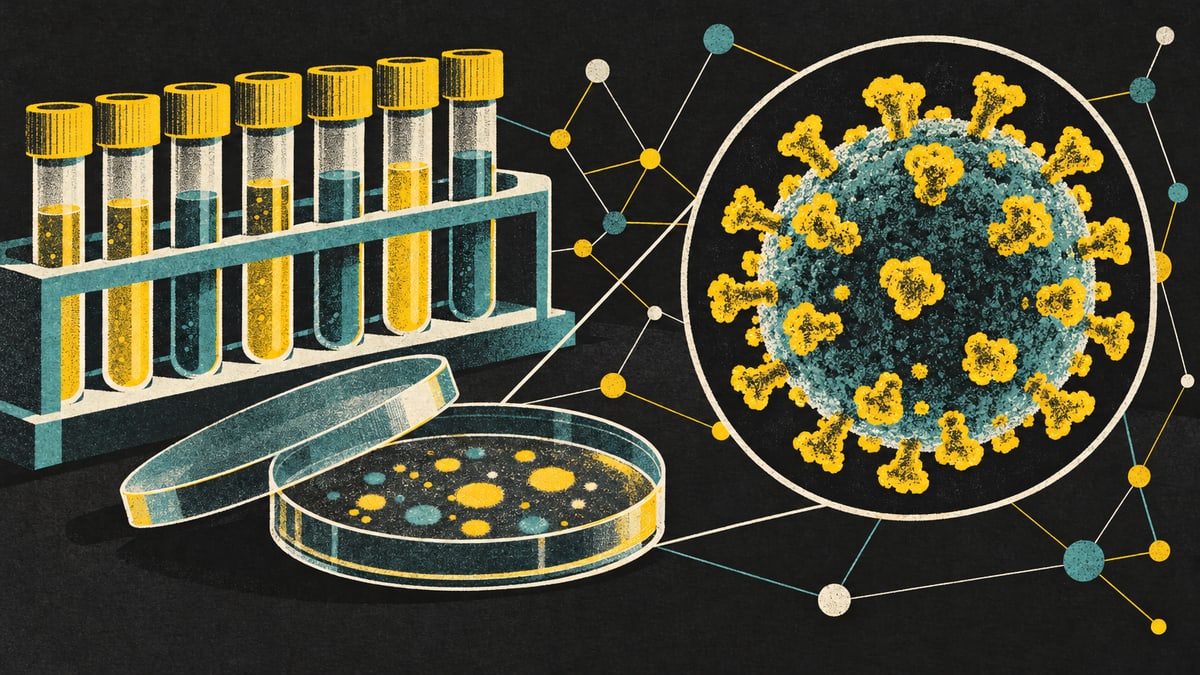
Britain is planning a lab that will use AI to catch biological threats sooner and to develop vaccines, treatments and other ways to fight disease outbreaks faster, the government said on Saturday, Oct. 24. The AI Biosecurity Lab is backed by £100 million of government money, and OpenAI and Anthropic have committed up to £200 million more in credits to use their AI models and computing power. The government calls it the world's first organization dedicated to using AI for biosecurity, the work of protecting people from biological threats.
The government's case is that AI cuts both ways. It says AI can speed up research and the discovery of new medicines, but that more capable AI systems "also create new biological risks and could lower barriers to harmful activity." The lab's research is meant to cover a wide range of biological risks, including those that come from advances in AI.
OpenAI will provide £100 million in credits for computing power and for its models, and access to its most capable models suited to this work through an OpenAI program called Rosalind Biodefense. Anthropic will provide up to £100 million in credits for its models, access to them and dedicated technical support. Google DeepMind's scientists will work with the lab on research and will look to give it access to Google's most advanced Gemini models and to models built for science. Basecamp Research, a London company that builds AI models of biology, will share its models and expertise.
The lab will be an independent nonprofit. Like the AI Security Institute, the government body that tests new AI systems for risks, it is meant to hire top people from industry and universities and have enough freedom to move quickly. The lab is part of a £165 million National AI Biosecurity Initiative, which also puts £65 million into tracking diseases and developing vaccines and treatments for the germs that worry officials most. The initiative links the lab with the UK Health Security Agency, the Animal and Plant Health Agency and the Defence Science and Technology Laboratory. The lab will also work with the Medicines and Healthcare products Regulatory Agency to prepare for health emergencies and help shape how medicines designed with AI are regulated.
The biosecurity program is the biggest item in a wider package of AI spending that the chancellor, John Healey, set out ahead of his Budget. The tech industry group techUK puts the package at more than £600 million, and the company credits come on top. The package also gives the AI Security Institute another £120 million. It puts £60 million into a National Cyber Shield that will use AI agents, AI that can carry out tasks on its own, to strengthen the country's cyber defenses. A further £70 million goes to a new center that will use AI tools to find security weak spots in the country's vital systems and across the wider economy. An extra £60 million goes to the government's fund that invests in British AI companies, which is adding a new focus on robots, machines that work on their own and advanced manufacturing, and £18 million goes to a new academy for chip design.
The government has not named anyone to lead the lab or said where the lab will be based or when it will open. Details of its scientific advisory committee will come later, and the government hopes to add money from charities and donors over time. One outside analysis asks how a lab that relies on AI companies' credits and models will stay independent when it studies risks that, the government itself says, more capable AI can create.