
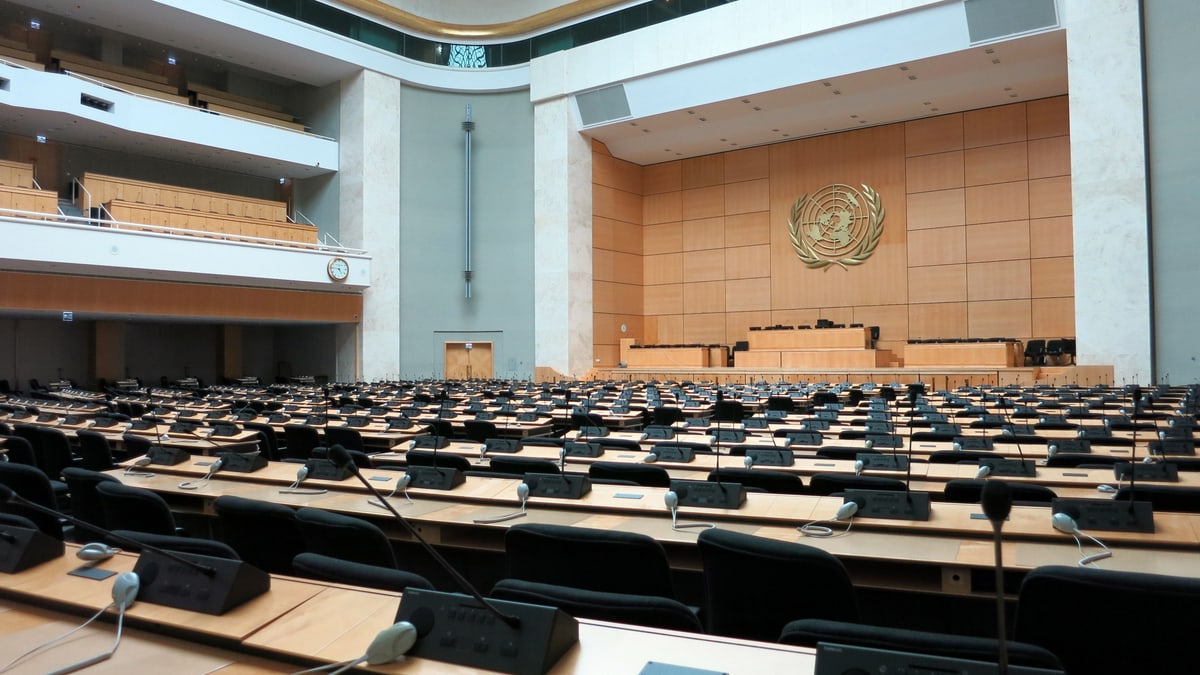
Countries that belong to a global treaty on weapons agreed in Geneva early on Saturday, Nov. 21, to spend 2027 and 2028 drafting rules for lethal autonomous weapons. These are weapons that can find, choose and attack a target with no person stepping in, and not all of them use AI, the UN says. The treaty, the Convention on Certain Conventional Weapons, has 128 member countries, including all the major military powers, and it already limits weapons such as landmines and blinding lasers. Switzerland, which chaired the week-long meeting, called the deal a significant step forward after more than ten years of talks.
What the countries did not agree on is whether the rules will bind them. Switzerland says most countries asked for talks on a legally binding agreement, but the meeting takes its decisions by consensus, so a decision needs every member to go along with it. According to a news report, the United States and Russia were among the military powers that opposed starting treaty talks. Instead, a new round of the expert group that countries set up under the treaty in 2016 to work on these weapons will draft a formal set of rules, which may or may not be legally binding. The experts will also recommend what legal form the rules should take, including whether to adopt them as a binding protocol, an add-on to the treaty like the five it already has, the UN's disarmament chief, Izumi Nakamitsu, told reporters after the meeting. The conference president, Swiss ambassador Julien Thöni, said countries could also choose rules that are partly binding and partly not.
There is no treaty written specifically for these weapons today, the UN says, though the laws of war, the rules that govern how armed conflict is fought, already apply to them. UN Secretary-General António Guterres had recommended that countries conclude a binding agreement by 2026, and he urged the conference on Nov. 16 to "seize this moment." The International Committee of the Red Cross says concerns about these weapons grew more pressing in 2026, and that with AI systems increasingly showing the potential to act beyond the control of the people who build, test or use them, clear rules are needed now. The Red Cross said it regrets that countries did not agree to begin talks on a binding agreement right away. It wants a future treaty to ban those that risk breaking the laws of war, including weapons whose behavior can't be predicted and those that target people directly, and to limit the rest.
Thöni said some delegations had proposed three, four or five years for the work, and that settling on two was an achievement. He said a text the experts agreed in September was endorsed in the conference's final document and gives the drafting an excellent starting point.
Nakamitsu said the path to a binding agreement "is still open." What the rules will contain, and whether countries will be bound by them, is for the member countries to decide after the drafting ends in 2028, and Switzerland says the main work still lies ahead. The conference's final text had not been published by Nov. 23.