
The U.S. Commerce Department has added Megaspeed, a Singapore company that bought AI chips from NVIDIA, and six other companies to its Entity List, a trade blacklist. The list names foreign companies and people that the U.S. government has reason to believe have been or are involved in activities against its national security or foreign policy interests, or are at serious risk of becoming involved. The rule took effect when it was made public on Monday, Nov. 23, and the Bureau of Industry and Security scheduled it for printing in the Federal Register, the government's official journal of rules, on Nov. 25. According to a news report, the listing came the same day NVIDIA reinstated Jensen Huang as chief executive. It also says Huang had admitted to an affair with Alice Huang, a former chief executive of Megaspeed, before he resigned; the two are not related.
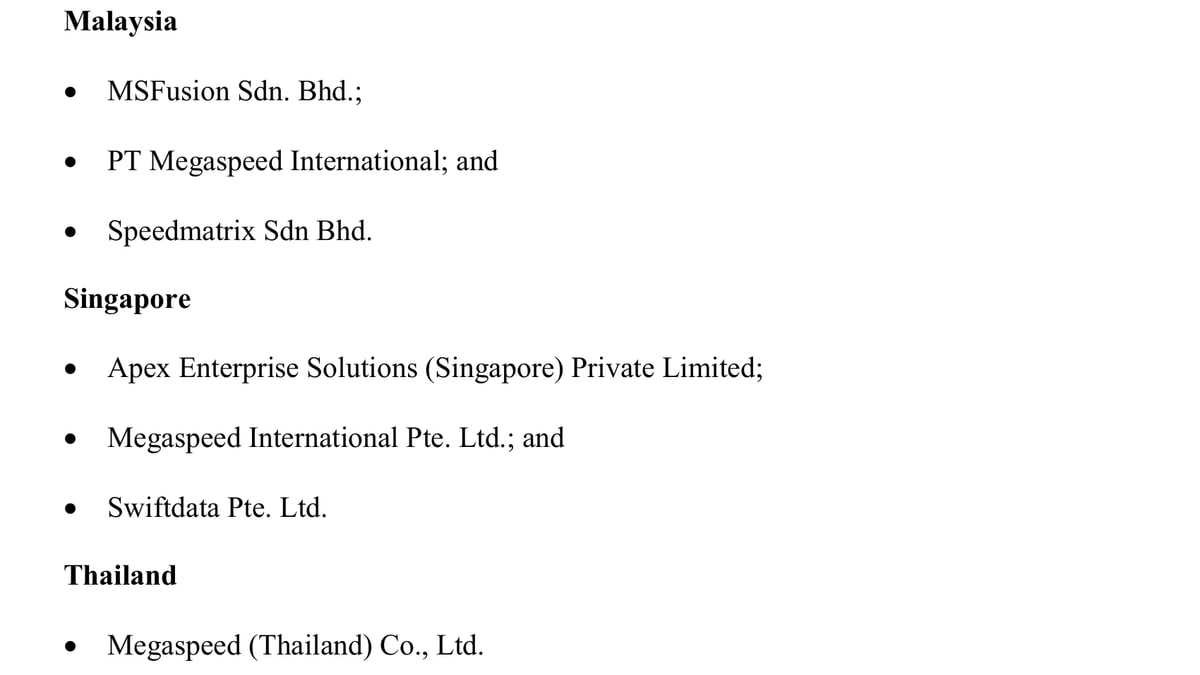
The rule lists three companies under Malaysia: MSFusion, PT Megaspeed International and Speedmatrix. Three are under Singapore: Apex Enterprise Solutions (Singapore), Megaspeed International and Swiftdata. One, Megaspeed (Thailand), is under Thailand. The rule's own entries tie several of them together: Speedmatrix and PT Megaspeed International list the same three addresses in Malaysia, and Megaspeed's Singapore and Thailand companies share the other name 7Road International. MSFusion lists an office in the same building in Johor, Eko Galleria, one unit number away; Commerce did not say how it is connected.
Commerce gives one reason for all seven: "the significant risk of these entities being or becoming involved in the diversion of advanced computing commodities to unauthorized end uses or end users." Diversion here means chips or computers bought through one company and passed on to buyers or uses that U.S. export rules don't allow. From now on, any export, re-export or transfer within a country of an item covered by U.S. export rules needs a license from Commerce whenever one of the seven is a party to the deal. Requests will be reviewed under a "presumption of denial," meaning they will normally be refused. Shipments already on their way under an existing order on Nov. 23 may still go ahead if they are completed by Dec. 23. The decision came from a committee chaired by Commerce, with officials from the State, Defense and Energy departments, and the Treasury where relevant, which adds companies to the list by majority vote.
A news report says Apex Enterprise Solutions is the Singapore arm of Alibaba, the Chinese technology group, that Swiftdata owns Megaspeed, and that Speedmatrix is Megaspeed's Malaysian arm. It quotes a statement from Alibaba saying that adding Apex was "erroneous because Apex has never diverted advanced computing chips subject to US export restrictions," and that Alibaba would seek all legal avenues to protect its rights and reputation. It also says Megaspeed stated in mid-November that it does lawful business and complies with U.S. export controls.
In a joint statement on Nov. 16, Commerce and the Justice Department said Commerce opened an investigation into Megaspeed in 2024 for possible export violations. They said NVIDIA put Megaspeed on its "no sell" list in June 2025, a month after Commerce investigators asked it for records of its sales to Megaspeed. That June, Commerce agents and Singapore law enforcement officials made an on-site check at Megaspeed and interviewed Alice Huang, then its chief executive, and Justice now leads a criminal investigation. U.S. authorities have been looking since 2024 at whether Megaspeed diverted AI chips to China, a news report says.
Singapore says it cannot investigate everything that happens in other countries, where the chips went. On Nov. 24, Prime Minister Lawrence Wong said the chips Megaspeed bought from NVIDIA did not even enter Singapore and were routed to other countries. He said Singapore's own investigation, into whether Megaspeed broke Singapore's laws, goes on, and that not all the information it asked the United States for was forthcoming. Singapore took Alice Huang in, investigated her and released her because, Wong said, there was no basis for further prosecution.
Commerce has not said where it believes any chips ended up, or what evidence led to the listing, and the rule does not mention NVIDIA. No charges have been announced in the Megaspeed case.