
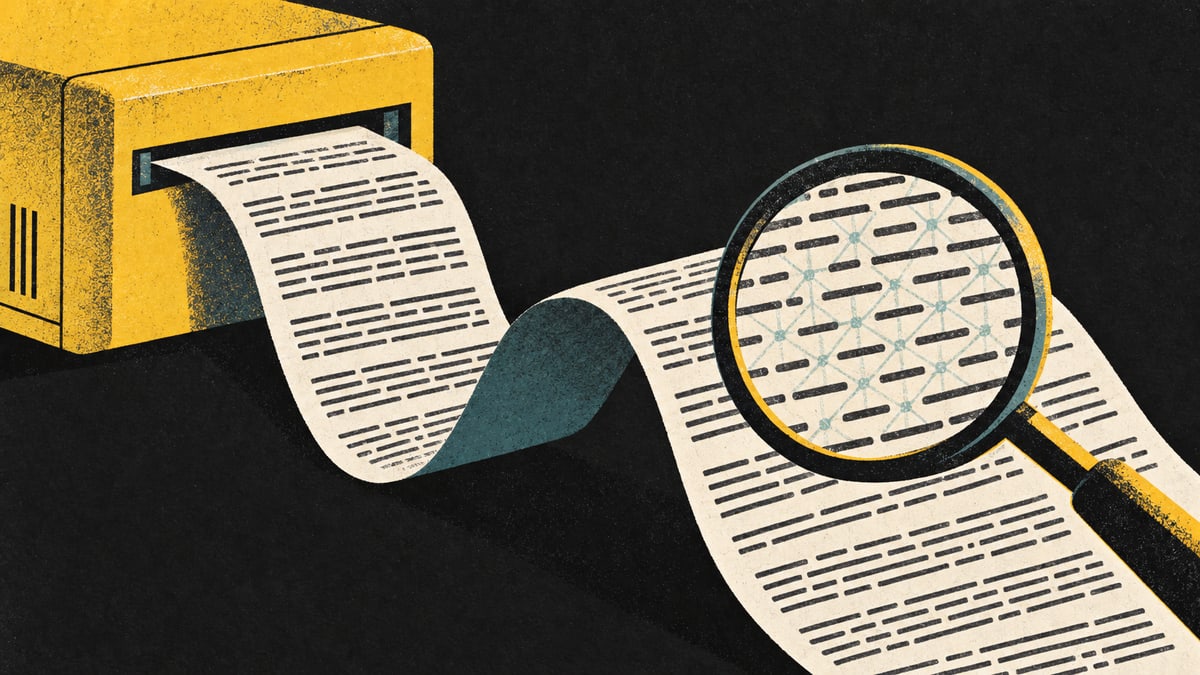
Text that xAI's Grok models write for businesses and app makers will carry an invisible watermark starting Saturday, Nov. 7, according to the company's developer guide, which uses the name SpaceXSI. An AI watermark is a hidden signal an AI tool weaves into its work as it creates it, which software can spot but people cannot see. xAI says the mark lets it later recognize text as written by its models, and that it is adding it to comply with the European Union's AI Act.
The mark covers text from seven Grok models, including Grok 4.7, made through xAI's API, the connection developers use to build Grok into their own apps and services. It is on by default whichever of xAI's servers developers connect to, including its main worldwide one, so it is not limited to customers in Europe. xAI says the mark adds no extra characters or hidden text. Instead the signal lives in the word choices themselves: the model slightly steers which words, and pieces of words, it picks as it writes. Developers do not need to change their code, and xAI says the mark does not change the quality or speed of answers.
A team's administrators can switch the mark off for some or all models, but only after confirming that an exception under the law applies to their use and that they alone are responsible for any marking or disclosure the law requires. Some models may be locked on for a team, and those cannot be switched off from xAI's console. Every change is recorded in the team's record of setting changes.
Checking for the mark works by odds, not certainty. xAI scores a piece of text and reports whether it is watermarked, not watermarked or uncertain, and longer text gives a stronger signal. Anyone who wants to use that check has to apply to xAI for access.
The EU's AI Act requires companies that offer AI tools to mark the text, images, audio and video those tools make so that software can detect them, and those rules have applied since Aug. 2, 2026. OpenAI chose a narrower start: it says it will add a watermark to eligible ChatGPT and Codex text in the EU only over the coming weeks, and its watermark for developers stays off unless they switch it on. Anthropic, like xAI, is applying its mark to Claude's text worldwide at launch, and says it does not yet have a lasting way to limit the mark to one region.
xAI's guide gives no figures on how often its check finds the mark, or how much rewording or editing weakens it, and a check that finds no mark does not show a person wrote the text. The guide covers only text made through xAI's developer service; it does not say whether the Grok app, or Grok on X, will carry the mark. Companies that do not sign the EU's voluntary code on marking must show that their own methods are good enough, and national regulators judge each case on its own. The guide does not say whether xAI has signed the code.