
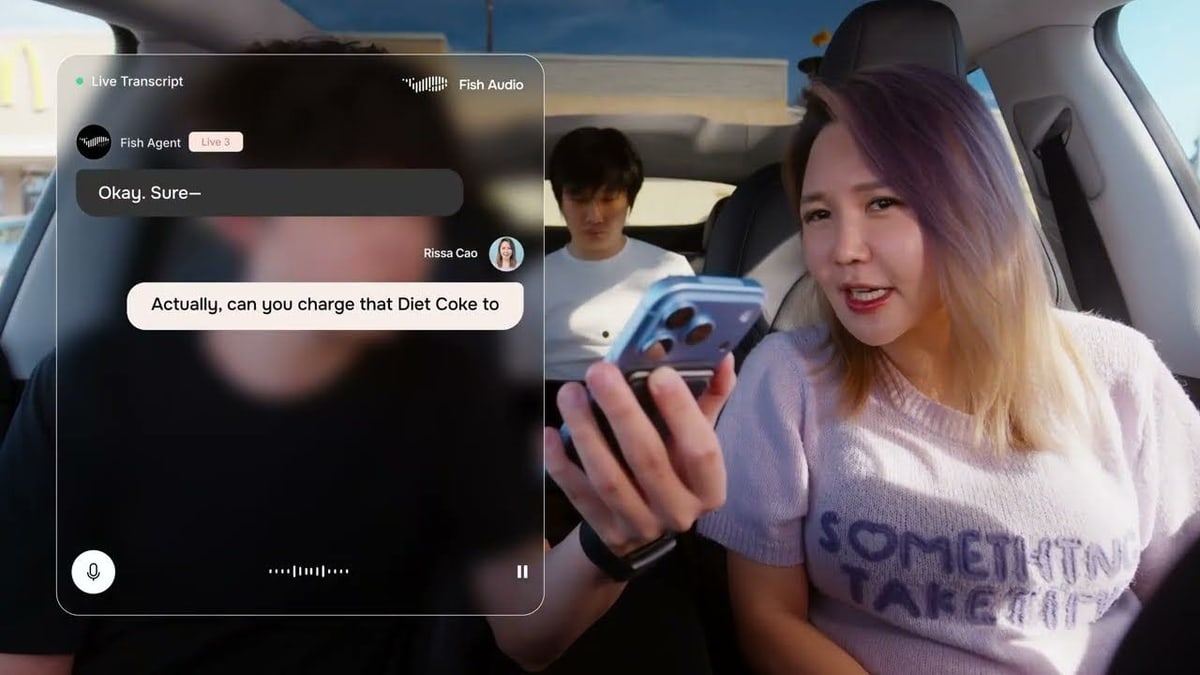
Fish Audio, a company that makes AI voices, released Live 3 on Nov. 10. It is a voice model for AI helpers that answer phone calls, take orders and make bookings, and Fish Audio says it keeps listening while it speaks. The company says that means it can slip in a quick "mm-hmm" while you read out a phone number, keep talking when you say "yeah" to show you're following, and stop when you cut in with a new request.
Fish Audio argues that the hard part of talking with a machine is timing, not speed: a voice helper can start answering quickly and still speak at the wrong moment. A pause after "What time do you open?" may mean you're done, but a pause in the middle of a phone number means more is coming. The company says most voice helpers today are built from separate parts: one turns your speech into text, one works out the answer, one speaks it, and another decides whose turn it is. Fish Audio says Live 3 can instead speak, listen and chime in all at the same time, while a separate part still works out what to say from the instructions and tools a business gives it.
Fish Audio says Live 3 builds that sense of timing into the voice model itself. It says it trained the model on real conversations between people, so it learned when to acknowledge, wait, answer or stop, instead of following a list of rules someone wrote. "The fix so far has been more rules and more thresholds," said Rissa Cao, Fish Audio's co-founder and chief executive. "We think a model should learn this from real conversations, the same way language models learn grammar."
In the company's video, Fish Audio's chief executive, Rissa Cao, orders fast food by phone from a voice helper built on Live 3. They ask for a second, identical meal, add a sandwich with a string of changes, then swap a drink partway through. The helper confirms the change right away and reads the whole order back at the end.
Live 3 itself speaks only English for now. People can try it by building a voice helper on Fish Audio's agent platform, which starts people off with a small free credit and needs no card, and developers can build it into their own apps. Fish Audio's terms limit free use to personal, non-commercial projects; commercial use needs a paid plan. Fish Audio says larger businesses can also run it on their own servers. Until Dec. 31, Fish Audio is charging half its usual per-minute price for voice helpers on the platform.
The examples so far are three short recordings of test calls on Fish Audio's blog, plus the launch video, all chosen by the company. Fish Audio has not published any comparison with other voice helpers, so it is too early to say how well Live 3 judges when to talk on everyday calls.