
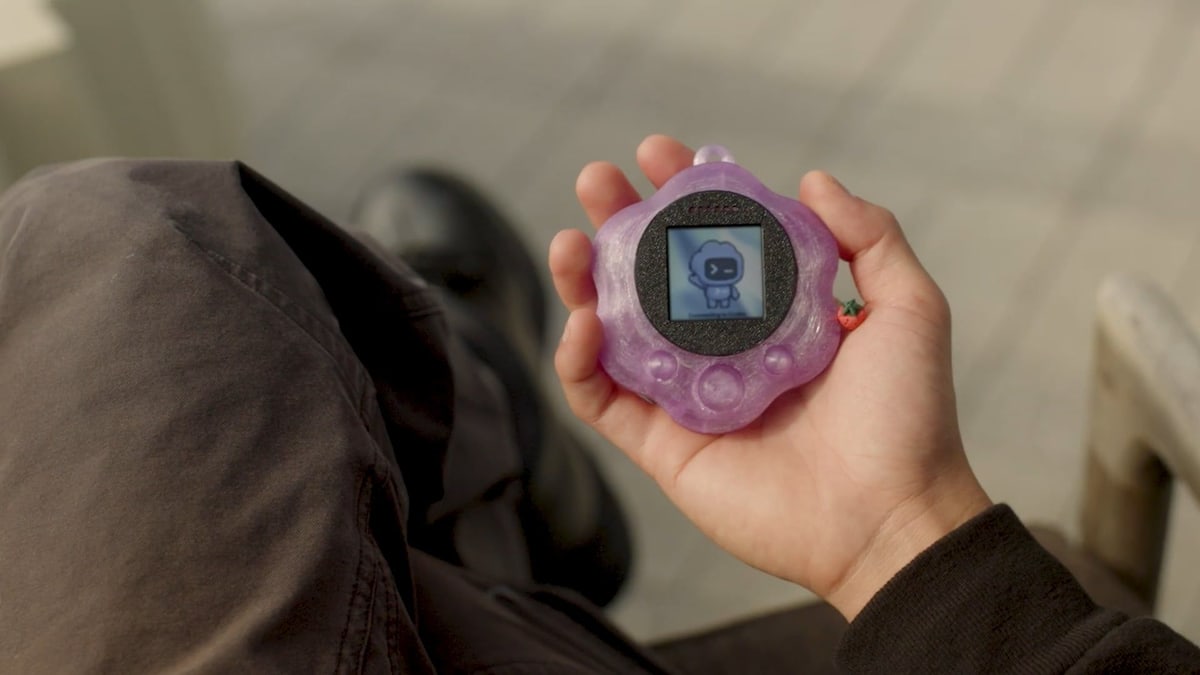
OpenAI has shown a small handheld gadget that it says its AI model GPT-6 Astra designed, from its look and case to its circuit board and software. In a post on Nov. 3, OpenAI says it ran the project as a test of whether it could create a device without people editing the design directly. The result is a device for talking to Codex, OpenAI's AI coding tool, shown in an OpenAI video titled TamaGPT.
OpenAI says Astra did the design work in four areas. For the look, it drew on OpenAI's recent collaboration with the company Work Louder and on ideas from games and toys. Astra also designed the plastic case and the pieces inside that hold the parts in place. It picked the electronic parts and laid out the circuit board, the flat board that holds a gadget's chips and other parts and connects them, so that the board fit inside the case. Last, it designed what appears on the screen and how a user works the gadget, and wrote the software that connects it to Codex.
Two OpenAI team members designed the gadget with Astra in under a week, as a side project, OpenAI says. A contract manufacturer, a factory that builds products for other companies, then built a small batch of prototypes in under a month.
Getting the gadget ready for a factory still took several rounds of review and changes, OpenAI says. Astra did not always account for the manufacturer's production limits, how precisely parts must fit, or the details needed to put the gadget together. OpenAI says those gaps show what future models need to do better.
The gadget is part of a wider push into engineering for physical things. OpenAI says its own hardware and infrastructure teams use ChatGPT and Codex to make and revise 3D designs, prepare factory drawings and set up simulations. It is also testing its models on real engineering problems with a small group of outside companies. OpenAI is expanding its existing work with the car racing team Chip Ganassi Racing, testing ways to turn 3D scans of existing parts into designs engineers can edit. Mazda's engineers who work on airflow and crash safety are exploring with OpenAI how OpenAI's models can help develop and test new car designs.
OpenAI's account of the gadget comes only from OpenAI, and no outside group has checked it. The gadget is a test device, and OpenAI has not said it will sell it. OpenAI says it will share more results from the Mazda work in the coming months, and it is asking engineers and engineering firms to join the effort.