
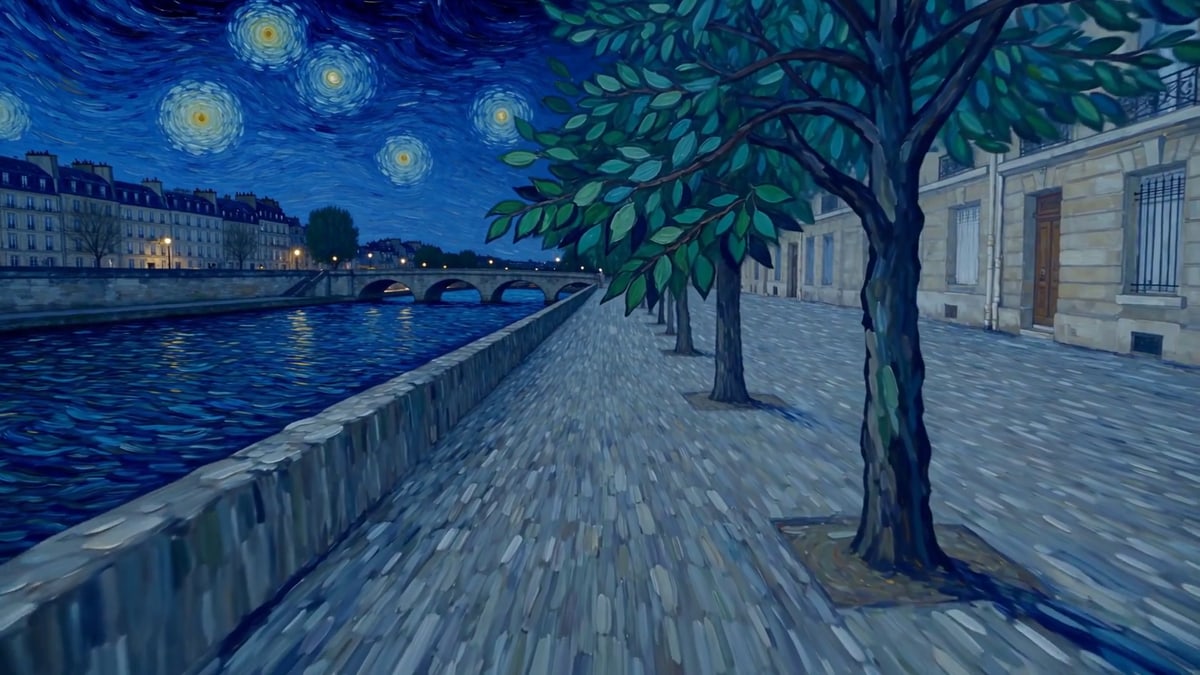
Sand AI, a company that makes AI video tools, released MAGI-2 on Nov. 24. It makes a video and its soundtrack at the same time from a written request: speech that matches the speakers' lips, sound effects, background sounds and music. Clips run up to 30 seconds. Sand AI calls it its main model, a much bigger version, trained on far more video, of a test version it released in August for anyone to download, which already made sound along with its video.
The video above is one of Sand AI's own examples. Given pictures of five classic paintings, among them The Starry Night and Water Lilies, the model made a single unbroken shot that moves through the style of each one in turn. Users can also give MAGI-2 many pictures, clips and sound files at once to follow, for example to keep a character's face, clothes and settings the same from shot to shot. They can set where the cuts fall and change parts of a video that already exists.
Sand AI says its raw model, the version before a final round of training on a small set of hand-picked clips, did some things it had not been trained to do. Without help from a separate AI rewriting the requests, the raw model showed early signs of solving puzzles such as Sudoku on screen, though it failed at times. Given only a short story outline, it often added actions, reactions and cuts nobody asked for. In one example, given pictures of the characters and the scene plus three story beats, it picked its own camera angles and close-ups. When asked, it could already translate a character's lines and speak them in another language, though only at an early stage. After the final training, the videos looked more polished, but those skills became noticeably harder to bring out. Sand AI says this suggests video AI should be judged on more than polish, including whether it follows rules and keeps events in a sensible order. No one outside Sand AI has yet tested these results.
People can try MAGI-2 now. Higgsfield, a video-making service, says MAGI-2 is in its web app, where a 10-second clip costs about $1.23 on its Plus plan, and is also open to developers who build it into their own apps. Users must be 18 or older. Higgsfield's terms let users use what they make in their business. They also say Higgsfield may use what users upload and make to train its own AI, unless the user has a business contract that says otherwise. Users can stop that from then on by deleting what they have uploaded and made, or their account. Users may upload only pictures, clips, voices and music they own or have permission to use, and anyone showing a person's face or voice needs that person's permission.
Sand AI says MAGI-2 still has clear room to improve: very fast motion can sometimes break up, and scenes with many sounds at once could still be richer and more lifelike. It says it will soon publish MAGI-2 for others to download, with a detailed report on how it was built, but has not given a date. Higgsfield, which sells MAGI-2, says professionals comparing clips made from the same request, without knowing which AI made them, ranked it second of six video AIs. Beyond that, the clips in the announcement are Sand AI's own picks, so it is not yet clear how well it handles everyday requests.