
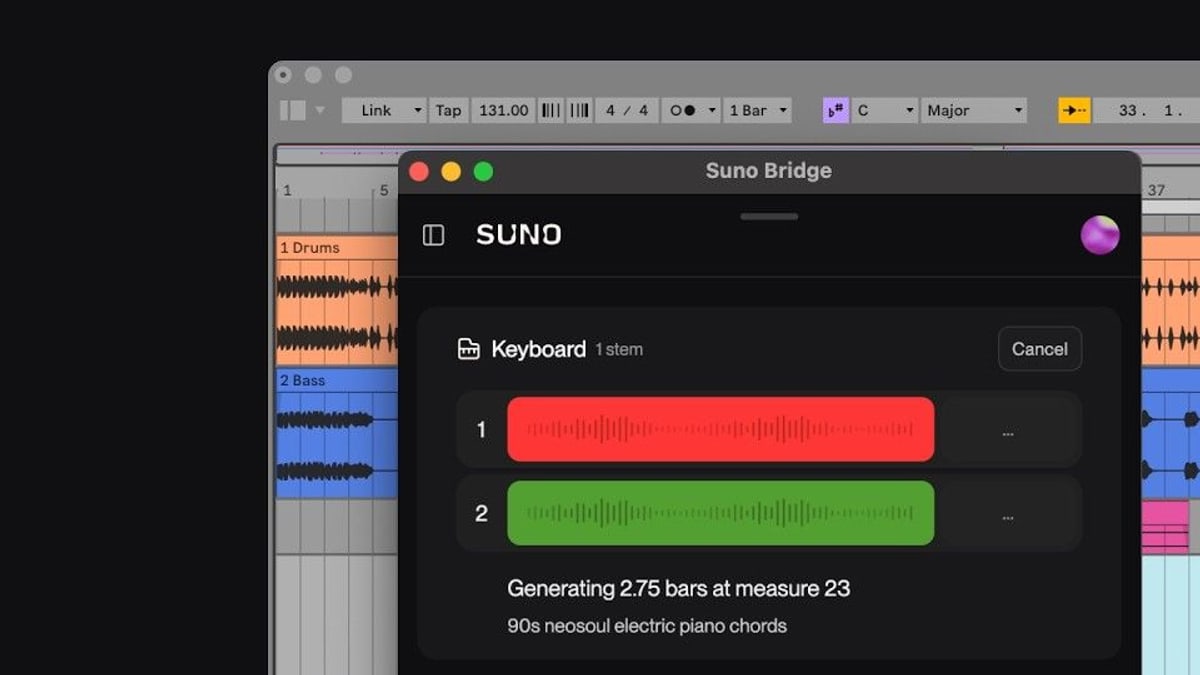
Suno, whose AI turns an idea into a song, has released a test version of a new app called Suno Bridge. It is a Mac app that runs beside Ableton Live, a program musicians use to record and arrange songs. Suno's own app could already add new vocal or instrument parts to an existing song for Premier subscribers, and Bridge brings that into a song someone is building in Live. Suno's AI makes the new parts and drops them straight onto the song's timeline, where Live lays out every part in the order it plays.
Both programs have to be open. Bridge first sends the project to Suno, so the AI can take in the music that is already there. The musician then marks a stretch of the song in Live, picks an instrument type in Bridge and describes the sound they want in words. Suno says that, unlike ready-made sound clips, the new parts follow the song's speed, key, chords and feel, and land in time with the rest of the track. Musicians keep the effects and other tools they already use in Live.
Suno pitches Bridge at finishing old, half-done songs, getting past a creative block and hearing an idea played with new instruments. The company says that for the first time, people can use its AI together with the music program and add-on tools they already know. It says Bridge was built independently of Ableton, and that it plans to support more music programs and computers other than Macs, without giving dates. For now, Bridge works only with Ableton Live 12 or later on a Mac.
Bridge itself is a free download, but it only works with Suno's Premier plan, which costs $30 a month, or less when paid for a year at a time. Each new part uses up some of the plan's monthly allowance of credits, the same way making music in Suno's own studio app does. Bridge uploads the Live project and its audio files to the musician's Suno account. Suno's terms of service, which the Bridge page points to for how uploaded files are stored and handled, give the company a permanent right, which can't be taken back, to use what people upload, including to improve its AI.
Suno says uploaded audio passes through filters that look for music owned by someone else, and that only those recordings are blocked while the musician's own material goes through. Suno's terms hand Premier subscribers whatever rights Suno holds in the music they make, but say the company makes no promise that any copyright exists in AI-made music.