
Anthropic said on Sept. 23, 2026, that Claude agents working with its new life-sciences research group flagged a previously uncharacterized enzyme system it calls array-associated reverse transcriptases, or ART. The company frames ART as a reverse transcriptase found mainly in bacteriophages, paired with an accessory gene and a long array of evenly spaced DNA repeats that resemble a CRISPR array. Anthropic published the claim on its news page and linked a company-hosted preprint; The Verge and Al Jazeera covered the announcement the same news cycle.
"CRISPR-like" here is a structural analogy for the repeat layout, not a claim that ART is a proven next CRISPR gene-editing tool. Anthropic says the underlying jumbo-phage reverse transcriptase had been identified before. What Claude is credited with noticing is the associated non-coding repeat array and partner gene that together mark the system. Function is still unknown. Early lab work, Anthropic says, shows the array is expressed as distinct short RNAs, which is suggestive but not a finished mechanism story.
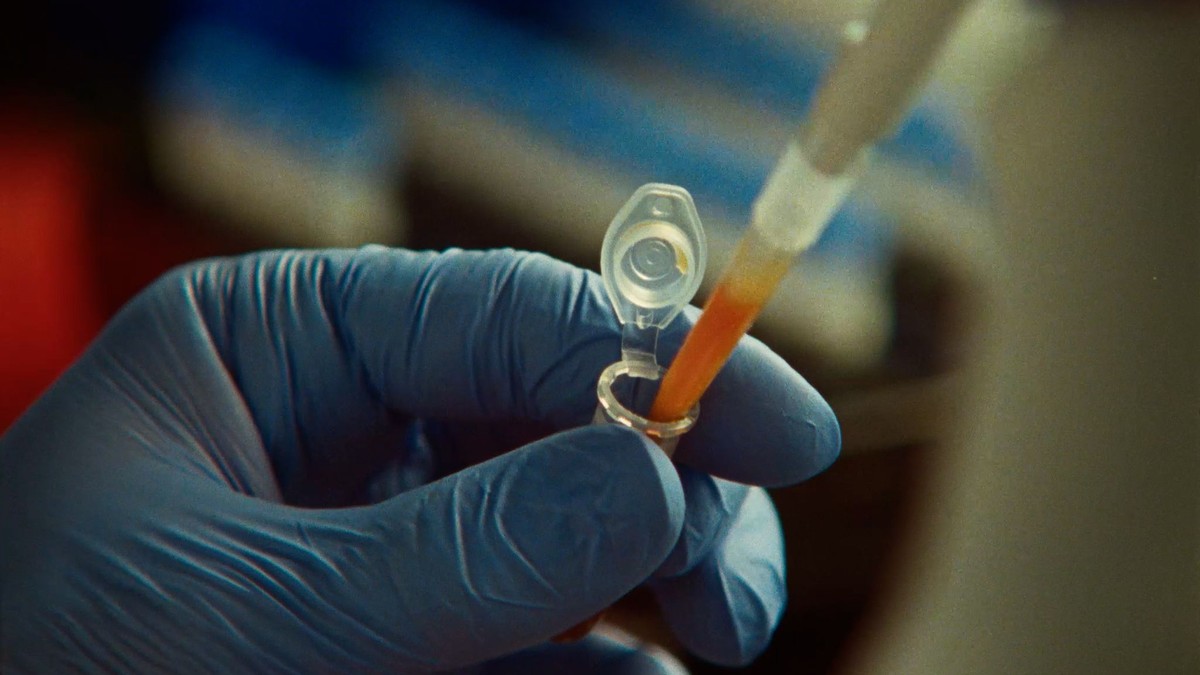
On method, Anthropic says it gave Claude a high-level prompt to search DNA databases for interesting reverse transcriptases, then let agents investigate families and write candidate reports. One campaign ran about 21 hours across roughly 950 agents and about 210 million tokens before an agent flagged a tandem-repeat pattern beside an odd RT. Anthropic says humans perform the wet-lab work in a Bay Area lab limited to BSL-1 and BSL-2 work, and that the team does not handle pathogens that infect humans. Feng Zhang, quoted on the Anthropic page, called the RNA-repeat arrays associated with reverse transcriptases genuinely intriguing and worth further investigation.
What remains open is peer review of the preprint, independent replication of the genome-mining claim, and any biochemical proof of what ART actually does. Until those land, treat Anthropic's discovery narrative, Zhang's encouragement, and press CRISPR analogies as separate layers rather than a single verdict that a new gene-editing platform has arrived.