
Anthropic on Monday, Nov. 9, released Claude Fable 5.2, a new version of the model it calls its most capable for daunting technical work. Anthropic says Fable's safeguards against misuse in cybersecurity and biology are what let the company offer it to all users. Its twin, Claude Mythos 5.2, is the same underlying model with fewer limits on cybersecurity and biology work. Organizations Anthropic approves can use it directly, and Claude Enterprise customers also get it inside Claude Security, Anthropic's tool that scans code for security flaws. Anthropic says both write their answers up to 30% faster than the 5.1 versions.
Developers pay $8 for every million tokens Fable 5.2 reads and $40 for every million it writes. Tokens are the small chunks of text, often parts of words, that AI models read and write. Fable 5.1 costs $10 and $50, so the new model is 20% cheaper. It has been available since Monday through Anthropic's own developer platform and through Amazon Web Services, Google Cloud and Microsoft Azure.
In the Claude apps, Pro subscribers and standard Team seats can spend up to half of their weekly limit on Fable models at no extra cost through Nov. 16, and higher-priced plans get one to three free refills of their Fable allowance. After they use that half, or once the week ends, their Fable use draws on usage credits again, if they have them turned on. Anthropic still tells users to start with Claude Opus 5.5, which it calls its strongest everyday model, for most coding and knowledge work, and to move up to Fable for the most ambitious, open-ended technical jobs.
In Anthropic's test results, Fable 5.2 beat Opus 5.5 on almost every skill measured. One test checks whether code a model writes would be accepted by the people who run open-source projects. Users can set how much effort the model spends on a task, and more effort costs more. At its second-highest effort setting, Fable 5.2 scored 49.1%, which Anthropic says is the highest of any released model it has tested. OpenAI's GPT-6 Astra scored 42.8% at its highest setting, and Google's Gemini 4 Carbon 41.1% at a medium setting. Fable 5.2 trailed Gemini 4 Carbon on a test of automating business tasks, 51.4% to 53.9%.
Anthropic also points to work the model did before release. It says 1,000 copies of Fable 5.2 working together turned the proof of Fermat's Last Theorem into a formal proof in 30 hours, with little human help beyond a list of in-between results to aim for. A formal proof is written in a special programming language, such as Lean, so that a computer can check every step. Anthropic says this lets mathematicians be more confident in a result without checking it by hand, which matters more as AI produces results that are hard for people to check. Anthropic's first attempt, with an unreleased research model and a researcher's guidance, took 11 days.
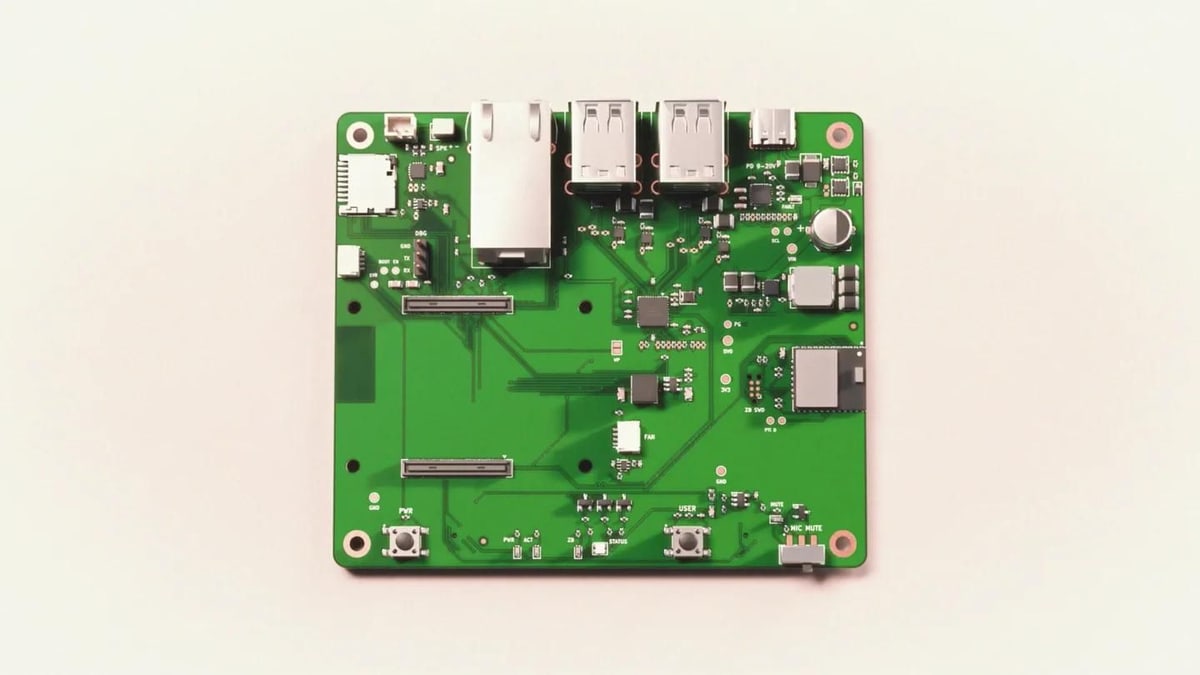
Anthropic says Fable 5.2 also designed three electronic devices from short written requests and little human input: a voice-assistant hub, a USB speakerphone and a handheld virtual pet. Diode, a circuit board maker that Anthropic does business with, built the boards and assembled the devices under the model's direction, and all three worked without changes to their wiring. Anthropic says they are early prototypes that haven't been through the safety and quality testing products need, and it doesn't yet know how they will hold up with continued use.
Anthropic says outside groups, including the UK's AI Security Institute, tested the model before release, though they did not review its account and may not agree with it. Anthropic judges the risk of the model acting unsafely in high-stakes situations to be low. But Anthropic also says the new models voice suspicion that they are being tested more often than any of its recent models have, which makes it harder to judge how they will act in real use. The test scores and research results so far all come from Anthropic and the companies it worked with.