
FuriosaAI, a Seoul company that designs chips for running AI models, says it has raised $620 million from investors in a deal that values it at $2.9 billion. Its chips are built for inference, running a trained model to answer requests, as opposed to training it. The company says that is where saving power matters most, because a model is trained once but run many billions of times.
The money comes from investors in South Korea and abroad. FuriosaAI says Korea's National Growth Fund committed 370 billion won, about $280 million, and that its international backers include Cisco Investments, Infinitum and Jericho Capital. NAVER, one of FuriosaAI's first investors, put money in again. According to a news report, the round quadrupled the company's value.
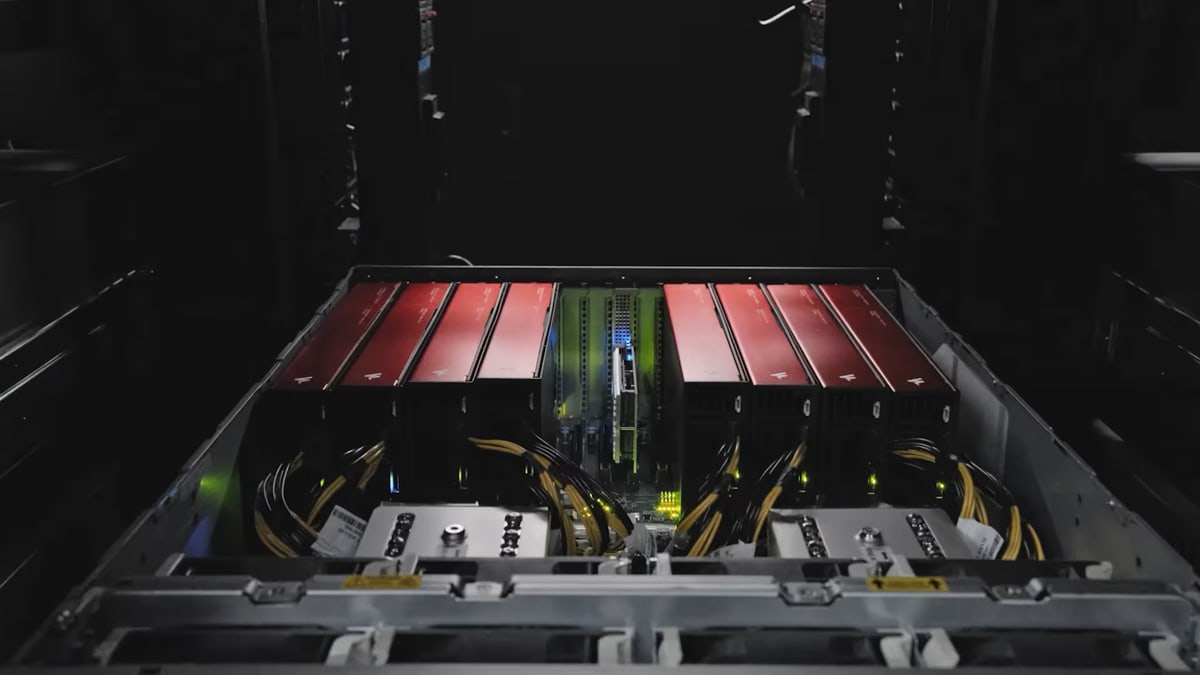
FuriosaAI says its chip, called RNGD, which comes on a card that plugs into a server, has been in mass production since January, that it will make 20,000 of the cards this year, and that it has secured the memory and factory capacity to more than double that in 2027. Each card draws 180 watts and is cooled by air, and eight of them fill one server that uses 3 kilowatts. The company says the server is designed to fit the racks and power budgets companies already have, with no new cooling.
The company says that, card for card, RNGD matches the output of NVIDIA's RTX PRO 6000 card and serves twice as many users for each kilowatt of power. FuriosaAI's own test ran one openly available model, Qwen3-32B, on short requests. With long documents, its lead per kilowatt shrinks to about 1.4 times, and no outside test of the claim has been published. FuriosaAI says Samsung SDS has started selling use of the chips as an online service, and that LG Group companies are putting them into their own data centers.
FuriosaAI says the money will go to making and installing more of the chips around the world, and to a third-generation chip, which the company is developing with Broadcom and other partners to run the most advanced AI models in large groups of machines. The company has not said how many cards it has sold, how much revenue it makes, what a card costs, or when the third-generation chip will arrive.
Correction (Oct. 31): an earlier version said FuriosaAI had not said which AI models or settings it used for its comparisons. Its chip page names the model and the request lengths.