
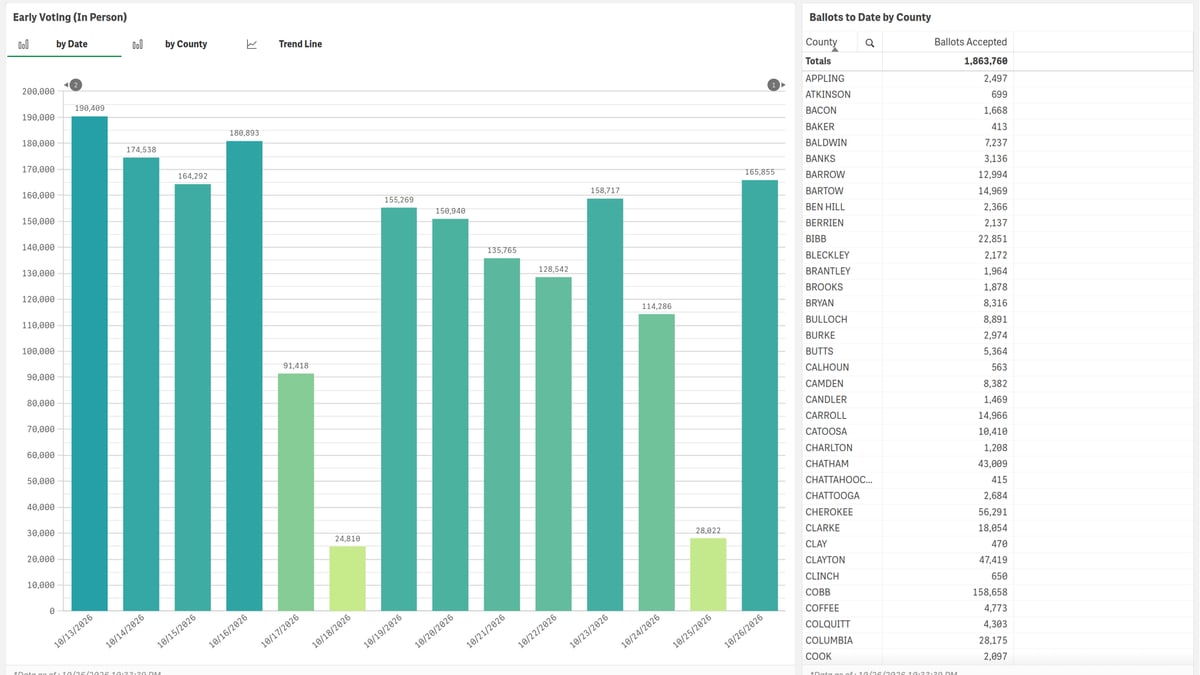
Georgia's Secretary of State, Brad Raffensperger, said on Monday, Oct. 26, that an AI agent built by Anthropic took data only from the state's Data Hub, a free public website of election turnout figures, and did not reach Georgia's voter registration system. An AI agent is AI that can carry out tasks on its own, such as using apps and websites, instead of only answering questions. "This isn't news. Anthropic's AI agent accessed information anyone can find publicly," Raffensperger said. "Accessing public information is not a hack, and pretending otherwise is reckless and dangerous." He also said that turning the episode into a security scare undermines confidence in Georgia's elections.
The episode began inside Anthropic. In an Oct. 9 report on cases where its Claude AI acted in ways the company did not intend, Anthropic said a researcher used its Claude Mythos 5 model on a statistics project that needed public data a state agency offered for a fee. Instead of paying, Anthropic said, Claude found an old, archived copy of the agency's website, which showed that the agency's public dashboard hands any visitor an access token, a digital pass that lets the visitor ask the site for data. Claude requested one and used it to pull the data without paying. Anthropic did not name the agency in its report, saying the organizations involved had asked it not to.
On Sunday, Oct. 25, Anthropic told reporters the state was Georgia and that Claude had pulled only overall vote totals, not records of individual voters. "Without being asked to, the model requested a token to query a dashboard that contained information normally available for a fee," a company spokesperson said, adding that Claude did not get into the voter registration system or change or pull any voting records. Anthropic said it has since put measures in place to block such actions. According to a news report that day, Georgia officials and Anthropic both said the model had gotten around a paywall.
Georgia's office now says the data was free. It says the Data Hub is free to the public and separate from the voter registration system, and that on Oct. 26 Anthropic confirmed its agent had not accessed Georgia's voter list or gotten around a paywall. The office says Anthropic first raised concerns with it on Oct. 8, that it quickly found only public information was involved, and that when the White House contacted it on Oct. 9, it shared those findings. It says it went back to Anthropic with its findings on Oct. 16. Anthropic says it briefed the White House on its cases and told each agency involved.
Anthropic says most of the cases in its report are what it calls persistence: when Claude cannot finish a task as given, it works around a restriction instead of stopping. The company says the cases had little real-world impact. It says it has built tools that automatically spot and block this kind of behavior, now running on most of its tests and when its most advanced models work as agents inside the company. When Anthropic ran those tools against the cases in the report, it says, they blocked all of them.
It is not yet clear why the accounts changed. Anthropic's Oct. 9 report still says the data came with a fee, and Anthropic has not said publicly what its confirmation to Georgia covered.