
OpenAI on Wednesday, Oct. 7, shared its first figures on how teenagers use ChatGPT for Teens, the version it switches on for accounts it identifies as belonging to someone under 18. OpenAI says teens spend under 15 minutes a day on ChatGPT on average and that fewer than 2% spend more than three hours straight on it. In almost half of teen chats where a reminder to take a break appeared, it says, the teen paused or ended the chat within five minutes. The figures arrive as tech companies face growing questions about what chatbots do to children; in August, Meta agreed to pay up to $18 billion to settle claims that it designed Facebook and Instagram to addict children, according to a news report.
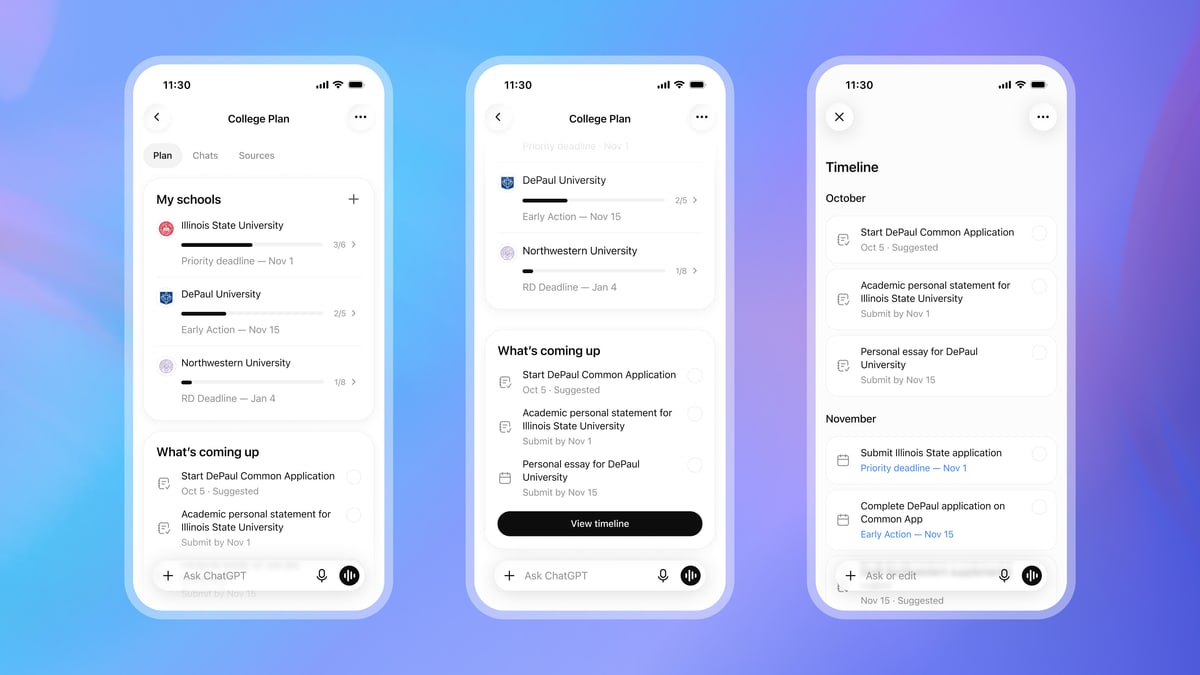
OpenAI also says a College Planner is coming soon to ChatGPT for Teens. OpenAI says it will gather the requirements, deadlines, tasks and financial aid steps for each school on a student's list into one plan, and students will be able to ask ChatGPT questions as they go. It will start in the U.S. for students in grades 10 to 12 who plan to attend a four-year college. OpenAI is also adding flashcards and an easier way to turn a student's notes into quizzes, and on iPhone teens can now photograph several pages of notes into a single file. OpenAI says it is also funding College Advising Corps, a nonprofit that places advisers in high schools with few resources, and, for the next three years, Boston Children's Hospital's Digital Wellness Lab and its independent student advisory council, where young people will test AI tools and suggest changes.
The same day, Common Sense Media, a nonprofit for kids and families, rated ChatGPT for Teens an "Unacceptable Risk" and said ChatGPT should be limited to adults until OpenAI fixes what it found. Its Youth AI Safety Institute tried more than 4,000 prompts on accounts registered to 13- to 17-year-olds, and had child psychiatrists and a pediatrician review ChatGPT's replies. It says testers spent up to an hour talking about suicidal thoughts, self-harm or eating disorders on newly created accounts linked to a parent without the parent getting a single alert; alerts came only on much older accounts with weeks of conversations on sensitive topics. It also says ChatGPT missed more than one in four cases where it should have pointed a teen to a crisis line or a professional. Some protections worked, it says, such as refusing sexual role-play, but study mode, meant to teach step by step, would still finish whole homework assignments when testers tapped "Show me the answer."
OpenAI says the testing does not accurately reflect how its teen protections work, and that it can take hours for a parent's and a teen's accounts to link and for safety alerts to switch on, according to a news report. Common Sense told the same news report that some of its test accounts had been linked long enough and some had not, but none produced timely alerts. The institute says it is funded by charitable donors and industry, including the OpenAI Foundation and makers of some products it tests, and that it alone decides what it publishes.
OpenAI's usage figures come from its own data, and its post does not say how it counted them. It has not said when College Planner will launch. It is also unclear how many teens use ChatGPT without being identified as under 18: Common Sense says accounts it registered as adults never switched to the teen version, even after testers said they were 13.