
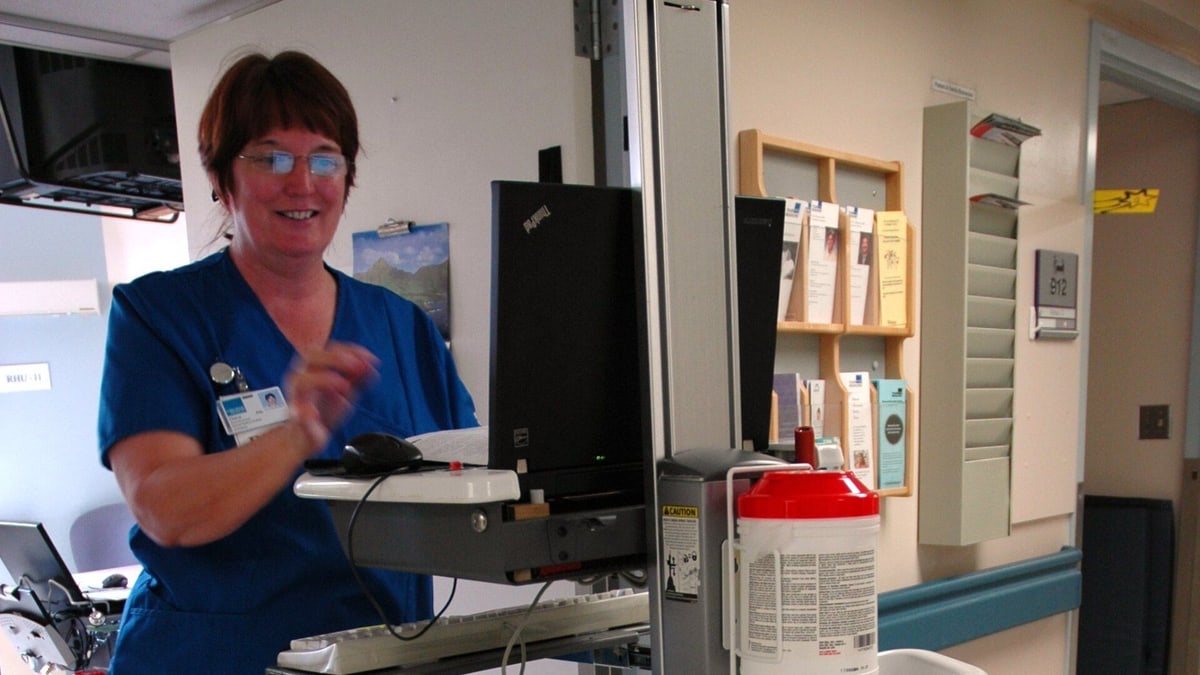
California Governor Gavin Newsom signed Assembly Bill 1979 on Sept. 30, and it sets a line on how far AI can go in patient care. Starting on Jan. 1, 2027, hospitals, clinics, doctors' offices and group practices may not use a tool that includes AI to carry out, on its own, any medical task that state law says must be done by someone with a professional license. They also may not use AI to direct, guide, supervise or instruct unlicensed staff in that kind of work. The ban does not stop trainees working toward a license from using such tools as part of a supervised course or training program. Newsom's office says the new health care rules "help keep people, not algorithms, at the center of healthcare decisions."
The law also covers AI that helps with medical decisions, which it calls clinical decision support: a system that makes a prediction, classification, recommendation, evaluation or analysis to help decide when to give care, what is wrong with a patient or which treatment to use. When such a tool informs a patient's care, the hospital or clinic must take reasonable steps to make sure the licensed doctor, nurse or other professional can still use their own independent judgment. Tools that only book, cancel or remind people of appointments, give patients educational or pre-visit materials, or take payments do not count as clinical decision support, as long as that work needs no license. The new rules also do not apply to automated paperwork and messages that involve no professional judgment, such as notices that a patient's records were updated, reminders, or help finding information a patient asks for.
A second part reaches beyond hospitals, to health chatbots: AI systems that hold a human-like conversation, are marketed as helping deliver or support health services to consumers, and use information about a person's physical or mental health or wellness, whether the person shares it or the chatbot gathers or infers it. California's medical privacy law, the Confidentiality of Medical Information Act, will cover any business that offers one to help people manage their health information, or to diagnose, care for or manage a medical condition, in the same way it covers health care providers, though only for that law. The business must meet the same confidentiality standards for medical information that a health care provider must, and faces the same penalties. That law already bars providers from sharing, selling or using medical information for purposes not needed to provide care, and a violation that causes someone financial loss or physical harm can be charged as a misdemeanor, a lesser crime. California already applies the law to mental health and reproductive health apps in the same way.
The new section sets no fine of its own. A doctor who breaks the rules answers to the Medical Board of California or the Osteopathic Medical Board of California. When a violation amounts to practicing a health care profession without a license, the board for that profession can ask a court for an order to stop it. Penalties already available under other laws still apply.
The California Nurses Association, the union that sponsored the bill, says it and its allies overcame opposition from hospital companies, insurers and technology industry groups. The bill's author, Assemblymember Mia Bonta, says protecting patients requires "that we not rely exclusively on A.I. to do things quicker and cheaper." Newsom also signed a second bill, SB 503, the same day. It requires developers of these medical decision tools to take reasonable steps to reduce known or predictable bias.
Much depends on other California laws. Which AI tools cross the line turns on which tasks those laws reserve for licensed professionals, and the law does not spell out what "reasonable steps" to protect a professional's judgment must include. It is also not yet clear how actively the licensing boards will police it, or which consumer chatbots meet the law's definition of a health chatbot.