
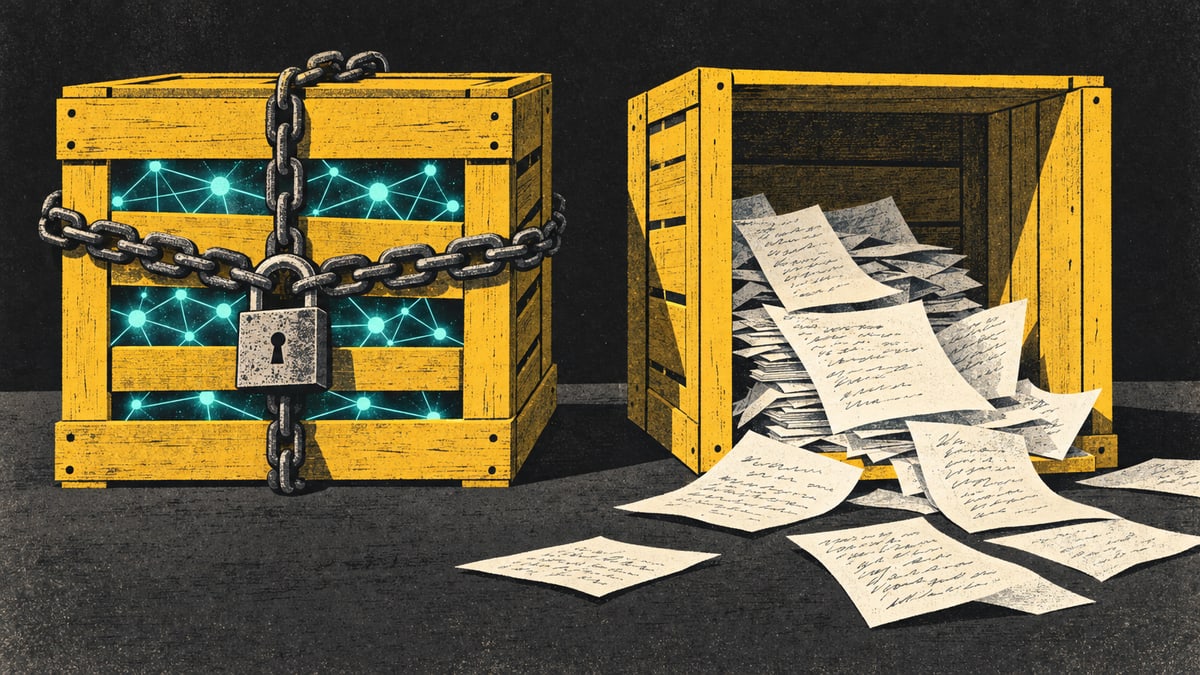
China's Ministry of Commerce and Ministry of Science and Technology proposed on Friday, Oct. 16, to add 40 technologies to the country's list of technologies that are banned or restricted from export. Twenty-three of them are in AI, tied to large AI models, AI agents (AI that can carry out tasks on its own, such as using apps and websites, instead of only answering questions), big clusters of computers and information processing. The other 17 are in medicine and solar power. The United States, for its part, already limits China's access to the most advanced American AI chips.
The commerce ministry says 14 of the 40 technologies would be banned from export, among them AI that writes and changes malicious software, and 26 would need permission, among them AI that helps find vulnerabilities, weaknesses in software or a system that an attacker could use. It says AI that writes such software on its own could be used to attack the country's most important information systems, its defense industry and core government systems, or to get around its security defenses, and that the aim is to prevent misuse and keep AI under human control.
The ministry says the great majority of AI technology could still be exported freely. What counts as an export, it says, is moving the technology itself out of China, not offering a service built on it to people abroad. Technology that is already public, in academic papers or released as open source (free for anyone to use, study, change and share), would be outside the rules. A Chinese company that offers a large model built with restricted technology to people abroad through an app, a website, an online service or a connection that lets developers plug it into their own apps, or as a lightweight version that runs on a user's own device, would fall outside the export rules for large models. Setting up a model with restricted technology on servers abroad would count as an export, but a company using its own cloud servers abroad could qualify for automatic approval.
Automatic approval would also apply to cases including newly releasing a covered AI technology as open source, Chinese companies running their own computing centers abroad, having chips made abroad, joint research with foreign partners and work on international standards, which the ministry says would let such exports go ahead almost as soon as they are reported. For most of the listed technologies, the ministry says, the list sets specific technical limits that define what is covered, and products made with the listed technologies are not covered.
One part takes effect now. From Oct. 16 until the revised list is in force, anyone exporting a listed technology must register it first on the commerce ministry's online system, including deals that have started but are not finished. That covers handing ownership of a technology to someone abroad, licensing it for use abroad, a Chinese technology's owner or controller becoming a foreign company or person, and other cases the ministry names. Exporters must decide for themselves whether a technology falls under the rule. The public can comment until Nov. 15.
The ministry says the change is routine and does not target any country, region or organization. Neither the announcement nor the spokesperson's answers name a company or model that would be covered, and it is not yet clear when the final list will take effect or how much it will change after the comments.