
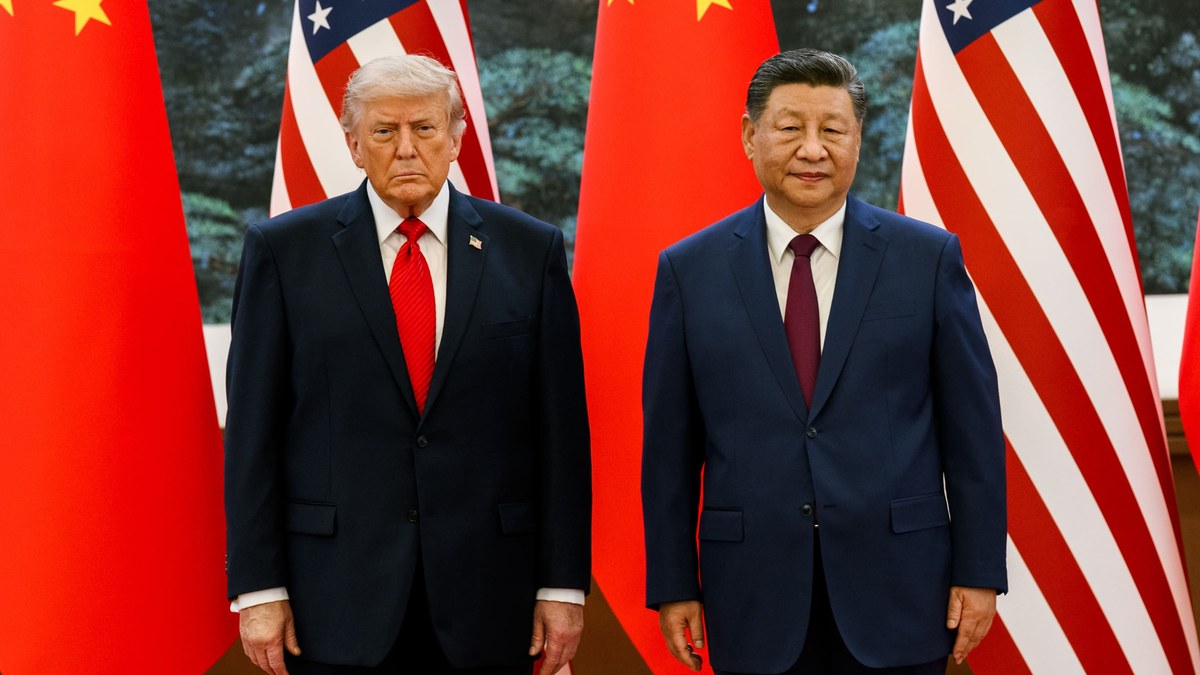
Treasury Secretary Scott Bessent and Chinese Vice Premier He Lifeng discussed a US-China AI dialogue ahead of President Donald Trump's meetings with Xi Jinping in the United States, including a channel for incidents that rise to a national-security level, according to CNBC and Al Jazeera coverage of the weekend talks. The Guardian's Sep. 22/23 summit frame puts that modest safety mechanism against deep distrust over chips, export controls, and whether American 'safety' language is really development suppression. The beat matters because the world's two AI powers are floating a crisis-notification path without agreeing to slow the race.
Bessent described moving from opaque to more transparent contact between the number one and number two AI powers. Al Jazeera notes Beijing's Xinhua acknowledged AI talks but did not say China had accepted the notification mechanism. Trigger details for any hotline remain limited in open wires.
Guardian quotes Eurasia Group's Amanda Hsiao saying China does not necessarily see the threat the same way and that distrust blocks cooperation, with Chinese officials inclined to read US safety or pacing calls as tools to suppress Chinese development. People's Daily, per Guardian, urged making AI a new frontier for China-US cooperation and using an intergovernmental dialogue mechanism. Trump's public line remains competitive ('whoever wins AI, wins') even as officials float a limited risk channel, a dual track of race-plus-modest-guardrail language that CNBC sources say will not produce an agreement to slow development.
CNBC reports that advanced Nvidia chip export controls and US accusations of Chinese 'distillation' from American model outputs remain sticking points, with Beijing rejecting theft framing. Council on Foreign Relations' Chris McGuire told CNBC a national-security incident channel would be a modest but positive step, while an agreement to slow AI development is extremely unlikely. What remains open is whether Trump and Xi lock any notification framework this week, whether China accepts US terms, and whether chip or distillation fights swallow the dialogue. Until a joint readout lands, treat the pack as a pre/mid-meeting bilateral frame boxed in by distrust, not as proof a working hotline already exists.