
South Korea's Ministry of Science and ICT is on the Day One agenda at Humanoids Summit Seoul, which opened Sept. 22, 2026, at COEX for a two-day run through Sept. 23, pairing congratulatory remarks by Deputy Minister Dokyu Lee with a midday briefing titled "Physical AI Policy in Korea" by Director Changjong Song. The summit matters because Seoul is treating embodied, real-world AI as a national industrialization track, not only a trade-show theme, and the official program puts that policy message beside hardware, stack, and factory-deployment pitches on the same stage.
That policy slot is not the same thing as autonomous robots already running factories. The live agenda from humanoidssummit.com lists MSIT speakers, an NVIDIA and ROBOTIS sponsored lunch workshop on Isaac GR00T with AI Sapiens and AI Worker demos, Unitree's APAC scaling talk, RLWRLD's five-finger dexterity keynote, ROBOTIS on an open humanoid platform, and a Day Two keynote on deploying humanoids at industrial scale. Pre-event trade copy had named Second Vice Minister Ryu Je-myung for opening remarks; the live agenda lists Dokyu Lee, so day-of speaker credit follows the agenda.
Herald Business, reporting from the COEX Grand Ballroom on Sept. 22, said an AI humanoid performed a morning demonstration and described the Seoul debut as a commercialization and business-strategy conference for humanoid robotics and physical AI, first launched in Silicon Valley in 2024. Aju Press, also on the floor that day, said the debut runs with MSIT backing and RLWRLD as exclusive technology partner, and quoted ROBOTIS founder and CEO Byoungsoo Kim arguing humanoids will settle in as platforms with many apps, much like smartphones.
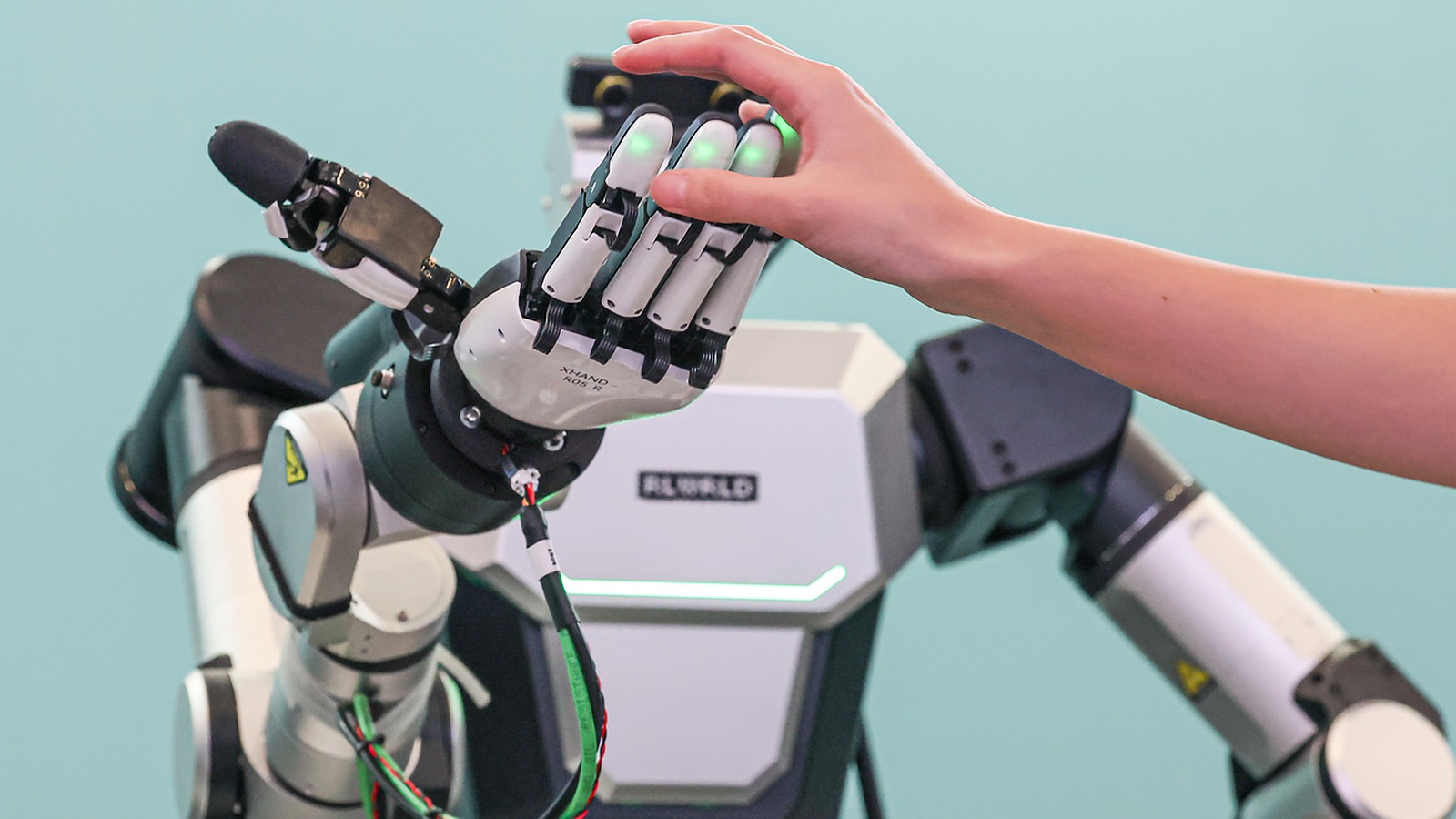
The same Aju floor report separates the industrialization pitch from what visitors could actually see. Park Ji-hyeon, head of sales at Roas, Unitree's official South Korea distributor, said fully autonomous humanoids practically do not exist yet and that there is nothing beyond teleoperation or robots that follow preset commands, with Unitree no exception. Aju also described an RLWRLD-trained humanoid clearing varied objects off a fast conveyor and cited the company's claim of an 86.8% manipulation success rate in its own tests, while a later smartphone pick on the same belt missed and required a human scramble.
The policy backdrop extends beyond the ballroom. DigitalToday reported that on Sept. 16 MSIT kicked off manufacturing-site Physical AI R&D in Jeonbuk and South Gyeongsang, budgeting about 736.8 billion won over five years in Jeonbuk for a factory-orchestration software platform and about 676.3 billion won in South Gyeongsang for a human-AI collaborative large action model, or roughly 1.41 trillion won combined through 2030. That roadmap is separate from any single summit demo, but it is the industrial program the Seoul agenda is meant to internationalize.
What remains open after Day One is how far MSIT's Physical AI policy briefing translates into procurement, testbed access, or export standards, whether open-platform bets from ROBOTIS and foundation-model pitches from RLWRLD move past teleop and presets on factory floors, and whether Day Two industrial-scale deployment talks name sites and timelines that independent reporters can verify. Until those deployments are documented outside the expo hall, treat summit industrialization language and floor teleoperation limits as parallel facts, not as proof that fully autonomous industrial humanoids are live in Korea.