
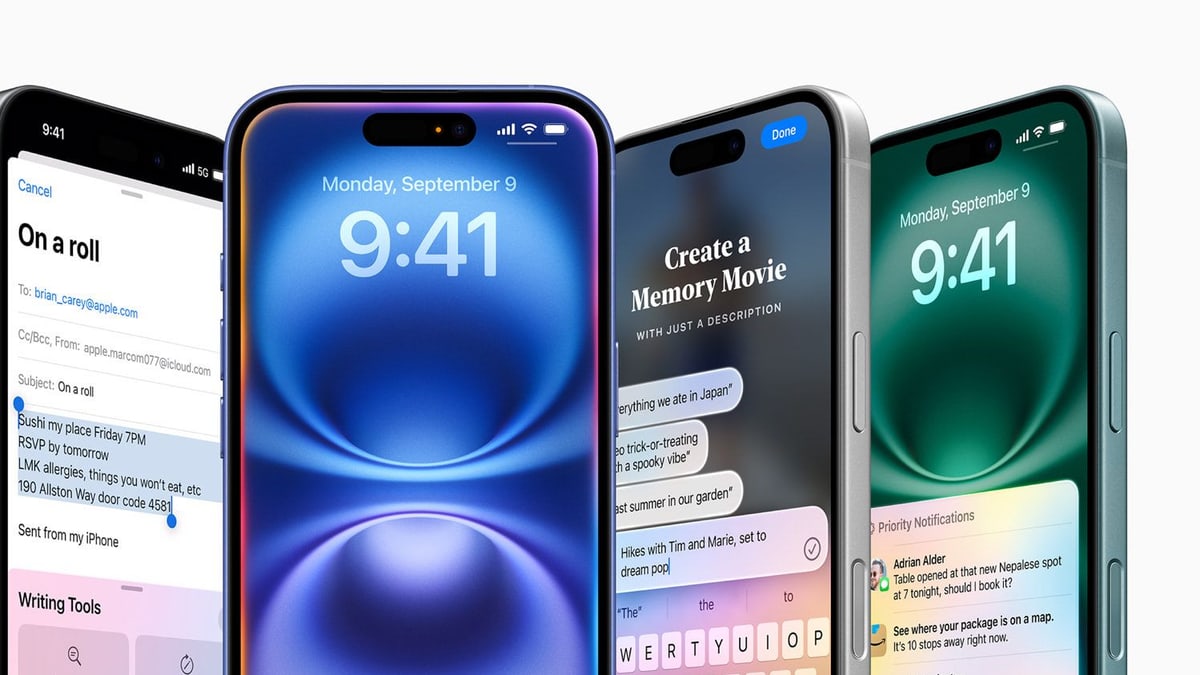
Staff investigators at South Korea's Fair Trade Commission, the country's competition and advertising regulator, have accused Apple of deceptive advertising for the iPhone 16 over Apple Intelligence, its set of AI features. The commission said on Thursday, Nov. 26, that its staff sent their case report to the commission's members and to Apple and Apple Korea on Nov. 24. That opens the members' formal review. The staff want Apple fined, ordered to stop such ads and ordered to publicly announce the ruling against it. The report is the staff's view only. The commission's members decide whether Apple broke the Act on Fair Labeling and Advertising and what it pays.
From September 2024 to March 2025, Apple's iPhone 16 web page in Korea described nine Apple Intelligence features in detail, the commission says. They included Writing Tools, summaries in the Notes and Phone apps, Genmoji (custom emoji made from a typed description), Image Playground, which makes pictures, and three new Siri abilities. In September 2024 the page said the features would launch first in U.S. English that year. In October 2024 it said they were available in U.S. English, and in February 2025 that Korean support was due in early April 2025.
Four of the nine did not arrive as advertised, the staff say: Genmoji, Image Playground, a Siri that understands the user's personal context and a Siri that gives step-by-step guidance. The personal-context Siri, advertised for 2024 in U.S. English and early April 2025 in Korean, came in U.S. English only in September 2026 and in Korean in October 2026, the commission says. The staff say the page hid, played down or left out facts buyers need to choose a phone. Among them, they say, were that some features would be hard to deliver in U.S. English in 2024 or in Korean by early April 2025, and when they would come. They say the same of the October 2024 line that the features were available in U.S. English, when some were not. The staff call this a serious violation of the advertising act's ban on deceptive ads.
The staff put the sales tied to the ads at about 3.35 trillion won. A news report says the commission's older fine rules apply, because the ads ended before the rules changed in June 2026. Under them, a serious violation draws 0.8 to 1.6 percent of those sales, so the fine could reach 53.6 billion won, about $40 million. Apple and Apple Korea have six weeks from receiving the report to answer in writing and to ask to see and copy the evidence. Only then do the members rule.
Apple's worldwide iPhone 16 announcement in September 2024 did say some features would come later. It said more Apple Intelligence features, among them Image Playground, would "roll out later this year and in the months following," went on to describe Genmoji and a Siri that draws on personal context, and listed Korean among the languages coming "over the course of the next year." It said the first features would arrive as a test version in October 2024, and only on devices set to U.S. English, with more in the months after. The staff's case, as the commission describes it, concerns the iPhone 16 web page in Korea.
In a statement to reporters, Apple said users have been able to use dozens of features since it added Korean support to Apple Intelligence in 2025, and that it expects to make its case during the commission's review.
The case began in March 2025 with a complaint from the Seoul YMCA, a civic group, according to a news report. The complaint said Apple advertised every feature as coming although it was uncertain whether some could be delivered, the commission says. The commission told reporters it will call its members together as soon as possible once Apple has had its chance to respond, to make a final decision.