
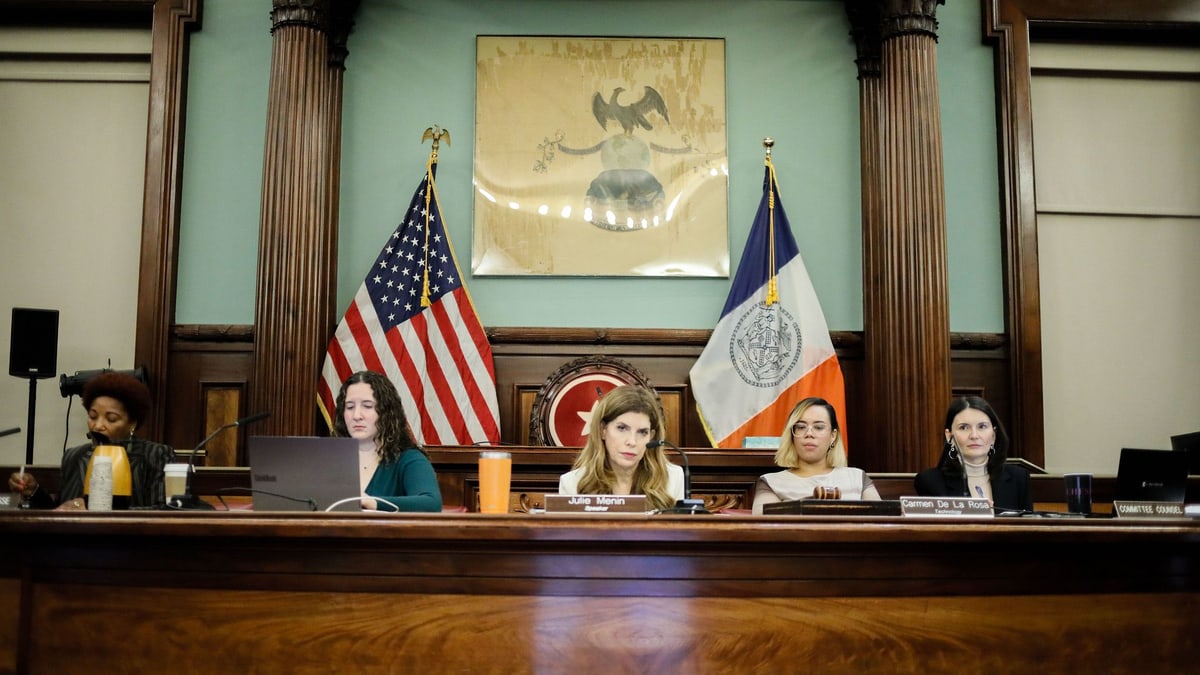
Elon Musk's SpaceXAI, the company behind the Grok chatbot, answered questions under oath from the New York City Council on Friday, Oct. 16. It came only after the council issued a subpoena, a legal order to appear, which the council says was its first on record against a private company or person. SpaceXAI had skipped the council's Oct. 5 hearing on AI safety, where Anthropic, Google, Meta and OpenAI testified under oath.
Gabriela Castillo Madrid, SpaceXAI's senior manager of global government affairs, testified for the company. She appeared by video, according to a news report. Speaker Julie Menin told her she had used Grok to make a sexualized image of herself within seconds, and asked how that was possible if Grok had "strict controls." Castillo Madrid said she could not speak to the image itself, but that the company's safety team "could look into that specific instance."
The council also heard from Devin Kim, a former employee who, the council says, alleges he was fired after raising safety concerns about Grok. Kim told the council that during his time at the company, only three of its 200 technical employees worked on AI safety. Asked whether she knew about Kim's case, Castillo Madrid testified under oath that she did not.
Menin said SpaceXAI's testimony "raised far more questions than it answered" and that "self-regulation is not enough." Council Member Carmen De La Rosa, who chairs the council's technology committee, said the AI companies that have testified could not answer basic questions about privacy, harassment and protection for whistleblowers, and that the committee has letters ready to follow up.
The council is also weighing AI bills. One, from Deputy Speaker Nantasha Williams, would let elected officials and candidates tell AI companies in writing, in the 120 days before an election, that they do not allow realistic fakes of their voice, photos or video. Companies that make or run such tools would then have to put in place a reasonable way to stop users from making those fakes in the 60 days before the election. A company that failed to do so and let such a fake be made would be guilty of a misdemeanor, with a fine of up to $2,500 for each one. Another bill, from Speaker Menin and introduced last week, would give whistleblowers a share of fines collected from AI companies that break the law. The fakes bill has not passed, and it is not yet clear when the council will vote on either bill or whether SpaceXAI will answer the questions it left open.