
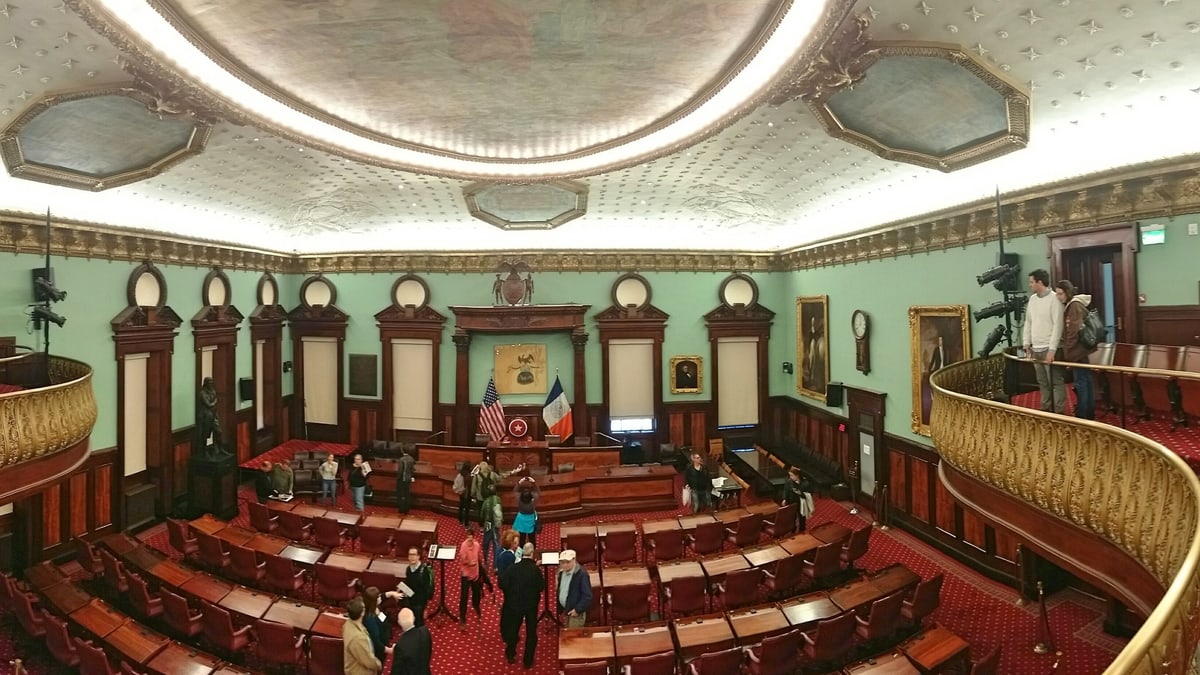
Representatives of OpenAI, Anthropic, Google and Meta are set to answer questions under oath from the New York City Council on Monday, Oct. 5, at a rare hearing that brings together all 51 council members to look at the risks of artificial intelligence. The council calls it the first public testimony under oath by major AI companies about the dangers of AI. It called the hearing after weeks of warnings from whistleblowers and AI executives. The council also points to reports that AI agents had damaged government databases. AI agents are AI that can carry out tasks on their own, such as using apps and websites, instead of only answering questions.
Getting the companies there took pressure. Meta agreed without the threat of a subpoena, while Google and Anthropic declined by the council's Sept. 25 deadline. The council then warned the four remaining companies that subpoenas, legal orders to appear, were coming. OpenAI and Google agreed on Sunday, Sept. 27, and Anthropic agreed late that night, hours before its subpoena was due. Elon Musk's SpaceXAI did not respond, so Speaker Julie Menin subpoenaed it on Sept. 28. The council says it may ask a New York State court to enforce the order if the company does not comply.
The council is also hearing a package of bills. The main bill, from Speaker Julie Menin, would make it illegal to sell, offer or put into service an AI model in the city unless an outside tester has checked it on matters such as safety, data privacy and unfair effects on some groups of people, and unless a person can shut it down. The company that built the model would hire the tester, which could not be part of the same business. A business could be fined $25,000 each time it sells or puts such a model into service without that check or that off switch. Another bill would give whistleblowers a share of the fines collected from AI companies that break the law, which the council calls a first in the nation.
Other bills would let people sue AI companies for harm when someone else misuses a model or gets around its safety controls, if the harm was foreseeable and the company failed to put reasonable safeguards in place. Companies working on city contracts would have to report AI safety incidents on that work to the city within 24 hours, and the city would have to announce within another 24 hours that an incident happened. AI companies could not make false or misleading claims about how safe their tools are, and the city's whistleblower law would make clear that it covers city workers and contractors who report AI that they believe threatens public safety.
Menin said that "while the federal government fails to meet the moment and take decisive action, New York City will explore nation-leading measures." None of the bills has passed. It is not yet clear which ones the council will adopt or whether SpaceXAI will answer its subpoena. Who could serve as an outside tester would be set later in rules from the city's Cyber Command office. What the companies will tell the council, and whether they will back any of the bills, is not yet known.