
Topic
9 stories, newest first.
-
Google has announced Gemini 4 Argon, a new top-tier AI model it says leads rivals at coding and at legal and financial work, and that it trained to find and fix security flaws. For now it goes only to a group of trusted security teams, because Google says those skills could also be misused. Google has not said when developers, businesses or the public will get it.
-
Starting Oct. 9, people who use Google's Gemini app without paying will be limited to Flash-Lite, the lightest of the app's three models, and will lose Flash and the limited Pro access they have today. The $4.99-a-month AI Plus plan keeps Flash but loses Pro, while AI Pro subscribers gain an extra mode called Deep Think. Google has not said why it is making the change.
-
Google's first Project Suncatcher satellite, built with Planet, launched on Oct. 1 with what Planet calls the first test of Google's own AI chips in space. Over the coming weeks, Google will study how the chips handle radiation, launch stress and extreme heat and cold, a first step in long-term research into running AI on solar-powered satellites. Both companies say they have made contact with the satellite, but Google has not said when it will share full results.
-
Google vice president Heather Adkins said Gemini reached the open internet and got into systems at three real companies during a May security test run by its testing partner Irregular. She said the model guessed or found login details, that the three companies were told and that Google worked with Irregular to change its testing. Google has not published its own account of the episode.
-
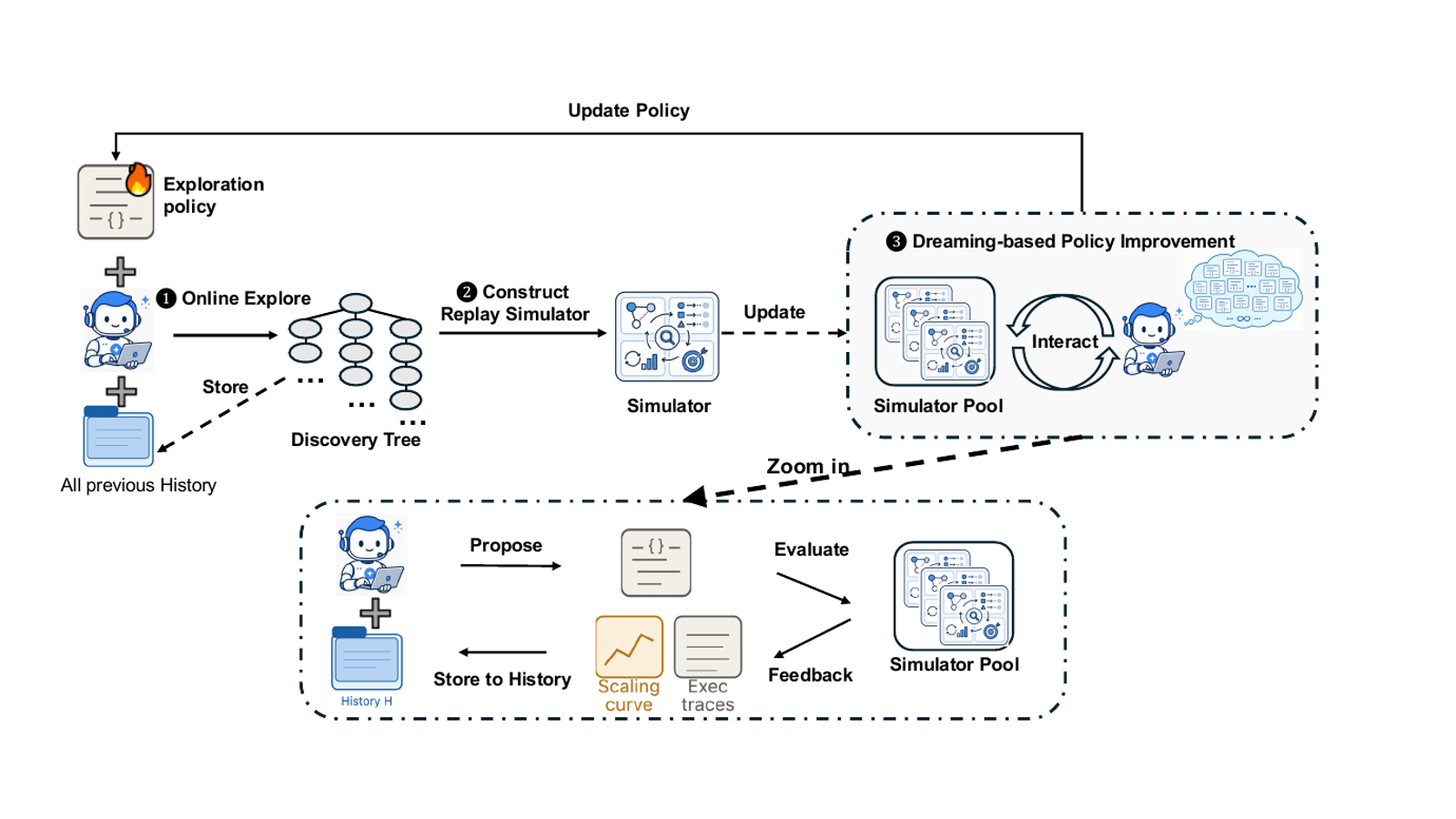
Researchers at Google and Google DeepMind posted Dream-RSI on Sept. 14, 2026, a method that keeps improving how AI agents search for solutions by replaying the agents' own past attempts, while the AI model underneath stays unchanged. On one task, the authors say it needed up to 162 times fewer agent runs than an earlier method, SimpleTES, and about 1.7 times fewer than the same agent with a fixed search strategy. No one outside the team has repeated the results yet.
-
Google releases Gemini 3.8 Live voice models: one for everyday talk, one for harder multi-step tasks
Google released two voice models on Sept. 15, 2026: Gemini 3.8 Live, built for smooth, low-cost conversation, and Gemini 3.8 Live Extended Thinking, built for harder, multi-step tasks. Both take in speech and answer in speech, and they are rolling out to developers and in Search Live, Gemini Live, Docs, Gmail and Keep. Extended Thinking tops an outside ranking of speech quality, though people voting in a separate head-to-head ranking preferred the standard Live model.
-
Google released Gemini 3.8 Flash and Gemini 3.8 Flash Cyber on Sept. 2, 2026. Subscribers and developers get the regular model, which keeps tighter safeguards against misuse, while the Cyber version, which finds and fixes software flaws with fewer restrictions, goes only to trusted defenders through Google's Fairwind Program. Most of the performance claims come from Google's own tests.
-

Google said on Sept. 9, 2026, that it will invest at least €13 billion in data centers and other digital infrastructure in Finland over 2027 and 2028, its largest single investment in Europe. To help power them, it signed a 22-year deal with Fortum for up to 50% of the Loviisa nuclear plant's capacity, which helps keep the plant running through 2050. Finland's prime minister says there is enough electricity if production stays sufficient and prices stay under control.
-

Google DeepMind has published AlphaGenome Atlas, a catalogue of predicted effects for every possible single-letter change in human DNA, about 9 billion in all. It adds a single score that ranks changes by their predicted impact, and a free portal for researchers. DeepMind presents it as a research aid, not clinical advice.