
Google on Thursday, Nov. 12, released Gemini 4 Hydrogen, a new member of its newest family of AI models that it built for speed. It also reaches far more people than the family's two top models. Google says Hydrogen is now in Google Search for all users worldwide, and it began rolling out on Thursday in the Gemini app and to developers and businesses. Carbon and Argon are Google's top Gemini 4 models. In the Gemini app, Argon needs Google's AI Pro or Ultra plan and Carbon needs Ultra, and neither is on the free tier of Google's service for developers.
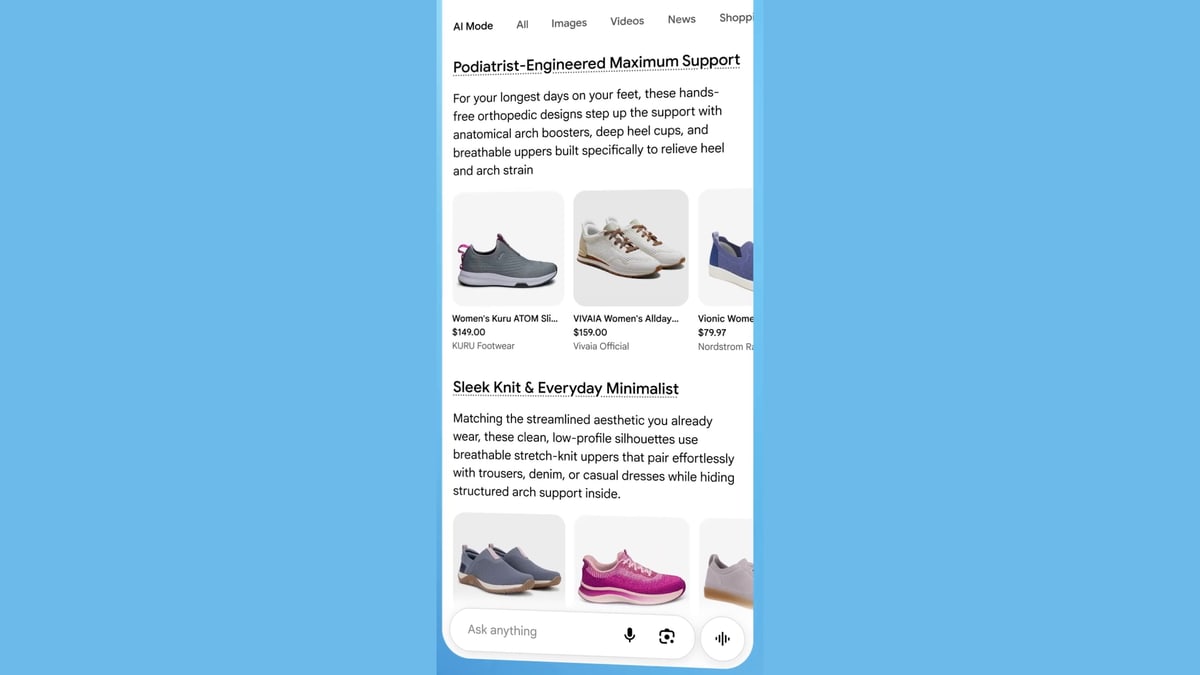
Google calls Hydrogen the biggest model upgrade to Search yet. In Search, it powers the AI-written answers, and the only kind Google names is AI Mode, its chat-style way to search. Google says Search now better handles questions with several parts, typos or very specific requests, shows more tables and images, and links to a wider range of sites. In the Gemini app, people on Google's paid AI Plus, Pro and Ultra plans can pick Hydrogen from the model menu. Free users can't choose it. When the app's automatic model choice is on, the app sends most of their prompts to a lighter model, Flash-Lite, and may use Hydrogen for ones that need more reasoning. With it off, every answer comes from Flash-Lite. Google has not said how often the free app picks Hydrogen.
Developers can use Hydrogen through the Gemini API, a connection that lets developers plug a service into their own apps. Unlike Carbon and Argon, it is on the API's free tier, where Google uses what developers send to improve its products; on the paid tier it does not. Prices are set per million tokens, the small chunks of text, often parts of words, that AI models read and write. At Google's standard paid rates, Hydrogen costs $1.50 per million tokens it reads and $7.50 per million it writes. The rate is the same however much text a request holds, up to the 1 million tokens Hydrogen can take in at once. Carbon and Argon cost $2 and $10 for the same amounts through Nov. 30, rising to $4 and $20 on Dec. 1. Gemini 3.8 Flash, the earlier model Google says Hydrogen improves on, costs half as much as Hydrogen until Jan. 1, 2027, when its price rises to match.
Google says Hydrogen finishes tasks 2.5 times as fast as 3.8 Flash at its standard setting for how long it thinks before answering, and makes up claims less than a fifth as often. On Terminal-Bench 4.1, a test of doing computer work by typing commands, Google says Hydrogen scores 57 percent to 3.8 Flash's 18.2 percent. Google also says Hydrogen, at that same setting, slightly beats Argon on one outside ranking of overall ability, 51 to 50. Many of the other figures in Google's post come from its own tests or from companies that tried the model early.
Vals AI, a company that runs its own tests of AI models, ranks Hydrogen first on its test of corporate tax research at 52.3 percent. Carbon is just behind at 51.78 percent, and a Claude model from Anthropic is third at 50.75 percent. Vals shows each score could be off by about 3.6 points either way, so the top three could be in any order. On Vals' legal research test, Hydrogen is sixth at 53.85 percent, behind Carbon at 55.77 percent. Google says Hydrogen ties for first there at 55.8 percent.
For software teams, Google added a feature called Orchestrator to Antigravity, Google's tool for building software. Orchestrator switches between Carbon and Hydrogen within one session. On an earlier version of the command-typing test, Google says Orchestrator came close to Carbon's success rate while using 24 percent less of a user's allowance on average and finishing 19 percent faster. In Antigravity, Hydrogen is open to paying AI Pro and Ultra subscribers and to businesses.