
Before a robot tries a new physical skill, engineers often build a computer simulation of it by hand, a virtual copy of the scene where the robot can practice first. Google says that work can take weeks. Google DeepMind says its new AI model, Gemini 4 Argon, can do much of it itself. In an internal test Google showed on Tuesday, Oct. 13, as it opened Argon to developers, businesses and paying subscribers, the model watched a video of a person playing cornhole, mapped where everything in the scene sat and worked out how a robot's whole body would need to move. Then, Google says, Argon wrote the simulation code on its own.
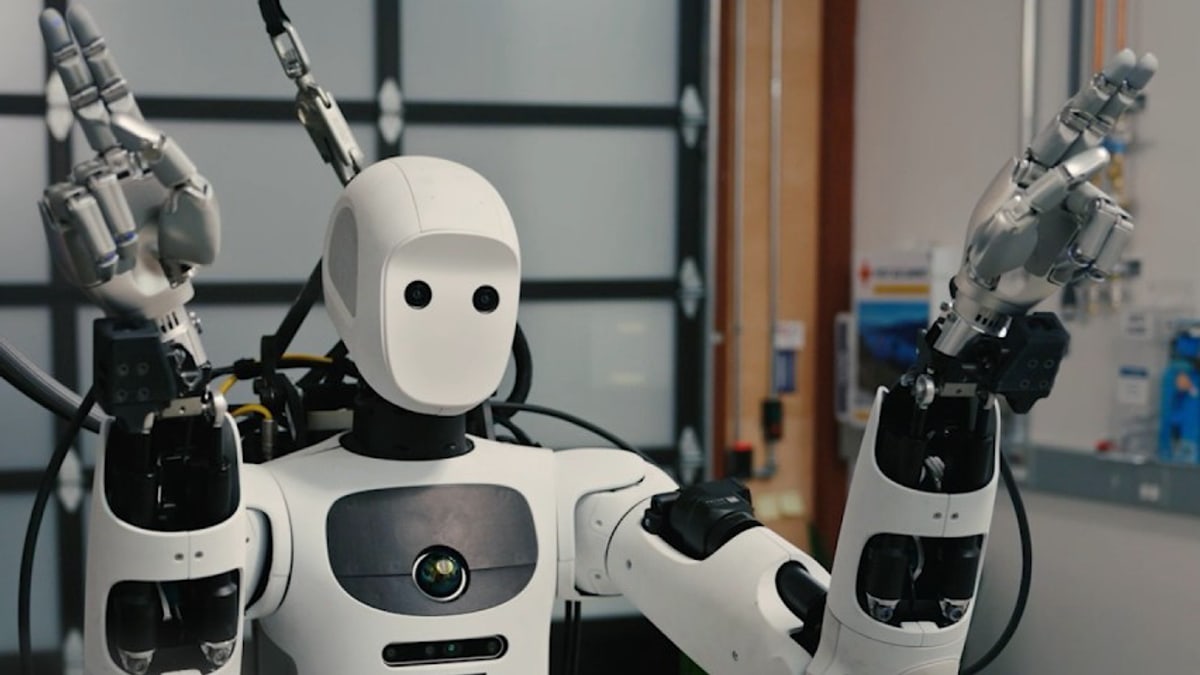
The moves were then carried over to a real machine: Apollo, a humanoid robot made by the company Apptronik and built in a human shape. Google says the robot sank seven throws in a row in a real-world trial. DeepMind's video shows a clip of the person throwing, the board rebuilt in a computer simulation, and the robot tossing beanbags at a real board.
Google says this approach squeezes weeks of that work into a few hours, and says it can turn ordinary videos into an endless training ground for robots. The company showed other examples in a post for developers: Argon steering Boston Dynamics' four-legged Spot robot to step on a pedal bin and drop in soda cans after Argon practiced the moves in a virtual copy of the bin, and building a simulation from a photo of a rough pen-and-paper sketch.
These results come only from Google, which calls the cornhole run an internal test, and Google has not said whether anyone outside the company has tried the method. It was one game on one kind of robot. Google has not said how often the approach works on other skills, how many tries the robot took in all, whether it missed before or after its run of seven, or how much its researchers guided the model along the way.
Gemini 4 Argon itself is available on the paid tier of Google's Gemini API, a connection that lets developers plug a service into their own apps, and to subscribers of Google AI Ultra; Pro and Ultra subscribers can also try it in the Gemini app. Google's post for developers shares sample instructions for this kind of video-to-simulation work, but it has not said whether outside developers can repeat the cornhole result. The company says its goal is robots that can work alongside people on hard problems.