
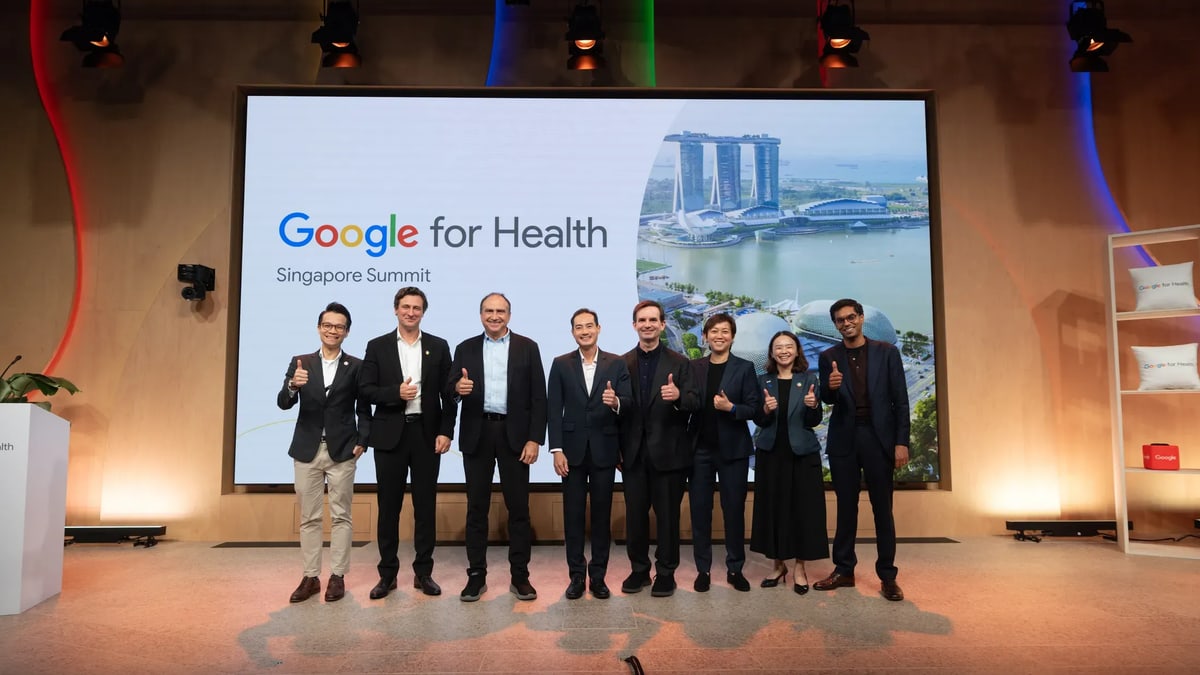
Google is working with two of Singapore's public health groups to test its AI in health care, it announced at a health summit in Singapore on Thursday, Oct. 29. Google DeepMind, its AI lab, is working with the National University Health System to evaluate a tool that answers doctors' questions by pulling together medical guidelines and research. Google Cloud and NHG Health are working on an AI health coach that would send residents personal lifestyle advice and reminders about preventive care. Google describes the partnership as putting its most capable AI to work across Singapore's health system. Tan Kiat How, a senior minister of state for health and for digital development and information who spoke at the summit, described the same projects as explorations that must prove themselves first: "we should scale because the evidence compels us to."
The health coach will live in NHG HealthBot, the health group's chat service, Google says, and draw on a program that uses AI to forecast health risks such as chronic illness across groups of residents. According to a news report, NHG Health says the coach will first reach a select group, which could include up to a few thousand people, from early 2027, in a nine-month trial that will include older residents and people eligible for Healthier SG, the country's preventive health program, who haven't yet gone for its screenings. NHG Health hopes to offer the coach nationwide if the trial works, the report says. Tan said the work will explore whether the coach can give more personal advice on staying healthy while steering medically sensitive or urgent problems to the right care.
The doctors' tool, which DeepMind calls an AI co-clinician, is part of a research project the lab announced in April. In DeepMind's own tests on 98 realistic primary care questions, it made no critical errors in 97. In a separate test of a version that talks with patients over live video, with doctors playing the patients, expert doctors did better than the AI overall, especially at spotting warning signs and guiding key physical exams. DeepMind said in April that its first research partnerships would not use that video version. According to a news report, clinicians in the Singapore study will judge the accuracy, safety and usefulness of its answers against set medical standards. Tan said the work looks toward a future in which AI could eventually help manage patients under a doctor's oversight, starting in simulation before any use with real patients.
Google also announced a Google Research hub in Singapore to work on AI for science, with the National University of Singapore and Nanyang Technological University. It also plans to bring MedGemma, its openly available medical AI models, into clinics and hospitals, so that custom tools can be built while the data stays under Singapore's control. Google.org, the company's charity arm, and Google DeepMind are giving $7 million to the Philanthropy Asia Alliance's Health for Human Potential Coalition, including $1 million for PathGen, a platform meant to help countries spot disease threats faster.
Neither Google nor Singapore has said what the projects cost or who pays for them. Nobody has given a date for when the doctors' tool might be used with real patients, or what specific results it must reach first.