
Giant kelp forms underwater forests that protect coastlines and give sea life a home, and it is disappearing around the world as oceans warm. The Australian island of Tasmania has lost 95% of its giant kelp, Google says. On Nov. 12, Google shared results from the work it began in 2024 with CSIRO, Australia's national science agency, which is using AI and genetics to help bring the forests back. The work is part of Google's Digital Futures Initiative in Australia.
It starts with a reference genome: a detailed map of one kelp's DNA that scientists use as a guide when they read the DNA of others. Before this work, the only one for giant kelp came from a kelp in California, and the team says Australian kelp is too different from it genetically to rely on it. So the scientists built their own. Google says its AI tools fixed errors in the raw DNA readings, and the team published two maps of Australian giant kelp, one from Tasmania and one from Victoria, on June 12 in the journal BMC Genomics. Google Australia paid for the study, and one of the paper's authors, Andrew Carroll, works at Google.
Partners then collected 600 wild kelp along Tasmania's coast. The researchers trained a version of DeepVariant, a Google AI tool that spots the places where one kelp's DNA differs from the map, to read the makeup of each one. The team says the results were alarming: the surviving patches are cut off from each other and have little genetic variety, which leaves them at risk of dying out where they grow.
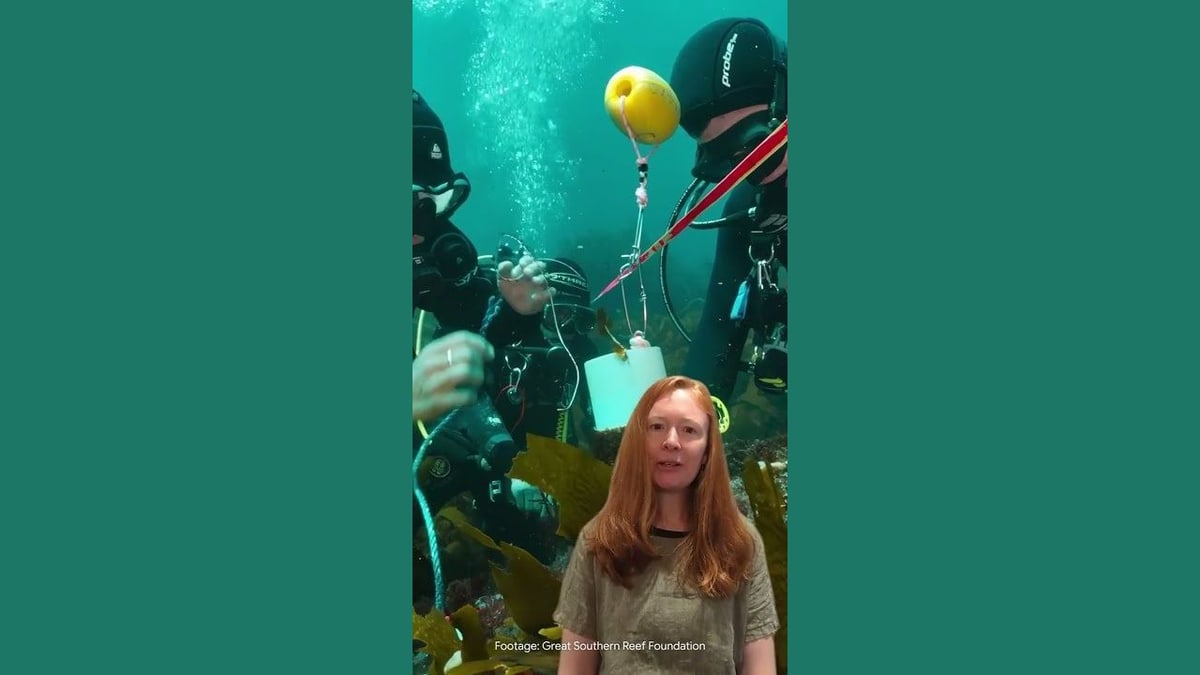
The scientists say they have had to become matchmakers. In the lab, they are crossing different native survivors, choosing kelp their research shows have genetic variety and traits that help them handle heat. In pilot tests, divers will fix the young kelp, less than a centimeter long, to the rocky seafloor, hoping it grows into a forest again. Giant kelp grows best in cool winter water, and the scientists say the summers, which keep getting warmer, will show which young kelp survive.
The team says seeing which kelp survive could bring it closer to pinpointing the traits behind heat tolerance, which it has not yet done. The June paper covers only the two DNA maps; the findings on the wild kelp have not appeared in it, and so far they are Google's and CSIRO's own account. Google says its genetics tools, including DeepVariant, are open source, free for anyone to use, study, change and share, though it has not said whether the version trained on kelp is public. It says the approach can help others trying to save endangered species.
Correction (Nov. 13): an earlier version misspelled the name of Google's Digital Futures Initiative.