
Google on Friday, Nov. 13, began rolling out a way for people in the U.S. to connect Google Wallet, which holds their payment cards and receipts, to Gemini, Google's AI assistant. Google says the connection is rolling out to all Gemini app users in the U.S., on the web and in the Android and iPhone apps, though its help page says the wider feature it belongs to is arriving gradually. People who turn it on get answers based on their own spending.
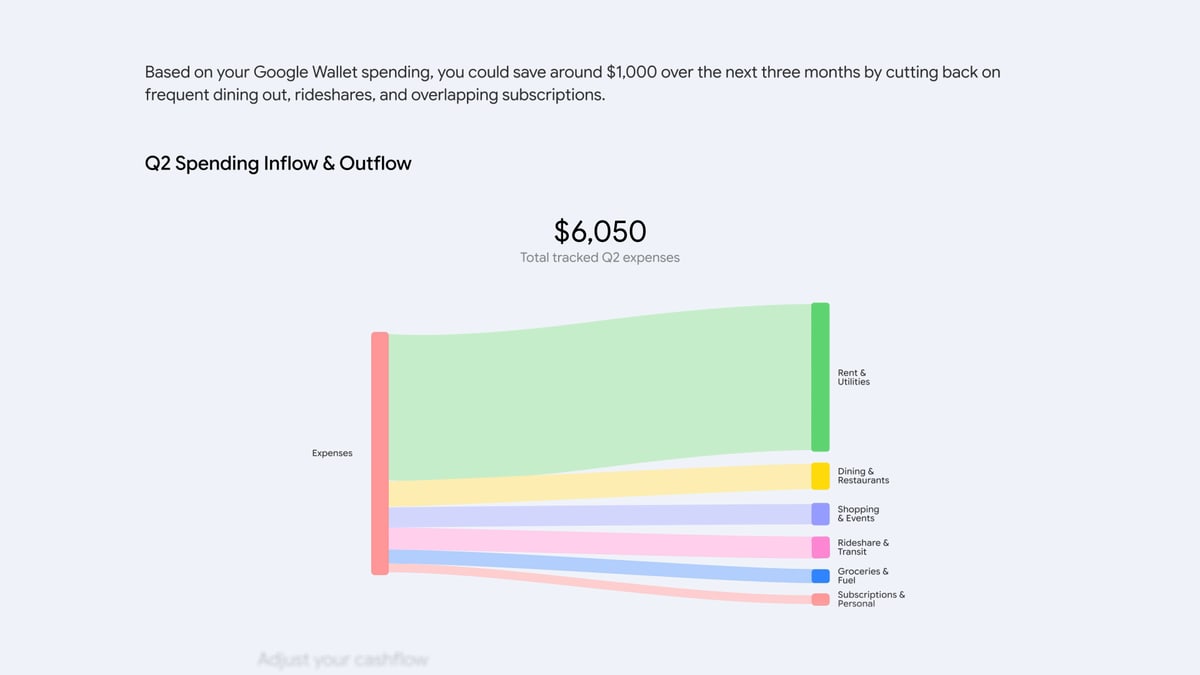
Wallet joins apps such as Gmail, Photos, YouTube and Search in Personal Intelligence, the Gemini setting that lets the assistant draw on a person's other Google apps. People can also link their credit card and bank accounts to Wallet through Plaid, an outside service, for more detailed answers. In Google's examples, a user types @Google Wallet in the chat to bring in their Wallet data and asks Gemini to review last quarter's spending to save $1,000 over three months. Gemini then draws charts of money coming in and going out. Asked which subscriptions are still being paid, Gemini finds repeat charges across linked accounts and flags price increases, Google says.
Google says Gemini can only read this financial information and cannot move, manage or invest money. Connecting is a choice, and people can turn it off at any time. To use it, people must be 18 or older and signed in with a personal Google account, not a work, school or supervised one. They must also keep Gemini's Keep Activity setting on, which lets Google keep their Gemini activity, including data from connected apps, and use it to improve its services and train its AI. Google's help page tells people not to rely on Gemini's answers for financial advice and to ask a professional.
The help pages also spell out what Google does with the data. Google says it does not train its AI directly on Wallet and payment data, but it does train on summaries, excerpts and conclusions drawn from transactions that Gemini uses to answer. Google says it takes steps to reduce personal information in that data before training. It also warns that the shared data may touch sensitive topics such as health, and that Gemini will see new data added to connected apps later.
Human reviewers, including outside contractors, read a sample of chats and summaries drawn from Wallet data. Google says it takes steps first, such as separating these from the person's account and reducing personal details, except when it is dealing with abuse or harm. It also asks people not to connect apps holding confidential information they would not want a reviewer to see. Disconnecting Wallet later does not delete what is already saved in a person's Gemini activity, which Google can still use to train its AI unless the person deletes it. Deleting does not stop that use for anything reviewers have already seen.
OpenAI's ChatGPT has offered a similar feature, also linked through Plaid, to its top-tier Pro subscribers in the U.S. since May and to Plus subscribers since June, and on Oct. 2 it began opening it to U.S. users on its free and low-cost plans.
Google's help page lists the Wallet connection as U.S. only. Personal Intelligence is not yet offered in the European Economic Area, Britain, Switzerland or Nigeria, and Google has not said when the Wallet connection will reach other countries.