
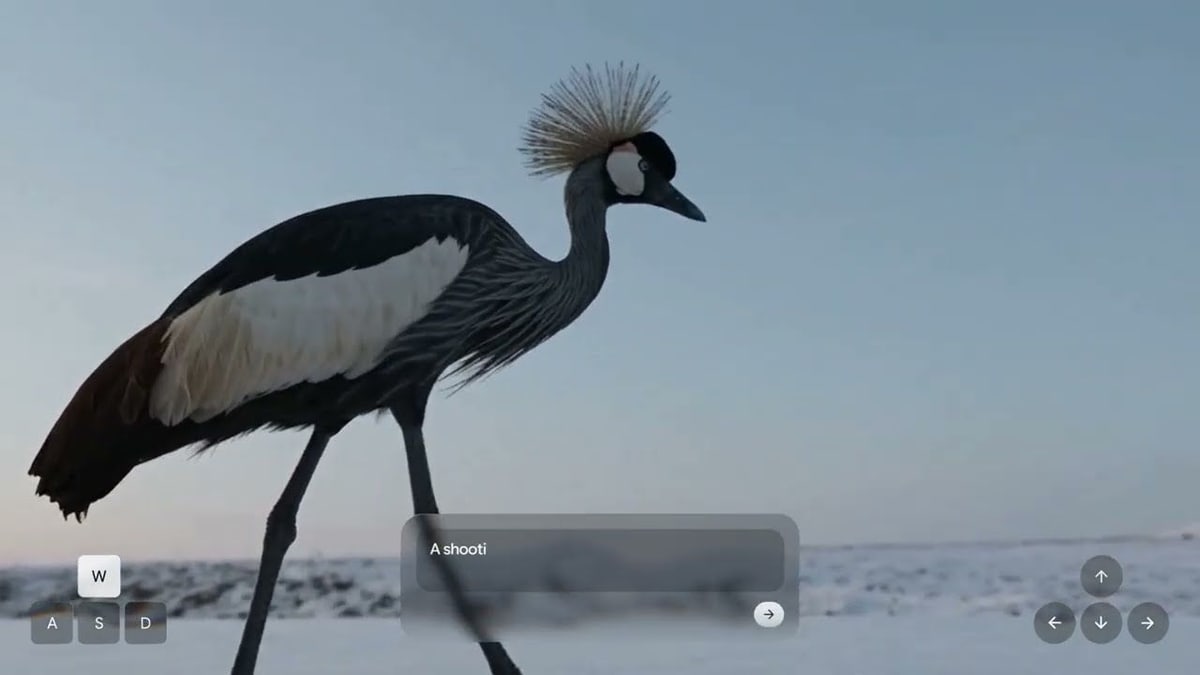
On Oct. 27, Google DeepMind announced Genie 4, the newest version of its world model. That is an AI that learns how the world behaves so it can predict what happens next. You describe a scene in words and Genie 4 builds it as a world you can move through in real time, steering with ordinary keyboard keys while the scene keeps going. Set something in motion and, DeepMind says, Genie 4 works out what happens next: how the world responds, how it sounds, and how the people in it move, react and speak.
The newest addition is sound. Genie 4 is the first of DeepMind's live world models to make its own audio, so each world carries the sounds of its setting, from wind in the trees to waves crashing on a beach. Its characters can also talk, and what they say changes as you, or events in the world, change things. While a scene runs you can type a change, such as new weather, a moved camera or a new person or object, and Google's Gemini AI fits it into what is already there. DeepMind also says the people in its worlds move naturally and react to what is around them, and that things fly and collide much as they do in real life.
DeepMind sees uses beyond play. It says worlds like these could become safe practice grounds, with no limit on new settings, for robots and other AI systems before they face the real world. In one demo, another Google AI, Gemini 4 Argon, splits a game of checkers into steps, and Genie 4 plays out a simulated version of Apptronik's Apollo, a human-shaped robot, making each move. Testers in film and other creative work, journalism, education, games and engineering are trying it too: filmmakers can step into a scene and shoot several takes, changing the camera, lighting and lines as they go, and photojournalists are testing how a single old photograph can become a moving scene of that place.
DeepMind calls Genie 4 an early, experimental model. It says its worlds hold together over short sessions, but details and objects can drift or change as a session runs longer, after several big changes, or as you move around. Getting objects to touch and push each other realistically, keeping sound accurate, drawing readable text and keeping a world steady for a long time are all still being worked on. DeepMind says every video and sound clip Genie 4 makes will carry SynthID, Google's AI watermark, a hidden signal woven in as it is made that software can spot but people cannot see or hear. A file without the mark is not proof it is real.
For now, only trusted testers can use it. DeepMind says Genie 4 is coming soon to subscribers of Google AI Ultra, Google's paid AI plan, in Google's Project Genie, and to some developers building with Google's Gemini tools, and it has opened a waitlist. DeepMind has not said when.