
Google is giving its Gemini AI a bigger role in catching text scams on Android phones. On Oct. 14 it announced an opt-in setting for Google Messages, Google's texting app for Android phones, called enhanced protection mode, which Google says will roll out in the coming weeks. When you are chatting with someone who is not in your contacts, the setting lets Google's most capable Gemini models, which run in Google's data centers rather than on the phone, read the conversation and judge whether the sender is trying to scam you.
Google says the scam detection already in its Phone and Messages apps flags more than 5 million suspected scam calls and texts a month. In Messages, that detection has run on the phone itself. Google says the more capable cloud models can read the wider context of a conversation and spot a scammer's intent sooner, including in scams that hide their real aim behind a slow-building chat. Sending private chats off the phone raises an obvious privacy question. Google says the analysis happens in Private AI Compute, a system where the data is encrypted and processed in a sealed space that it says no one else can reach, Google included. A message you choose to report as spam, though, does go to Google, contents included. Google lists the Pixel 6 and later, Samsung's Galaxy S24 series and later, its foldables from the Z Flip6 and Z Fold6 on, and other Android phones that can run its on-device AI as the phones that get this check.
The same setting adds two link checks. On some newer phones, including the Pixel 10 and later, Samsung's Galaxy S26 series and its newest foldables, Gemini Nano, a small version of Gemini that runs on the phone, will check whether an unfamiliar link looks trustworthy before you tap it, since scammers often use brand-new websites that are not yet on lists of known bad sites. And links from numbers not saved in your contacts get a redesigned warning that gives you a moment to pause before opening them, a warning Google says was until now only available in some countries or on phones with Advanced Protection, Android's strictest security setting, turned on.
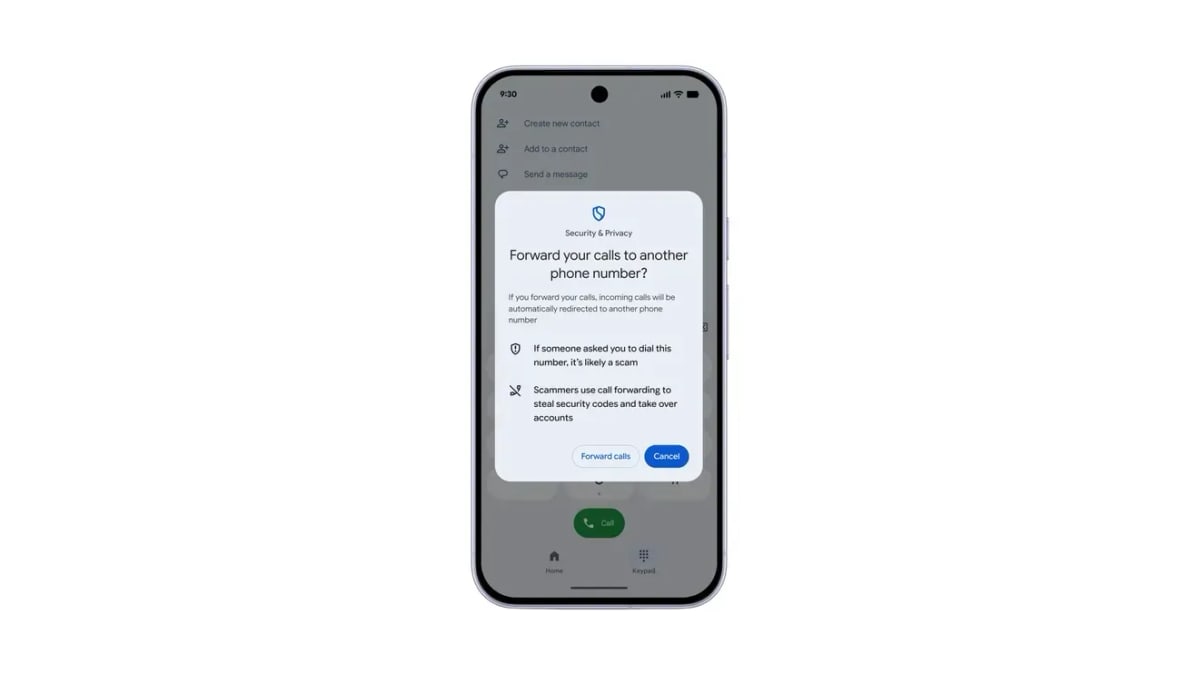
Google also announced protections that don't need the setting. Starting in early December on Pixel and some other phones, Google says, Android will stop apps from quietly turning on call forwarding. Scammers use this trick to send your incoming calls to their own number, so they can steal the one-time passcodes sent to you and take over your accounts. Android will also warn you if someone talks you into typing a forwarding code into your phone's keypad yourself. This month, Google is starting to roll out a change for phones on Android 15 and later that blanks out login and payment fields during screen sharing in Chrome and in web pages shown inside other apps. And Google says scam alerts for chat app notifications, until now on Pixel phones, will reach hundreds of millions more people on phones from other makers later this year, with availability varying by maker.
Google has not said which countries or languages will get the new setting first, how often it will mistake an ordinary chat for a scam, or what happens automatically to a conversation the system flags.