
Four AI makers have put their names to a charter on making AI safer for children. The Élysée, the French presidency, published it on Nov. 10, the day of a children's summit at the Paris Peace Forum. It names Anthropic, the maker of Claude; Black Forest Labs; Microsoft; and OpenAI, the maker of ChatGPT, as its backers. The charter is the companies' contribution to wider talks with governments, researchers and civil society. Those talks are brought together by a coalition on children's rights and protection in the age of AI, led by France, Spain and Kenya with ten United Nations bodies. Macron launched the coalition's roadmap at the United Nations in September, and the charter follows it.
The charter starts from a gap. It says AI that writes, talks and makes images is moving into children's schooling, play, searches and emotional support, but studies that follow children over years are not yet far enough along. Yet the tools are already in wide use, and companies and governments are already making decisions about them.
The companies make promises for any AI system they build or run that young people can reach. They will test it for risks to children's health, safety, rights and mental and emotional development, before release where that is relevant and at regular intervals afterward. They will watch for serious incidents involving children once it is out, and respond to them. The charter's principles also call for parental controls and for age checks that don't rely only on users saying how old they are. Steps against heavy use may include tools to curb excessive or compulsive use, and the principles say AI must never be used to make or exploit images of child sexual abuse or intimate images shared without consent.
Much of the charter is about research. The coalition will set up a research network, guided by an independent scientific committee. The network will track how children use AI and how the systems behave, build shared tools for measuring AI's effects on children, and run experiments and long-term studies. Company money goes to the shared measuring tools, which company researchers help build alongside outside ones. The tracking work, the long-term studies, the committee's pay and the work on testing standards are to be paid for only by public money and independent philanthropy. Results are to be published, including those that find no effect or are inconclusive, with protections for personal and confidential information. Companies may check the methods used to test their own systems, but they get no power to delay or block what is published.
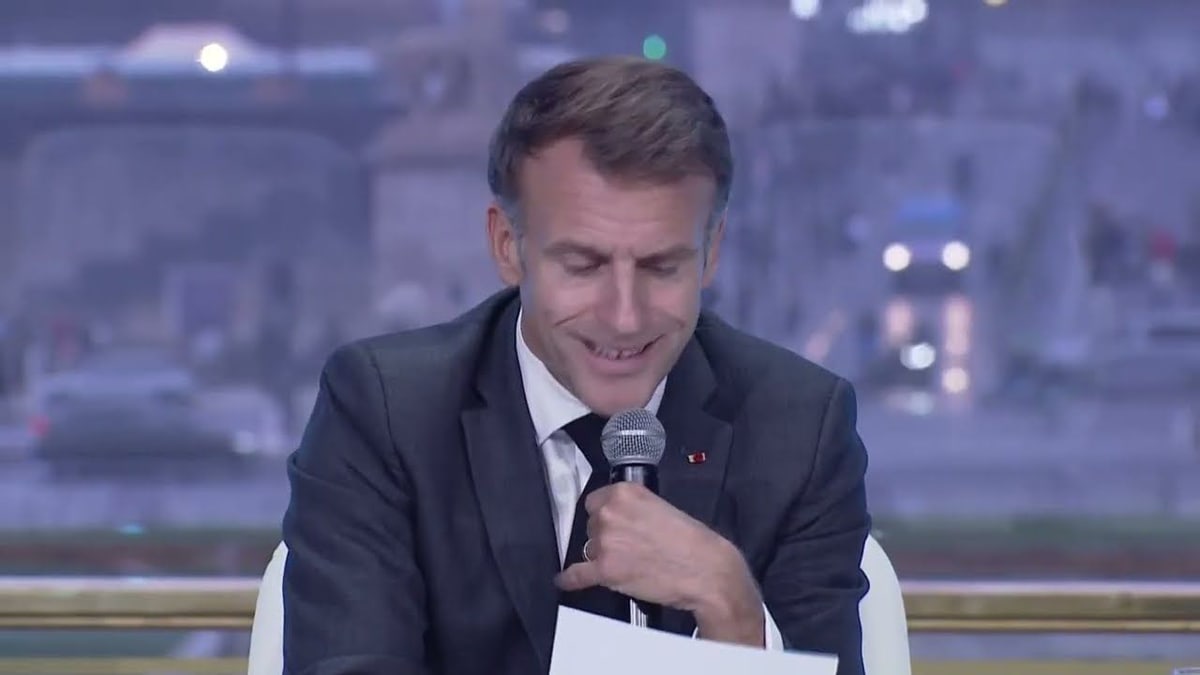
The Paris Peace Forum, which hosted the summit, said AI developers including OpenAI and Anthropic, and AI safety groups such as Common Sense Media, would commit at the summit to support research and tools on AI and child development, with €8 million announced in all. Macron said in the forum's statement that the commitment made with tech companies and AI labs is that no AI should be put in children's hands without first being tested, evaluated and authorized, and he called that a major advance. At the summit he said France would now push for every AI product to be checked and certified in advance, with a ruling on whether it is allowed for children, much as countries test toys before children get them.
The charter itself goes less far than Macron's words. It sets up no body to approve AI for children, names no penalty for a company that falls short, and does not say who decides when testing before release is relevant. Instead, backers commit to report on their progress, and the research committee's chairs will publish a yearly review. It says the purpose, resources and timetable of each contribution will be made public, but the charter never mentions the €8 million, and the forum's statement does not say who gives how much. Macron's office said the charter is meant to inform debates on national and European laws, according to a news report. Google and Meta are not among the charter's backers.