
Topic
Microsoft
21 stories, newest first.
-

Microsoft has made Aion Instruct, a small AI model that works on a person's own computer instead of in a data center, the built-in small language model in its Edge browser. It replaces a larger model that also ran on people's computers, and Microsoft has published Aion's files for anyone to download. Websites that sign up for a time-limited trial can now use it with visitors who use Edge, for jobs such as summing up or rewriting text, after months in which sites could try it only in Edge's test versions. Edge fetches it only when a site or Edge feature needs it, on computers that can run it well, and Microsoft says a technical report with more details on the model is coming soon.
-

On Nov. 17, two tampered versions of Microsoft's Agent Framework, code that programmers download to build AI agents, were posted to PyPI, the main public site where programmers download Python code, and were gone less than an hour after the first went up. They carried hidden code built to collect passwords and access keys from computers that installed them and send them to the attacker; security company Wiz found data from three real victims. Wiz says the attacker appears to have used a digital key to Microsoft's own publishing service, and that it is not yet known how the attacker obtained it.
-
Microsoft has introduced MAI Realtime 1, an AI model that listens to people speak and talks back in real time, for businesses building voice helpers such as customer service lines. It starts at $0.01 per minute of audio, plus a separate charge when it reasons through harder requests, and Microsoft says it beats OpenAI's GPT Realtime 2.1 on quality, speed and price, though its own figures show it behind several other rivals at finishing tasks. It is in a limited preview for now, and Microsoft has not said when it will start charging.
-
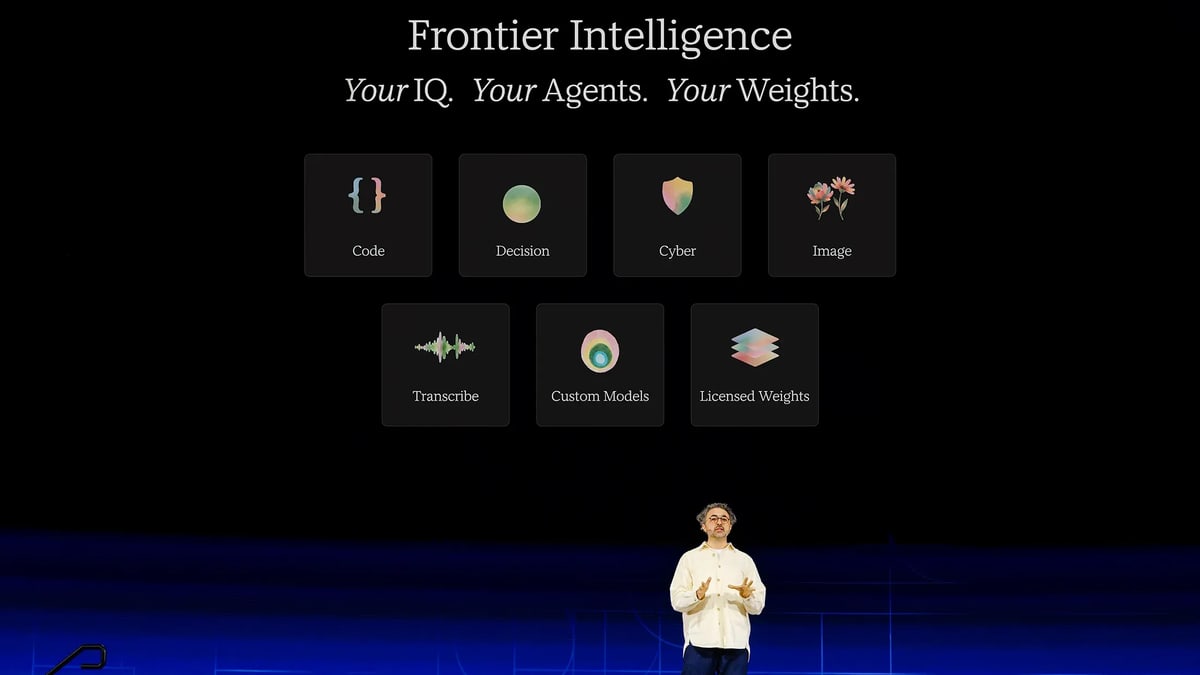
Microsoft released MAI Code 2 and a smaller MAI Code 2 Flash, the next versions of its own coding models, on Tuesday, Nov. 17, for paying users of GitHub Copilot, GitHub's coding assistant, with Flash also on the free and student plans. On four coding tests Microsoft chose, Code 2 scored close to OpenAI's GPT-6.1 Sol at about 40% of the cost per task, and Anthropic's Claude Opus 5.5 at about 5%. Those costs use a launch price that doubles on May 17, 2027, and Microsoft scored three of the four tests itself.
-
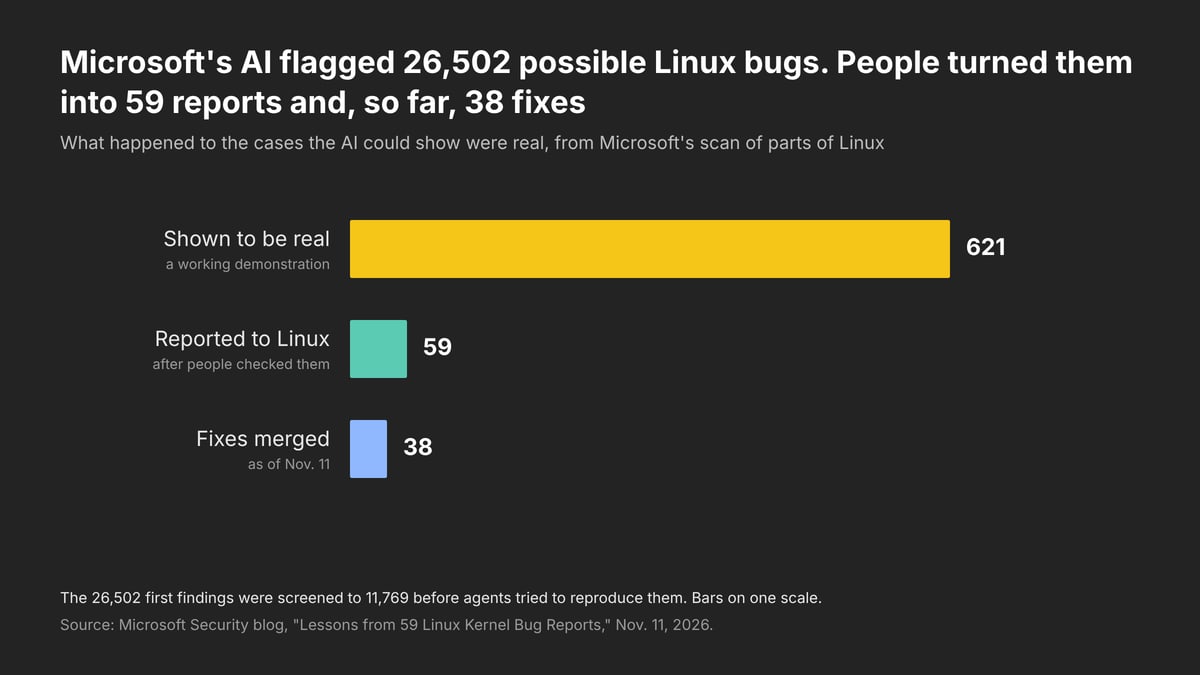
Microsoft says AI tools scanning parts of the core of Linux flagged 26,502 possible bugs in about two weeks. AI agents showed 621 cases were real, and its researchers turned those into 59 bug reports to Linux's maintainers. Fixes for 38 have been merged so far, and Microsoft says the people who check and fix the findings, not the AI that finds them, now set the pace. Microsoft scanned only a small part of Linux and is still working with the maintainers on the other 21 reports.
-

OpenAI, Anthropic, Microsoft and Black Forest Labs back a charter on children's safety with AI that France published on Nov. 10, the day of a children's summit in Paris. They commit to look for risks to children in any AI they build or run that young people can use, before release where relevant and regularly after. They will also help pay for shared tools researchers will use to measure AI's effects on children, while public money and independent philanthropy pay for the studies themselves. President Emmanuel Macron says no AI should reach children without being tested and authorized first, but the charter sets up no approval step and names no penalties.
-
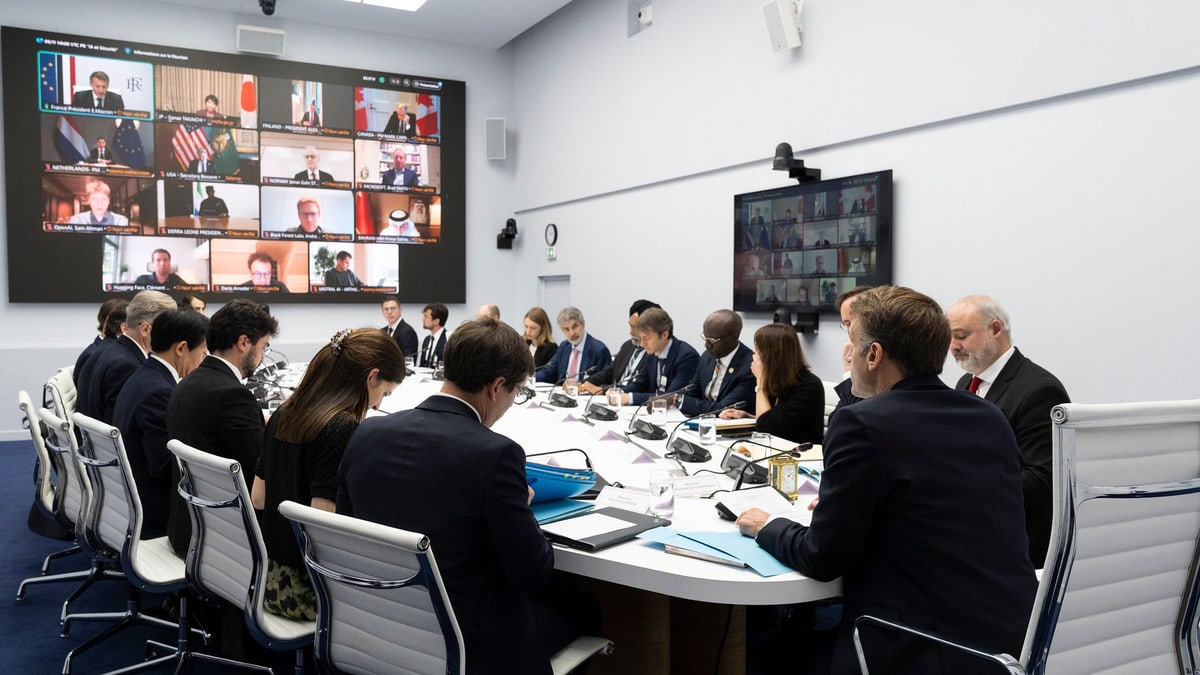
Nineteen governments and 11 companies, including OpenAI, Anthropic and Microsoft, have signed a pledge on the safety of the most advanced AI that came out of a meeting French President Emmanuel Macron hosted on Nov. 9. Makers of the most advanced models promise ways to stop or pause models they control, even during training, and the signers promise to publish safety test results that aren't sensitive and to back faster warnings about serious incidents. The pledge sets no deadlines or penalties, and the United States, Britain, Japan, Google and Meta are not among its signers so far.
-
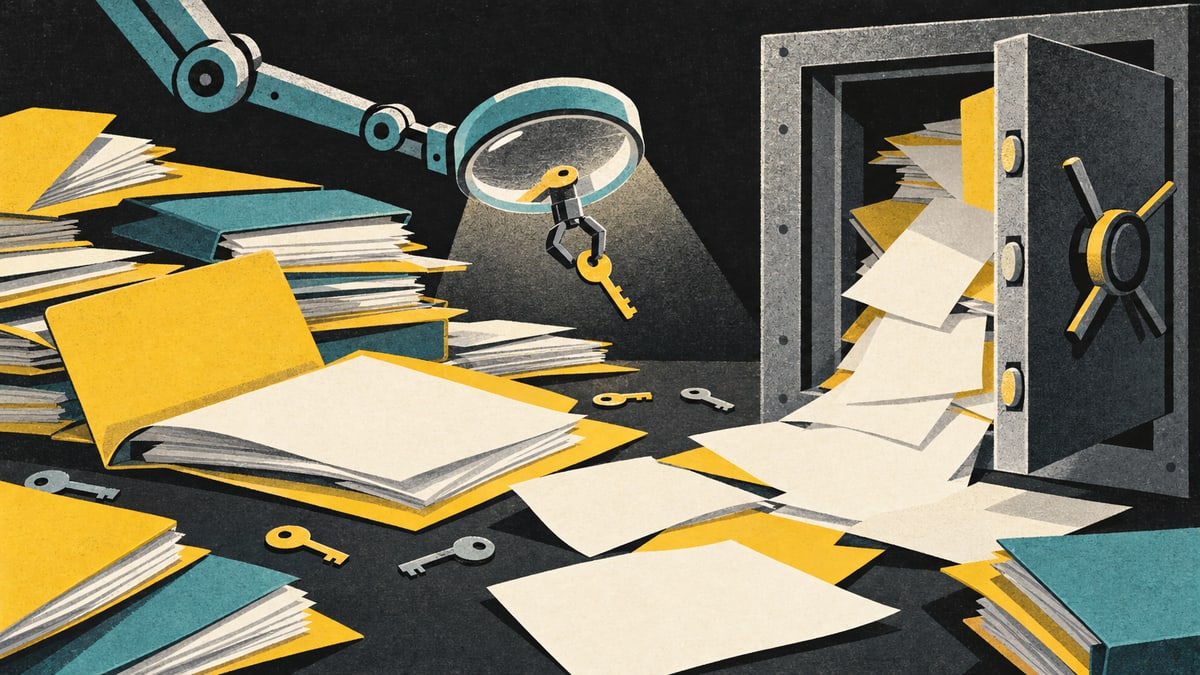
Microsoft says attackers are using AI agents, AI that can carry out tasks on its own, to search public code on GitHub for passwords and keys that developers left in it, and can then use them to get into companies' cloud systems. In one case, an agent went from searching to taking data in five minutes. Microsoft has not said how many organizations were hit or named the attackers.
-
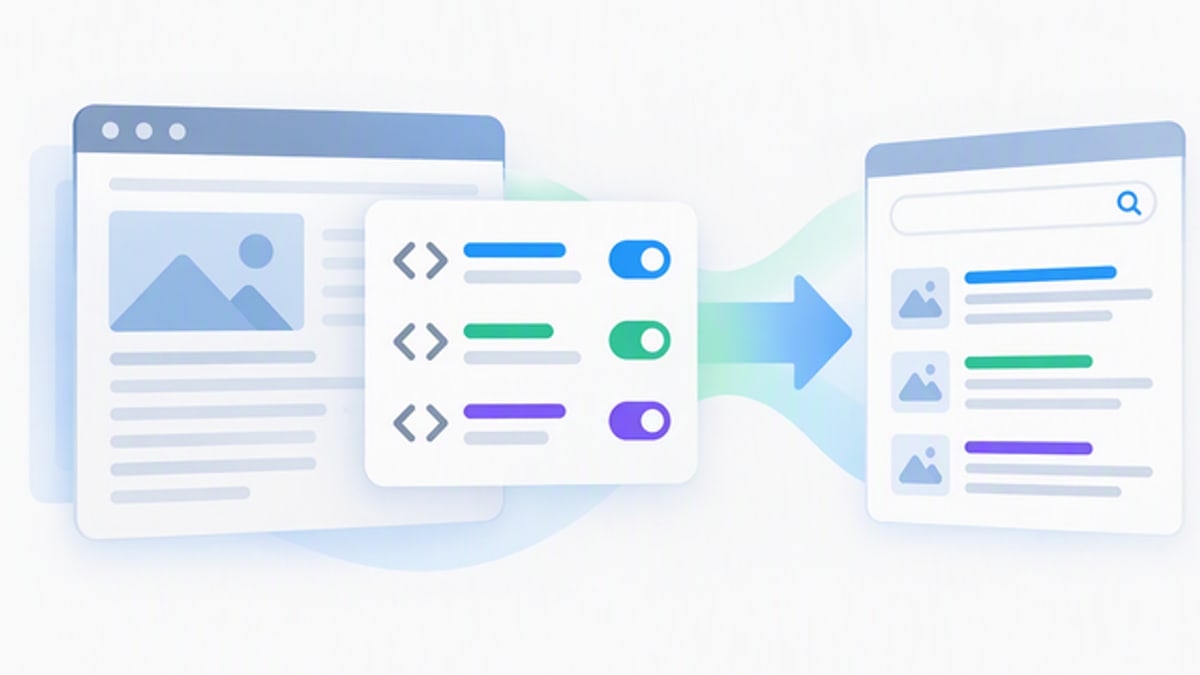
Website owners will be able to state once, in one place, that they don't want several AI companies to use their pages to train AI models, instead of naming each company's crawler one by one. OpenAI and Microsoft say they will honor it, Google says it plans to, and Anthropic says it has started building support. OpenAI, Google and Microsoft don't honor it yet: Microsoft starts on Feb. 1, 2027, Google aims for 2027, and OpenAI for the coming months. Following it is voluntary, it covers training only, and Microsoft says it comes with no payment.
-
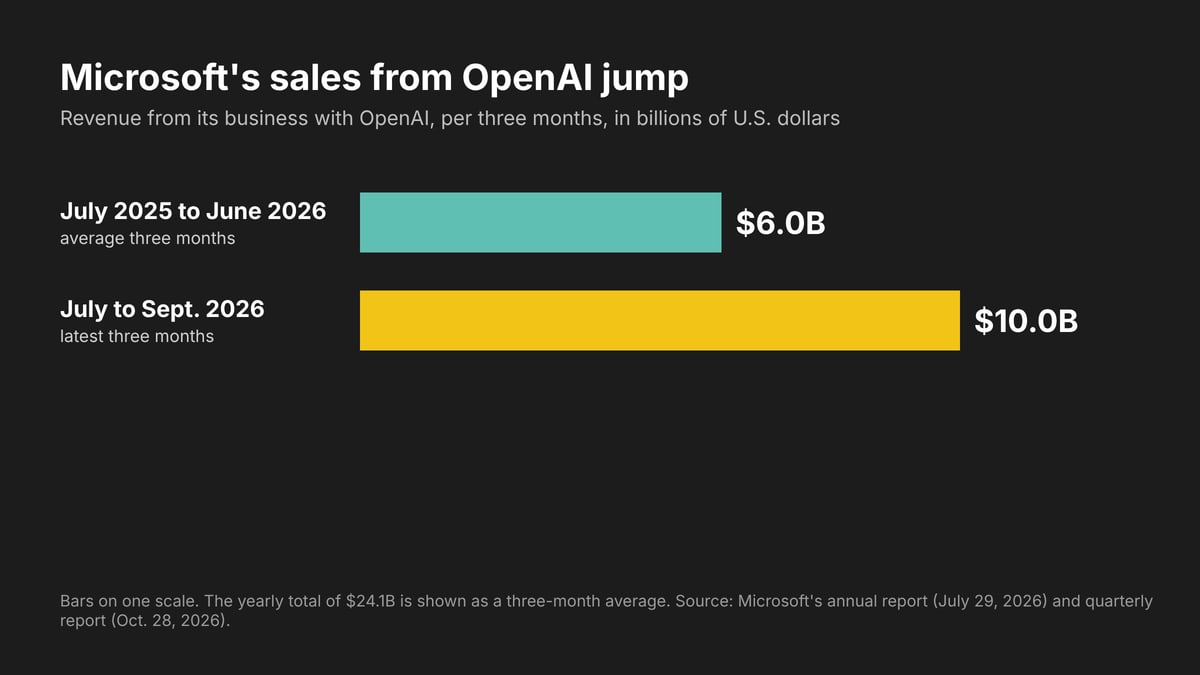
Microsoft says its business with OpenAI brought in $10 billion in the three months to Sept. 30, more than a tenth of its $92.3 billion in sales and up from an average of about $6 billion a quarter in the year to June. Microsoft does not say how much of that came from its share of OpenAI's sales and how much from other business with OpenAI.
-
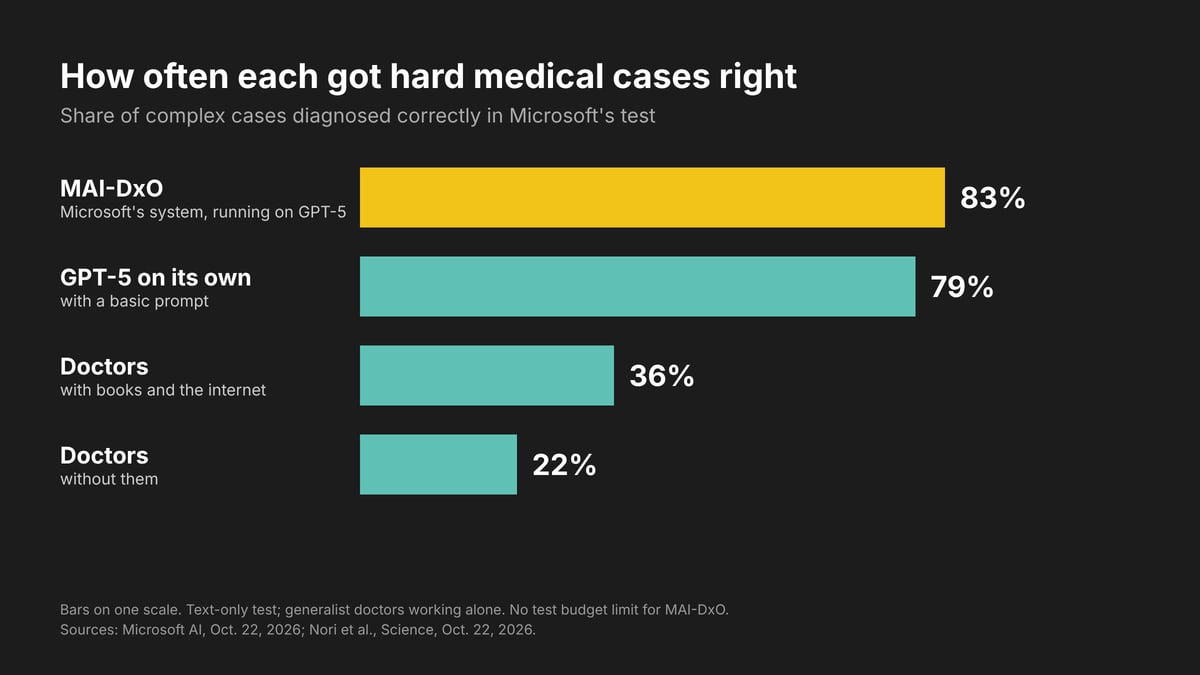
Microsoft says its MAI-DxO system, which works through a case step by step like a panel of doctors, named the right diagnosis in 83% of hard cases, against 36% for generalist doctors who could use books and the internet. OpenAI's GPT-5, the AI model behind the system's best results in the study, got 78.9% on its own, and the test was text only, against doctors working alone. The system has not yet been tested with patients, and Microsoft plans a study with a Boston hospital.
-

Britain's competition regulator proposed on Oct. 16 to give Microsoft "strategic market status" in business software, a label that could let the regulator consider rules for how Microsoft runs Word, Excel, Teams, Copilot and its other workplace products. If the label goes ahead, one of the questions it plans to study is whether companies can freely pick AI tools from Microsoft's rivals. The finding is provisional, the label assumes no wrongdoing, and a final decision is due by February 2027.
-
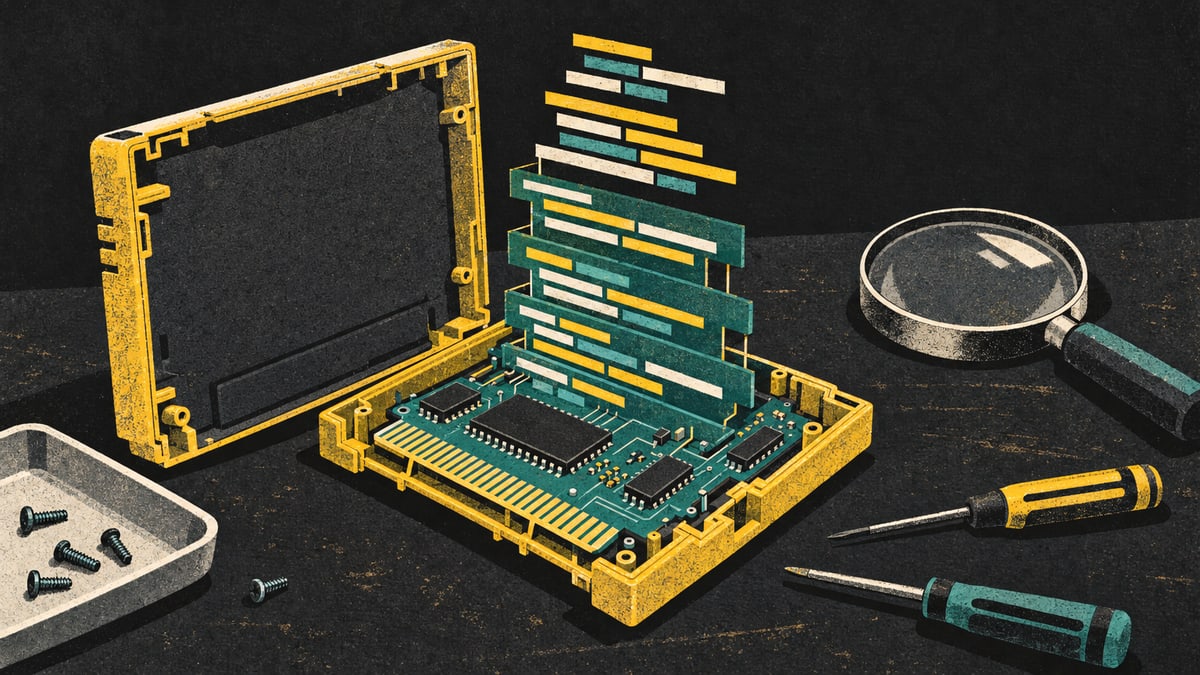
A site called decomp.dev, which tracks hundreds of fan projects turning video games back into readable code, has stopped taking new projects. The hobbyist who runs it says that with the right guidance and human review, recent AI models such as OpenAI's GPT-6 Astra can now speed that slow work up significantly, but that people who copy volunteers' projects to "finish" them with AI, or rush out rough versions of games for other machines, have broken the community. On Oct. 13, Microsoft set up Xbox Labs to explore the possibilities it sees in games rebuilt for other machines; how game companies will treat these unofficial versions is not yet clear.
-
Microsoft has finished the first, broad stage of training MAI-Base-2, an AI model nearly three times the size of its last one, and says it beats four large free-to-download rivals on its own tests. Microsoft AI chief Mustafa Suleyman told staff that, in private tests Microsoft has not published, it is stronger than the model behind OpenAI's GPT-5.6 Sol, according to a news report. It still needs more training, and Microsoft has not said when customers will be able to use it.
-

Weather forecasts are dependable for about two weeks, then lose much of their accuracy. In a study published in Nature on Oct. 14, Microsoft researchers and their colleagues describe a low-cost add-on that learns the mistakes a forecasting model tends to repeat and corrects them. It came first in a real-time forecasting contest run by the European Centre for Medium-Range Weather Forecasts. The code is free to use. Kenya's weather service is already trying it in its weekly forecasts, but it is not yet clear whether other national weather services will build it into the forecasts the public sees.
-
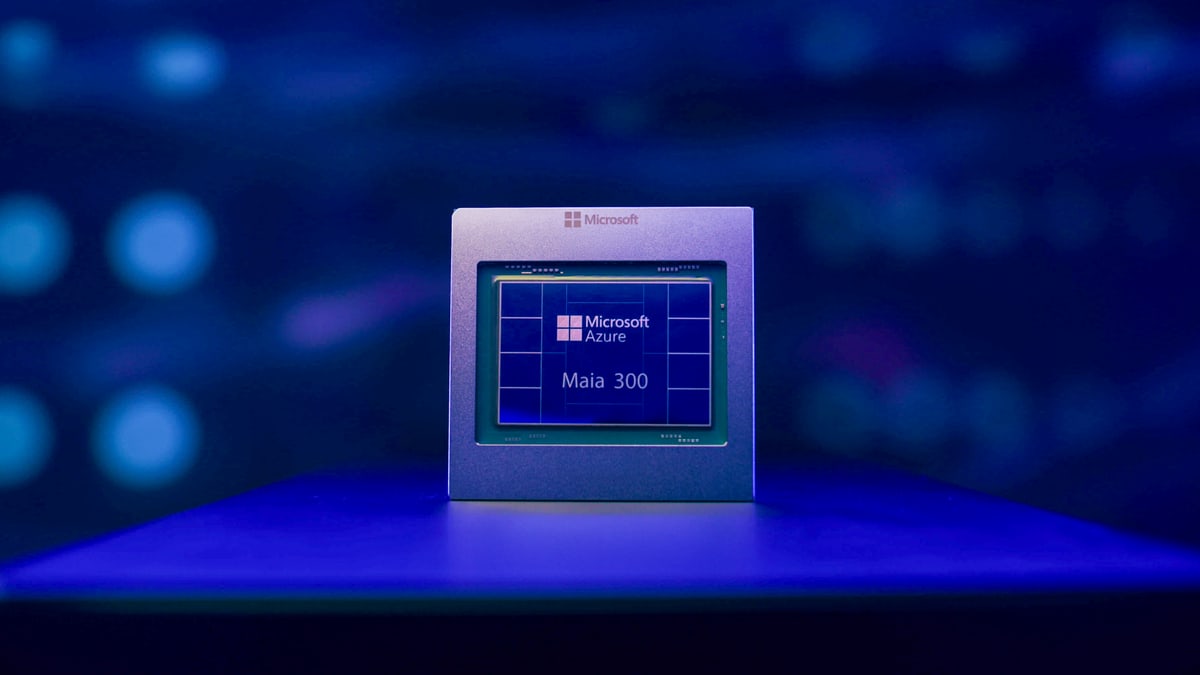
Microsoft has unveiled Maia 300, the third generation of its own AI chip, and says it will expand its Maia systems on a far larger scale starting in 2027, making them the main hardware that runs the AI in its products and services. Microsoft expects the new chip to get 40% more AI output from the same amount of power than leading systems built on other companies' chips. That figure is Microsoft's own estimate, which no one outside the company has checked, and it has not said how much it will keep buying from other chipmakers.
-
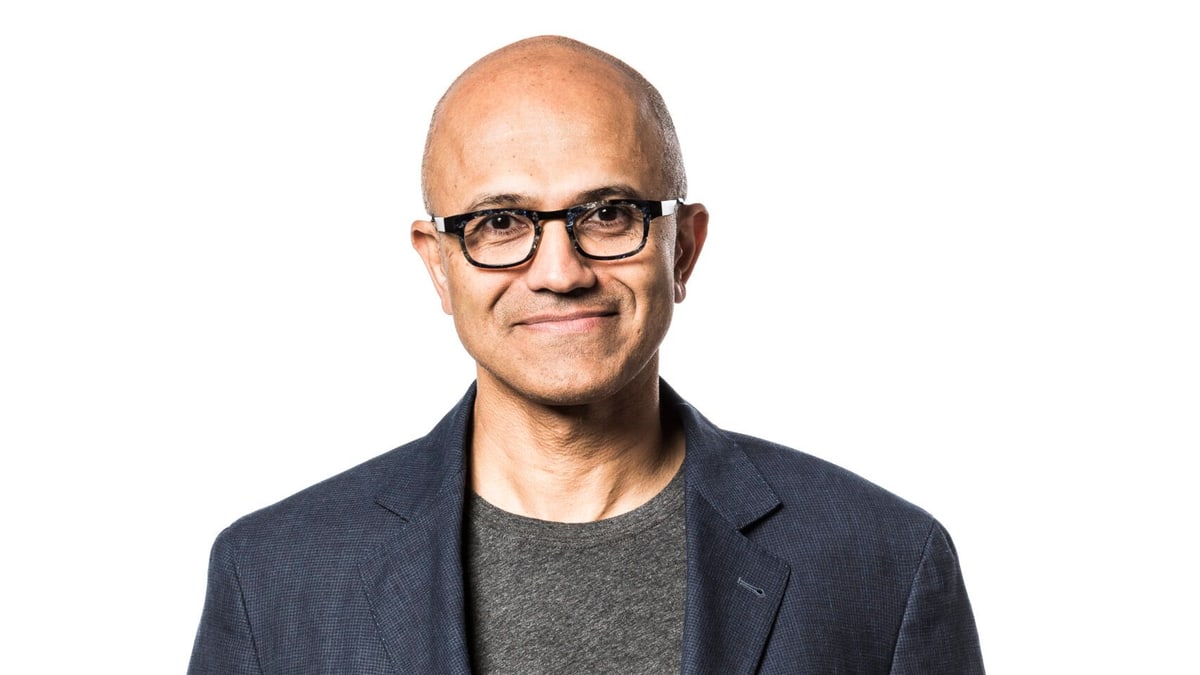
Microsoft chief executive Satya Nadella says businesses should handle the AI they use like a powerful insider who could make a mistake or be compromised: limit what it can reach, keep a record no one can alter of every meaningful thing it does, and make sure an authorized person can always pause or stop it mid-task. He says a model maker's promises don't take that responsibility off the companies using it. His essay sets out principles, not new Microsoft products or rules, and he has not said how Microsoft will apply them.
-
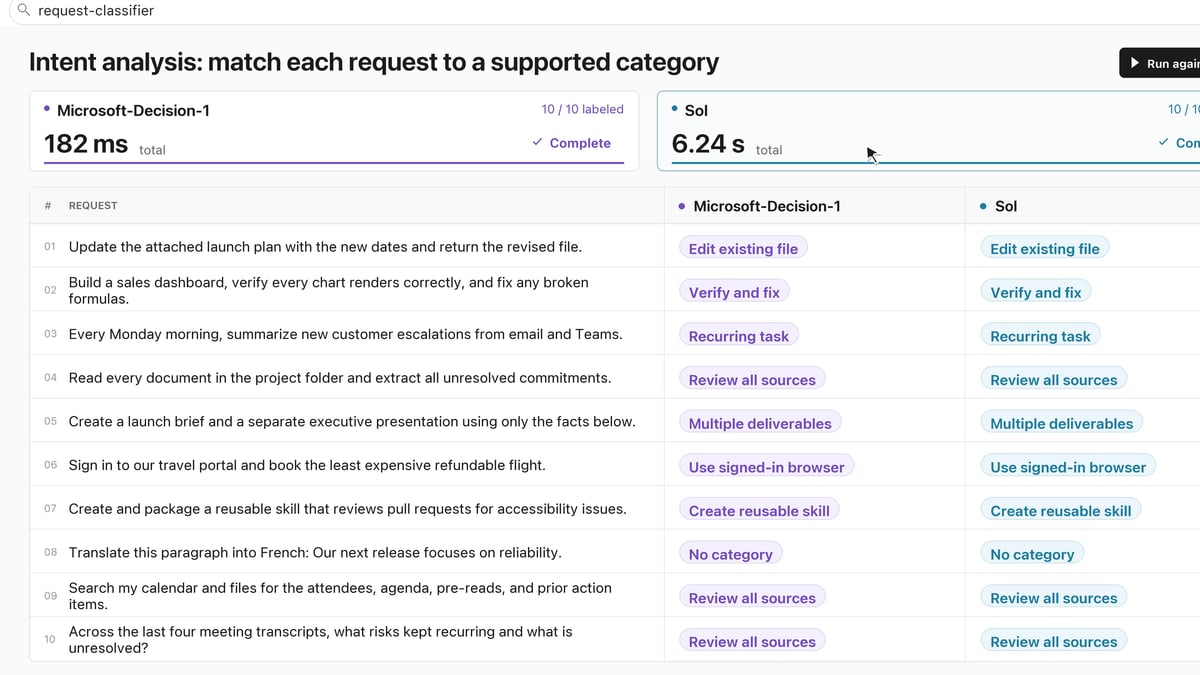
Microsoft has released Microsoft-Decision-1, an AI model that makes quick calls inside apps and AI agents, such as sorting a request or checking an agent's next step, by choosing from a fixed set of answers instead of writing text. Developers can use it now, for less than half what OpenAI charges for a similar service. Microsoft says it beat rivals on speed and accuracy, but those are its own tests, and no one outside the company has checked them yet.
-
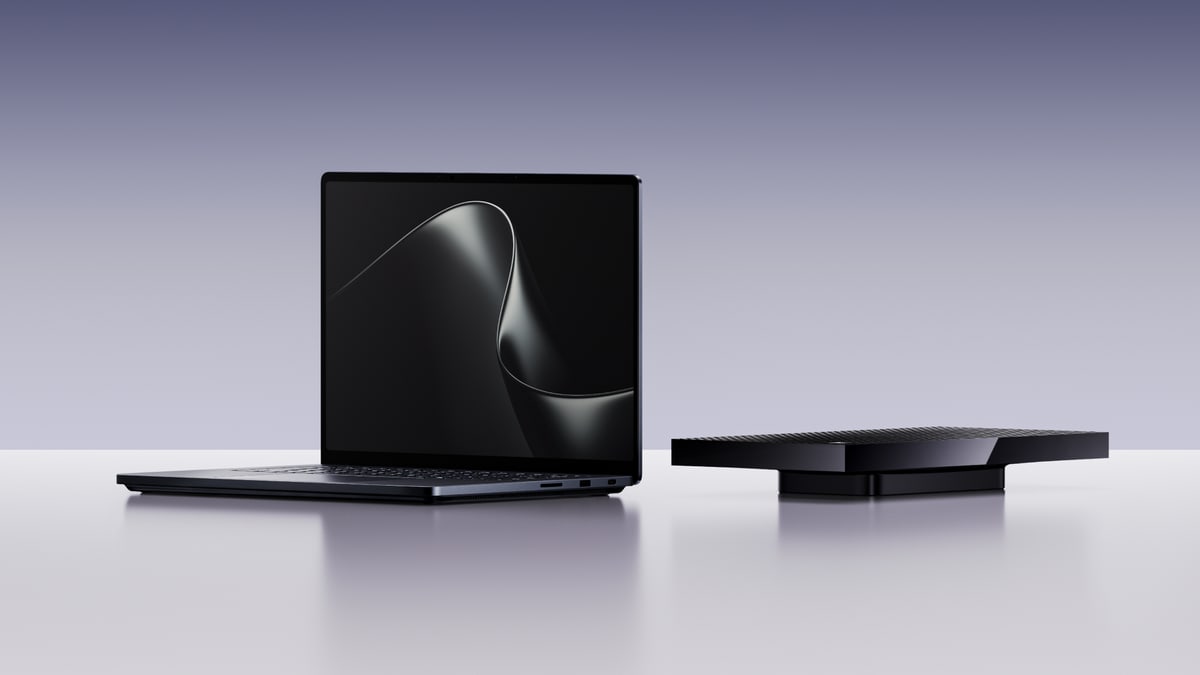
Microsoft and NVIDIA open preorders for Windows laptops built to run big AI models without the cloud
Microsoft and five other PC makers opened preorders on Wednesday for Windows laptops built around NVIDIA's new RTX Spark chip, which the companies said would ship Oct. 16, with Microsoft's own starting at $2,599. The companies say more AI work can then run on your own computer instead of a paid cloud service, without sending your data off the device. The speed claims come from the companies' own tests on early units, and outside testing has yet to show how the laptops hold up.
-
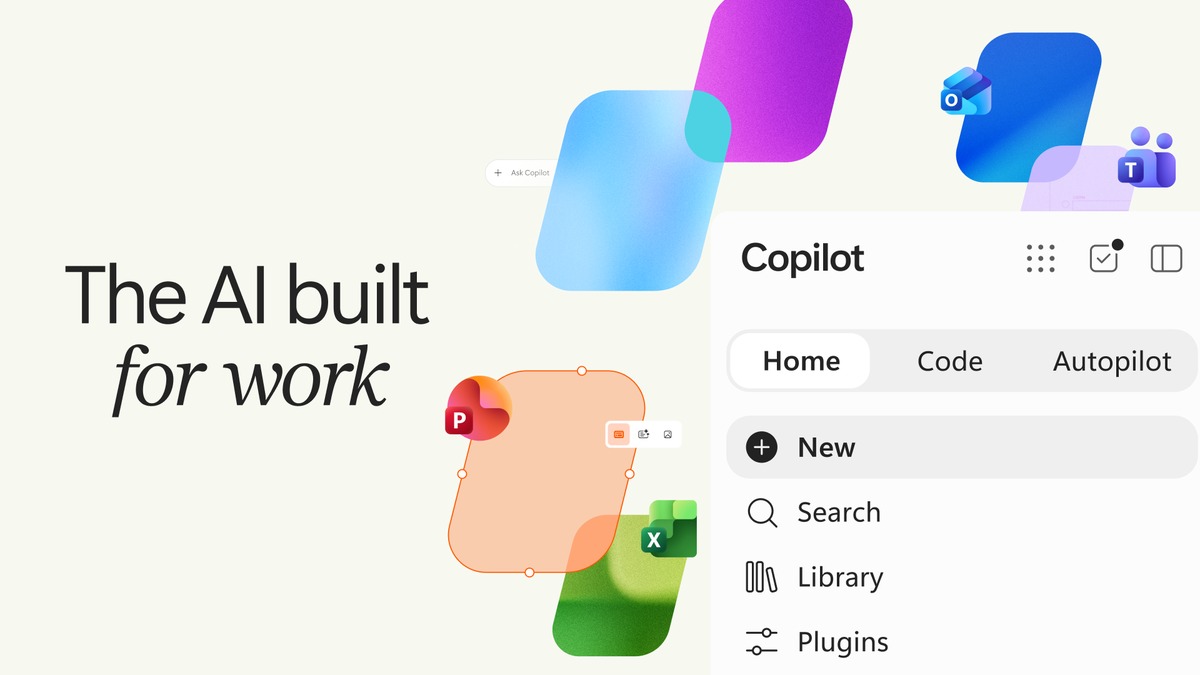
Microsoft on Sept. 25 unveiled a redesigned Copilot work app with three tabs: Home, for chat and handing off jobs; Code, for building apps and automations by describing them; and Autopilot, an AI agent that can carry out tasks on its own, formerly called Scout. Code began reaching Microsoft's Frontier early-access program on Oct. 21 and Home in October, and Microsoft says Autopilot comes to Frontier in November.
-
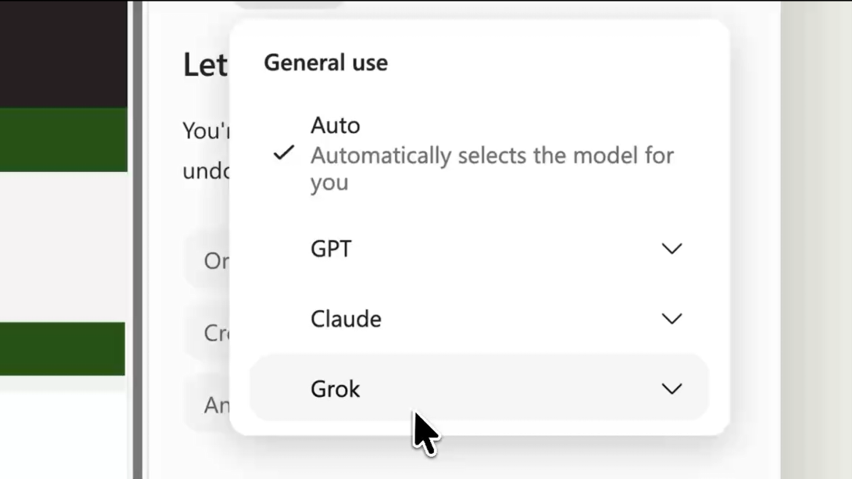
Microsoft is testing xAI's Grok models inside Copilot for Word, Excel and PowerPoint with customers in its Frontier early-access program. Grok stays off until a company's administrator turns it on, and work sent to it is handled outside Microsoft, where Microsoft's own data commitments do not apply. Frontier customers in the EU, EFTA countries and the UK cannot use it during the preview.