
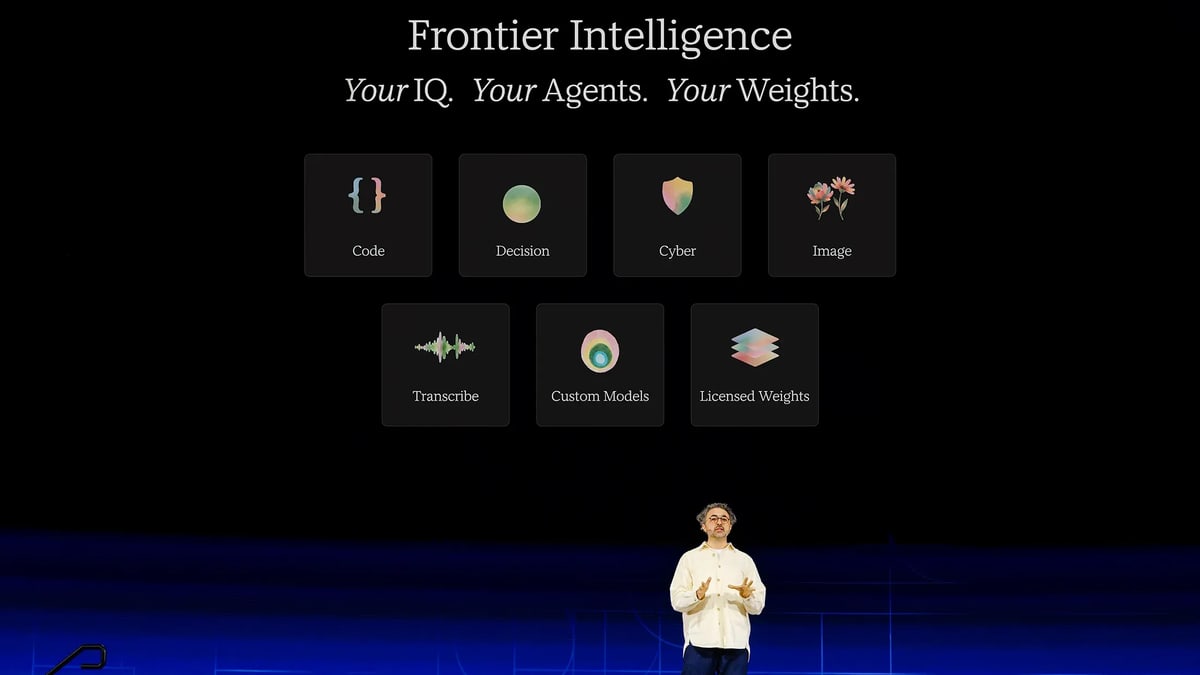
Microsoft on Tuesday, Nov. 17, released two coding models built by its own AI group, MAI Code 2 and the smaller, cheaper MAI Code 2 Flash, and put them in GitHub Copilot, GitHub's coding assistant. Microsoft has long relied on OpenAI and other companies for its most advanced AI, according to a news report, and Copilot users can already pick models from OpenAI, Anthropic and Google, among others. According to the same report, the new models could move some of that work away from outside companies. Microsoft says customers want models cheap enough to run AI agents, AI that carries out tasks on its own, around the clock.
Microsoft used four standard tests that compare AI models on everyday business coding jobs. Across them, it says, Code 2 scored 98% as well as OpenAI's GPT-6.1 Sol at about 40% of the cost per task, and 96% as well as Anthropic's Claude Opus 5.5 at about 5% of the cost. On average Code 2 solved 63.2% of the tasks, against 64.1% for GPT-6.1 Sol and 65.3% for Opus 5.5, at about 31 cents a task, against 76 cents for GPT-6.1 Sol and more than six dollars for Opus 5.5. The average hides wide swings: on one test, Opus 5.5 solved 57.5% of the tasks to Code 2's 43.1%. Microsoft says the model excels at jobs such as tracking down bugs and making changes across many files.
Microsoft's cost figures use Code 2's launch price, which is half the regular price, and all the models ran at their most thorough setting, where they spend the most effort on each answer. In Copilot, Code 2 costs $0.50 for every million tokens it reads and $2.50 for every million it writes until May 17, 2027. Tokens are the small chunks of text, often parts of words, that AI models read and write. After that date the price doubles to $1 and $5, still half of GPT-6.1 Sol's price in Copilot and a quarter of Claude Opus 5.5's. Microsoft measured Code 2 against GPT-6.1 Sol, but OpenAI now offers a newer GPT-6.2 Sol.
Code 2 is in Copilot's Pro, Pro+, Max, Business and Enterprise plans, and Flash is also in the Free and Student plans. GitHub says eligible subscribers on annual plans can use both, and both are billed by how much they are used. Business and Enterprise administrators can switch them off. Flash is also in a limited early test on Microsoft's Foundry service for businesses, and Microsoft says it plans to offer both models on other developer services soon. GitHub says both work in popular coding programs such as Visual Studio Code, Xcode and JetBrains tools, on GitHub's website and in its phone apps. Microsoft says Flash matches OpenAI's GPT-6 Luna at 65% of the cost and Anthropic's Claude Haiku 5.5 at 20%, on three of the same tests. Those figures also use Flash's launch price. From May 17, 2027, Flash costs the same in Copilot as both rivals' standard rates for each chunk of text it reads or writes. GitHub will retire Microsoft's older MAI-Code-1.1-Flash from Copilot on Dec. 18.
Microsoft says it built both models for the coding work its customers do every day. It says they are not yet tuned for harder problems, such as basic science research or very long tasks that AI agents work through on their own. Microsoft scored three of the four tests itself, and the company says results vary with the job, the settings and the price. It is not yet clear how Code 2 compares with OpenAI's newer GPT-6.2 Sol.