
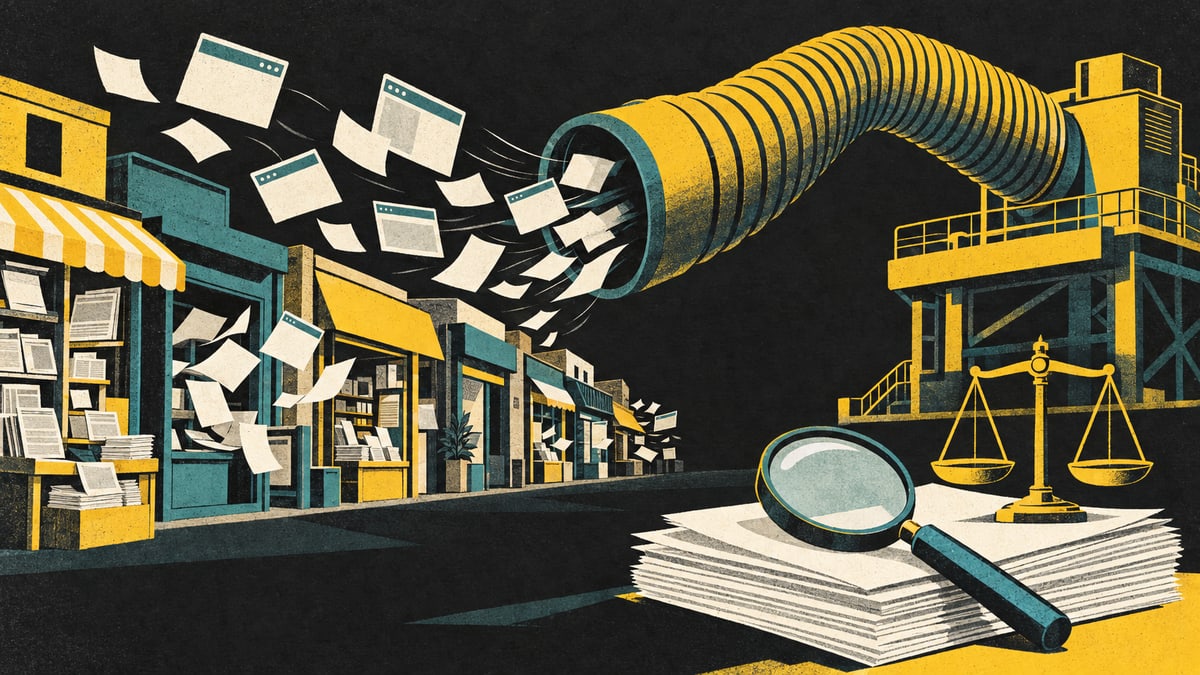
The Competition and Markets Authority, Britain's competition regulator, said on Friday, Oct. 30, that it has opened an investigation into whether the commercial terms Meta sets for businesses using its platforms and services break competition law. Those terms are the conditions businesses must accept to use Meta's services. The CMA says the terms could allow Meta to collect content from the websites of businesses and publishers that use its services and use it to develop and provide its own products, including its AI features, without those businesses getting a choice on whether or how their content is used.
The investigation will first assess whether Meta holds a dominant position in a UK market and, if it does, whether its current terms or its planned changes abuse that position. The CMA is concerned that making news publishers and other content businesses accept the terms could amount to unlawfully forcing unfair conditions on thousands of UK businesses that rely on Meta's services to reach customers and audiences. The CMA says it has heard concerns from groups including the News Media Association and Movement for an Open Web. "Where a company holds a dominant position, it must not use that position to impose unfair terms," said Sarah Cardell, the CMA's chief executive.
Meta had planned to bring in the new terms on Oct. 30. After talks with the CMA, Meta pushed them back to Nov. 20, and on Oct. 28 it paused them while it consults industry groups. According to a news report, Meta earlier in October removed the word "train" from the uses it allows for content collected from those websites and limited them to "advertising and business products." At the time, a Meta spokesperson said the update was "not about scraping news sites," according to the same report. A Meta spokesperson said an investigation is unwarranted and that the company has already committed not to change its terms without consulting publishers and others, according to a news report.
The CMA says no decision has been made on whether Meta has broken the law. Its first step, gathering information from Meta and others, is set to run until January 2027, though the CMA says those dates may change. After that, the CMA may close the case. If it provisionally concludes that Meta broke the law, it can send Meta a formal written list of its concerns, called a statement of objections, and hear Meta's reply before reaching a final decision.
Separately, the CMA is asking Meta for information about Meta One, a new subscription for businesses, and about concerns the Federation of Small Businesses raised over how small businesses could be affected if they post links to outside websites on Facebook and Instagram without paying for the subscription. The CMA has not decided whether to take formal action on that, and it is outside this investigation. It is not yet clear whether, or in what form, Meta's planned terms will come back, or whether the CMA will use its power to order temporary measures while the case runs.