
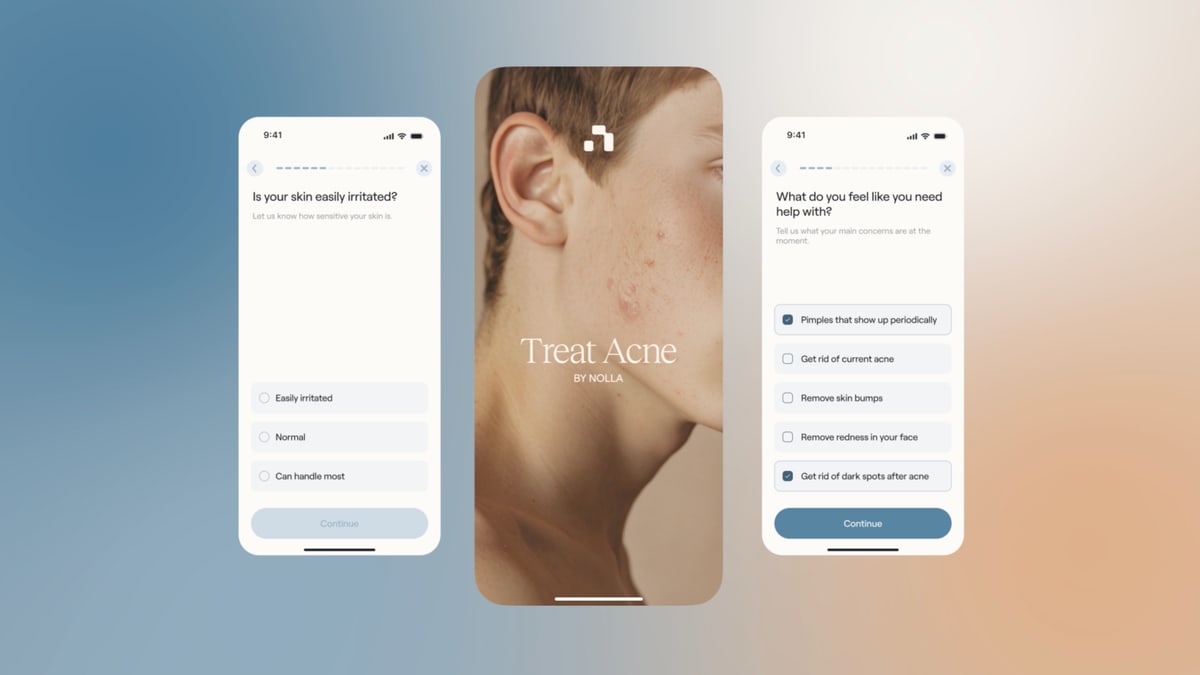
Utah is letting an AI system write a person's first prescription for acne treatment, not just renew one a doctor already wrote. The state's Office of Artificial Intelligence Policy, part of its Department of Commerce, signed an agreement with Nolla Health, whose app assesses acne from photos people take of their own faces. Under a one-year test that runs from Oct. 5, 2026 to Oct. 5, 2027, the app may issue first-time prescriptions and refills of acne creams and gels to Utah adults with mild to moderate acne. Utah's other AI prescription pilots, run by August AI, Doctronic and Legion Health, let AI only renew medicines patients already take. Nolla says it is the first organization in the U.S. that a state regulator has allowed to use AI for a first prescription, not just a refill.
The agreement works by setting rules aside rather than changing them. Utah runs a test program in which companies can try new AI services under close state watch. Here the state's licensing division agreed not to act against Nolla, or the doctors it employs or contracts with, under the state's rules against unlicensed or unprofessional practice or its telehealth requirements, as long as the company follows the agreement. The relief covers only this use. Patients who are harmed can still sue, and the company must carry malpractice insurance and may not use its terms of service to limit what it owes for harm. The state can end the agreement at any time, and taking part does not mean the state endorses the app.
The app may choose only from a short list of creams and gels and may not prescribe pills. The process stops for anyone with severe acne, anyone pregnant, planning a pregnancy or breastfeeding, anyone with a weakened immune system, and anyone who has reacted badly to one of the listed medicines; Nolla says those patients are sent to a doctor instead. Pharmacists are told that the prescription came from AI.
Doctors stay involved, at least at first. Two Utah doctors approve every prescription before it is sent in the first stage, which Nolla says covers its first 100 patients. Nolla says that in a second stage, of up to 500 patients, the app sends prescriptions on its own and a doctor reviews every case afterward, at least once a week, and that in a third, doctors check at least one in ten prescriptions each month, plus every case with a side effect or one passed to a doctor. Each step needs the state's written approval, and Nolla says the targets for moving on include agreeing with doctors 95% of the time and no serious harm to any patient.
Nolla says the app costs from $4.99 a month. Patients verify who they are, answer a short questionnaire and take a five-angle face scan, and in about 10 to 15 minutes get a treatment plan and, if appropriate, a first prescription. The company says licensed clinicians agree with the app's treatment choices in 96% of real-world cases. In the same announcement, Utah named other health pilots, including one that will let August AI's app renew medicines for long-term conditions that patients already take, though not write new prescriptions. A licensed provider checks its first 250 refills before they go out.
The company must tell the state within 24 hours of learning of any harm to a patient or a mistake by the AI, such as a missed diagnosis or a missed reason not to prescribe. It must also file monthly reports, and a report every three months, which the state makes public, showing how many patients it served, how many prescriptions were filled and how often doctors agreed with the app. The state says what it learns will be shared with lawmakers and the public to shape permanent rules. It is not yet known how many people will sign up, how the app will do once doctors no longer check each prescription before it is sent, or whether other states will allow the same.