
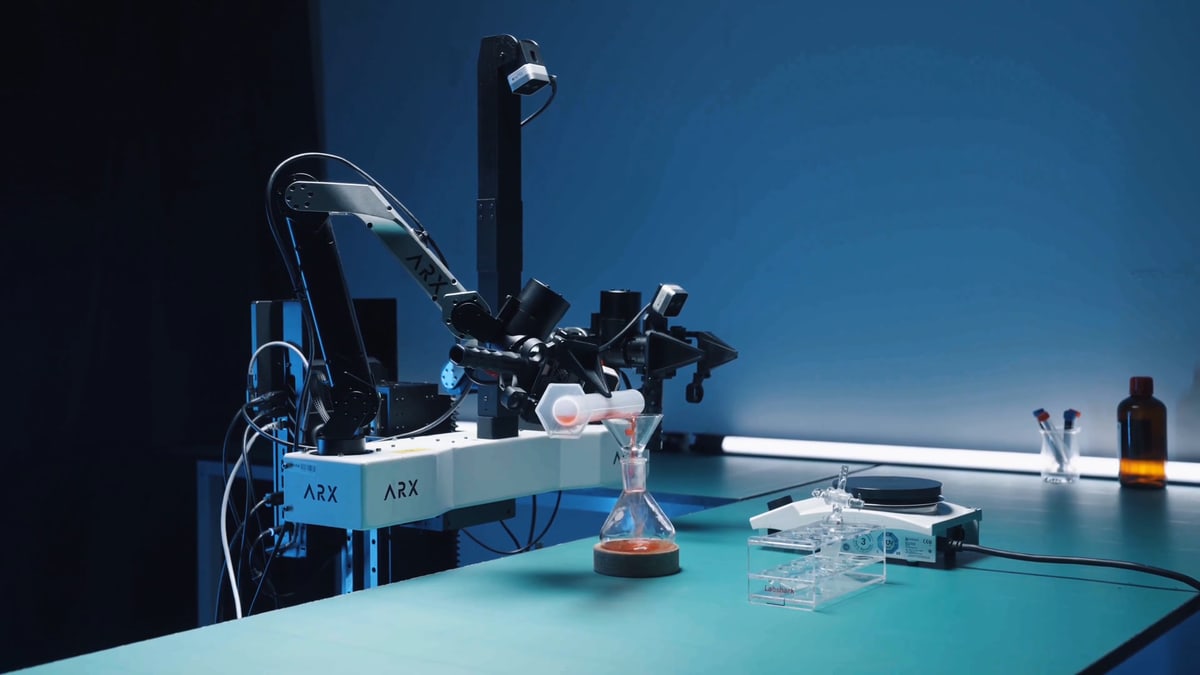
Shanghai AI Laboratory has introduced InternW0, the first in a planned series of AI models meant to help robots understand and act in the physical world. Its core idea is that a robot's forecast of what happens next is only useful if it arrives in time to act on. Timing counts most in delicate work like pouring liquids or fitting a pipette tip, where a small misstep means a spill or a slip. The lab put InternW0 to work on exactly those kinds of tasks.
InternW0 divides the work a bit like a navigator and a driver. A larger part of the model works out, at a slower pace, how the scene should unfold further ahead, while a smaller, quicker part picks the robot's next move from the latest camera view. Instead of redrawing its whole forecast after every move, the model refreshes it with what the robot has just seen. For hands-on tasks, the lab also trained it to use force and touch signals, which help a robot tell whether it has a firm grip or has made contact.
In the lab's tests, a robot with two arms tackled a 15-step routine for preparing a chemical solution: pouring liquid through a funnel into a flask, moving the flask onto a stirrer, pushing in a stopper and switching the stirrer on. A many-fingered robot hand had to pick up a pipette, fit a fresh tip, draw up a set amount of liquid and release it into a test tube. The lab says InternW0 got further through both routines than the other robot systems it was compared with, and could line up a misaligned pipette by feel. To aim it at this kind of work, the team trained it partly on video of people doing real lab work, filmed with cameras strapped to their heads.
The lab calls InternW0 a foundation to build on. It says future versions should take in more senses, such as sound and depth perception, and adapt quickly to new robots, instruments and labs. It also wants later models small enough to run on compact devices, so they could live inside all kinds of robots and scientific instruments.
All of these results come from the lab's own tests. InternW0 still struggled with the finest steps: pressing the stirrer's buttons at the end of the chemistry routine takes millimeter-level precision, and only about a quarter of its runs got through that step.