
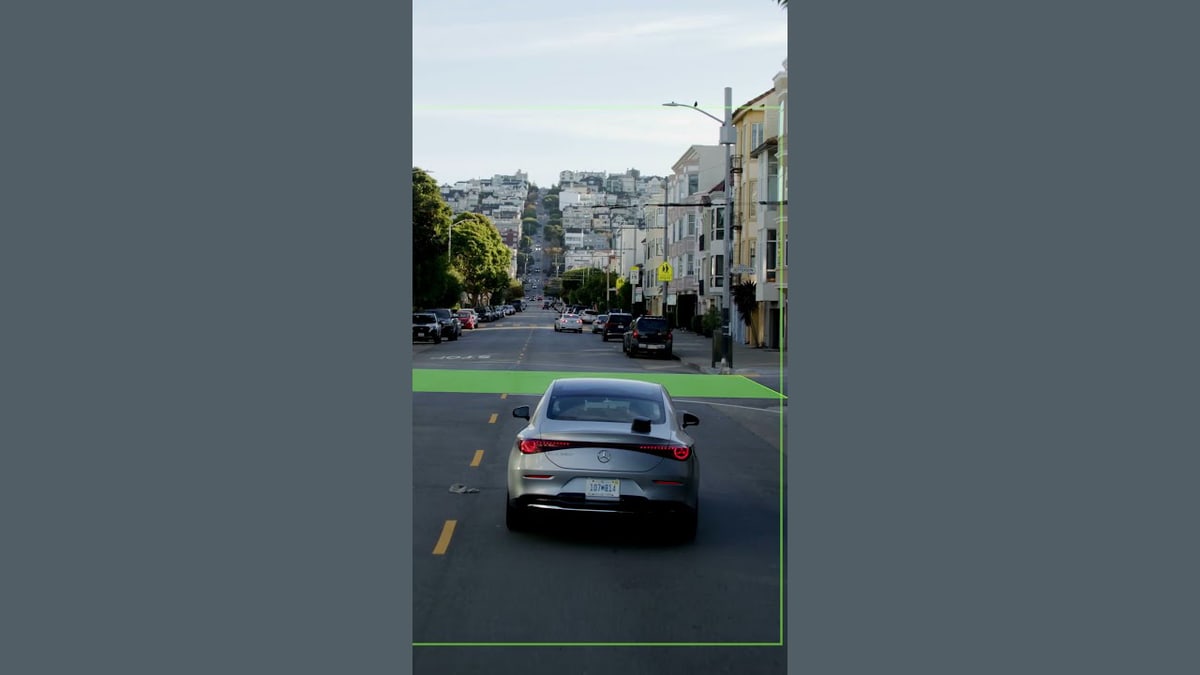
NVIDIA on Nov. 10 made Alpamayo 2 Edge, an AI model for self-driving cars, free to download, after first announcing it in October. It is a small, in-car member of NVIDIA's Alpamayo family of driving AI models. It watches the road through the car's cameras and plans the path the car should take over the next few seconds. When the moment calls for it, it also writes a short note on why. In NVIDIA's video, it explains moves such as yielding to people on foot and making room for an oncoming bus.
A car has to decide in a split second using only the computer it carries, and writing out a reason for every move takes time. So NVIDIA built the model to write its reasons only when needed and to skip them during routine driving. NVIDIA says it runs in real time on DRIVE AGX Thor, the company's computer for cars, after extra tuning steps that NVIDIA publishes. The free download itself has been checked only on one of NVIDIA's data-center chips, and NVIDIA says other chips have not yet been tested.
NVIDIA trained it on about 115,000 hours of video from cameras on cars, with example explanations written by a larger NVIDIA driving model that served as its teacher. It then practiced in a simulated world, learning from what happened after each of its own moves, which NVIDIA says made it drive better in simulated tests than it did before that practice.
The model's files are free to download from Hugging Face, a popular site for sharing AI models. Their license lets anyone use, change and share them at no charge, and anyone who passes them on must include the license and NVIDIA's notices. They come as is, with no promise that they work as intended or are free of errors. Its code is public too. It is meant for companies and researchers building self-driving systems, who can adapt it to their own driving data. Two companies with early access say they had it working within days: PORT in simulations built from its own London street recordings, and Niulinx on a real test vehicle.
NVIDIA's guide to the model says anyone building it into a car must first test it further with their own data to make sure it is safe. NVIDIA's own driving scores for the model come from simulations and recorded driving clips, and the video does not say whether the model was driving the car on screen. NVIDIA also says a good explanation and good driving have to be measured separately.