
Researchers from the National University of Singapore, Tsinghua University and other universities in mainland China and Hong Kong released OpenWAM in early September 2026. It is an open kit for building artificial intelligence that controls robots on top of video generators. The team says systems like this usually come as one tangled package, which hides which design choices actually make a robot better. By publishing the code, the trained models and the recipes for their training data, the team lets other labs test those choices and build on them.
OpenWAM starts from an AI video generator, a model that has already learned how scenes change over time. The team then trains it to predict two things together: what the scene will look like next, and what the robot should do to get there. It is a bit like learning to cook by watching endless cooking shows before ever picking up a pan. The finished model, OpenWAM-α, was trained on about 6,400 hours of footage, most of it from robots, real and simulated, and the rest filmed through people's own eyes.
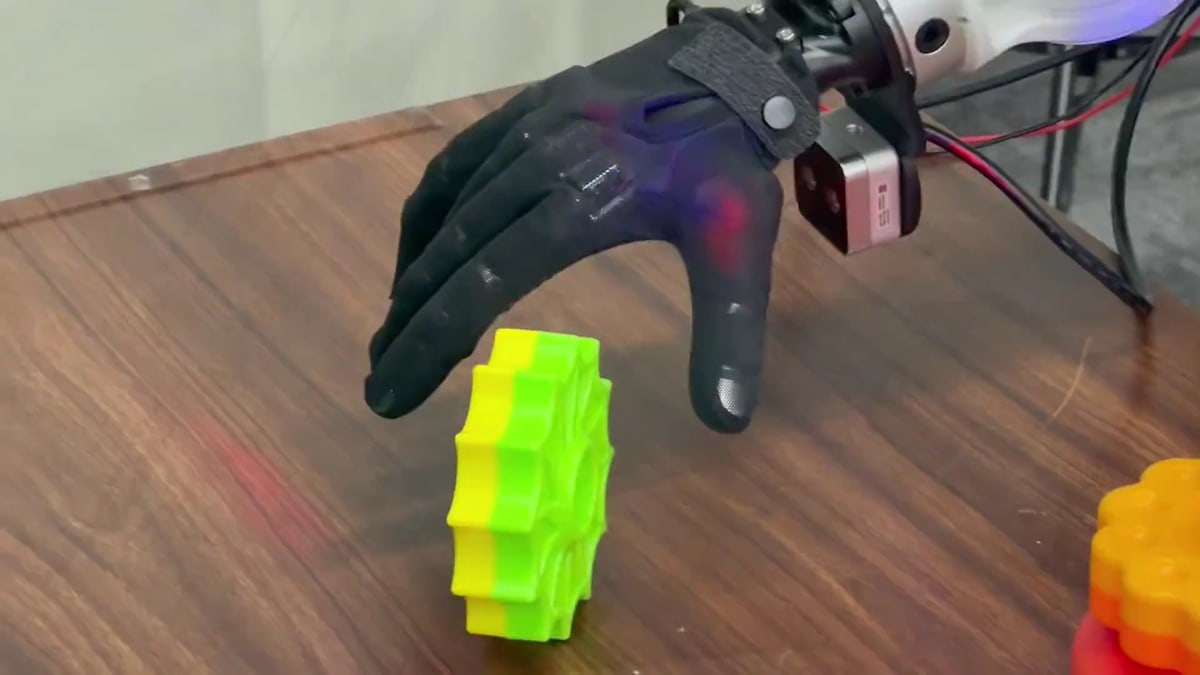
The same model ran a single robot arm, two-armed robots and a nimble robot hand missing from its original training, after extra practice on each. With that hand it took on jobs like twisting off bottle caps and putting away clothes, and the team reports it beat a rival robot AI on every hand task. On a single robot arm, it succeeded in about eight of every ten tries at tabletop jobs such as stacking and hanging objects.
The team offers OpenWAM-α as a starting point for others to build on and compare against. They see the most promising next steps in more and more varied robot data with precise records of each movement, in ways of seeing that hold up when conditions change, and in designs that blend this approach with other kinds of robot AI.
The results come from the team's own tests. The model also has a weak spot the team names itself: shifts in camera angle and grainy images throw it off. The team ties that to its design, which predicts future video in fine pixel detail, and to thin training data for single robot arms. Training a new version takes serious hardware too, with the team recommending several top-end graphics cards.