
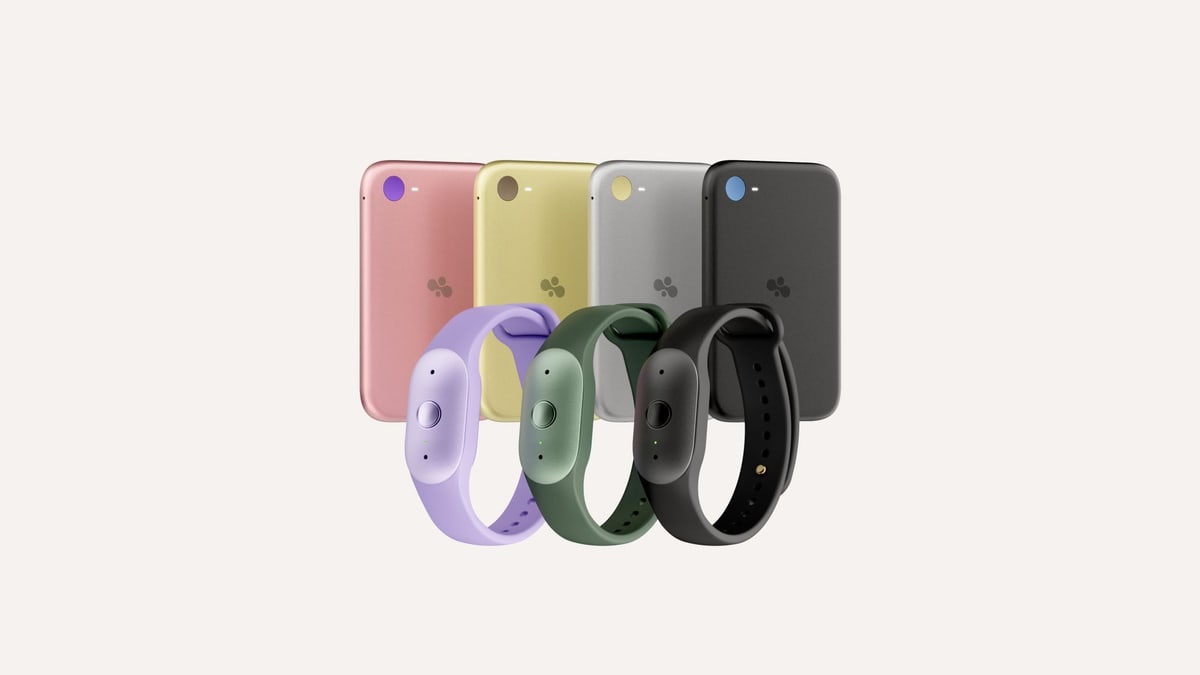
Amazon on Thursday, Oct. 15, introduced two new devices from Bee, a startup that a news report says Amazon bought in July 2025. Both listen to conversations when they are switched on and use AI to turn what was said into summaries, to-do lists and reminders. Bee Frontier, a wristband that can also clip onto clothing, is on sale now on Amazon.com for $74.99. Bee Eclipse, a slim device about the size of a credit card that sticks to the back of a phone with a magnet, will be available soon from $99.99, Amazon says.
Amazon says Frontier runs up to seven days on a charge and has two microphones that filter out background noise, so it can pick out what matters in a crowded restaurant or an open office. Eclipse runs more than 21 days on a charge. Each has one button to turn it on and off and a light that shows when it is on, and Frontier can be set to switch itself off after a stretch of silence, such as 5 or 15 minutes. The earlier Bee wristband cost $50, according to the same news report.
Buying a device includes conversation summaries and recaps. A Bee Pro subscription, $11.99 a month with the first 30 days free for new customers, adds unlimited recent summaries, suggested to-dos, a chat assistant, a desktop app and links to other services. Bee can connect to Gmail, Google Calendar and Microsoft Outlook to draft follow-up emails or create calendar invites after a meeting. New this time, and part of Bee Pro, are links to Alexa+, so users can ask Amazon's voice assistant for a meeting summary, and to Amazon.com, where things a user mentions can show up as product suggestions on Amazon's homepage and in the Bee apps.
A device that listens to your conversations raises an obvious worry about who else can get at what it hears, and Amazon's answer rests on two promises. First, it says no sound is kept: speech is turned into text as it is heard and the audio is deleted. Second, it says the written notes are encrypted, scrambled so that they can be read only with a matching digital key, and that only the owner's device creates and controls those keys. The company says it has no master key, and that conversations are processed on Amazon's servers inside a sealed-off computing setup that no one, Amazon included, can look into, after the device checks that those servers run approved software. Owners can delete their transcripts and summaries at any time.
Those are Amazon's own descriptions of how the system works. Amazon says Bee prompts its user to get permission from the people on a call each time a recording starts, but it has not said how people in a face-to-face conversation would know the device is listening, beyond its light. It is also not yet clear when Eclipse will ship or how accurate the summaries are.