
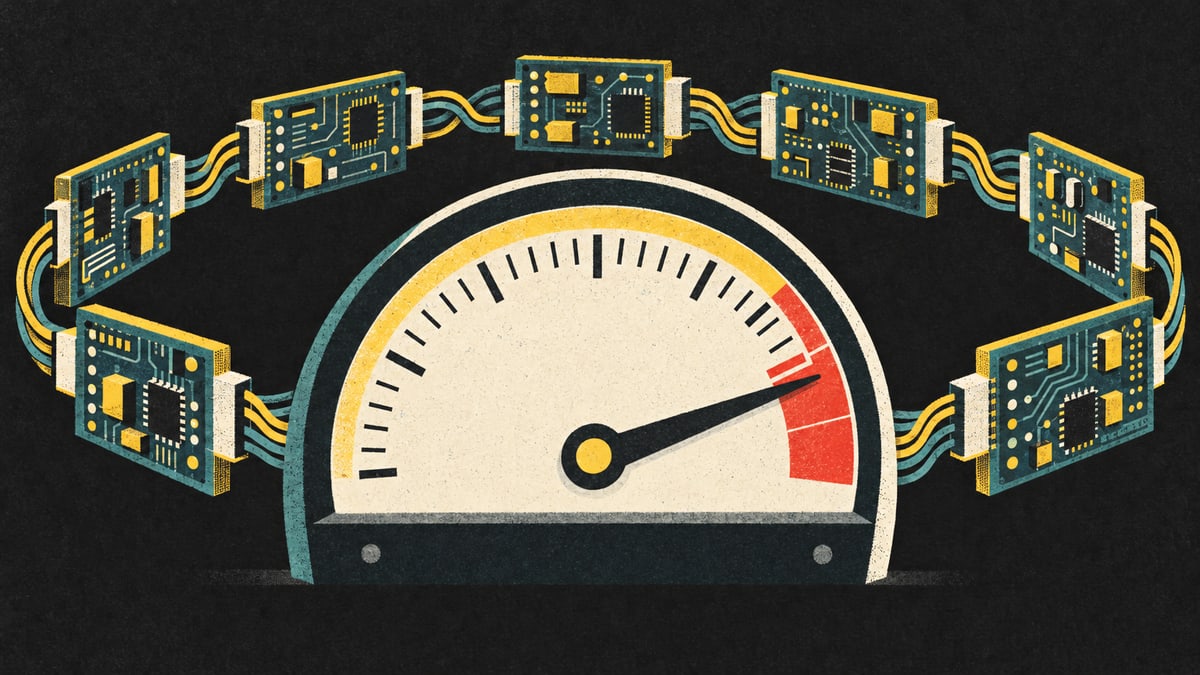
Anthropic, the company that makes the Claude AI models, says it has reached a line its own safety policy draws for AI that dramatically speeds up AI progress. Anthropic said so in the updated filing to sell its shares to the public that it sent to the Securities and Exchange Commission on Tuesday, Nov. 10. The same filing set a price range of $70 to $78 a share. In it, the company writes: "we made a determination that we have met this threshold." The version it filed on Nov. 2 said it "may imminently" meet the line, also judging by what it expected from future models, and that it had not judged any of its current models to be past it.
Anthropic's Responsible Scaling Policy is the published set of rules it sets itself for handling the risks of its most powerful models. One way it counts this line as met is when Anthropic sees or expects AI's overall abilities improving at double the fastest pace of AI progress it has seen kept up without much help from AI. It must also be plausible that much of the speed-up comes from AI doing research and engineering work. Double means as much progress in one year as would take two at that pace. Anthropic says it based its decision on what it expects from future models and its overall pace of progress, "rather than on what we have observed from current models," and that it is still assessing the underlying data. The policy says the line is meant to catch the start of dramatic recursive self-improvement: an AI improving itself, then using the improved version to improve itself again, round after round. The policy admits the line has proven hard to pin down in practice.
Anthropic's own words and an outside study both point to a speed-up already under way. The Nov. 10 filing adds that Anthropic's use of AI "has already been accelerating" its research, and that its internal estimates suggest progress may speed up further. Anthropic has also said that Claude wrote more than 90% of the contributions to the company's code in September 2026. METR, an outside group that studies the risks of AI, spent 11 weeks going through Anthropic's internal data with the company's cooperation. On Nov. 5 it said that as of October, Anthropic was likely improving its models on clearly defined tasks at around twice the pace it managed from March 2024 to October 2025. METR called that estimate highly uncertain, and said the true speed-up could be closer to 1.3 or 3 times that earlier pace. METR says this study did not focus on the policy's line, and that Anthropic kept most of the evidence METR found most telling out of METR's public report.
The policy ties what follows to particular models. The Nov. 10 version drops the earlier sentence saying Anthropic had not judged any current model past the line, and does not say whether any model now counts as past it. Under the policy, a model past the line counts as "highly capable." When one of Anthropic's published risk reports on such models blacks out details an outside safety researcher would consider important for judging the risk, at least one outside reviewer must give it a full review. If Anthropic has, or is about to have, such a model and clear evidence that no rival will soon build one, the policy says it will need a strong case that the risk of catastrophe is contained. It will delay its AI development and release as needed to make that case, until and unless it no longer believes it has a big lead.
The rest of what the filing says on the subject was already in the Nov. 2 version. Anthropic says it is weighing what meeting the line means and will release further reports. It is considering changes to its policy "to keep humans in control," and changes that would require people to review and approve certain research decisions as its models do more of that work. The filing does not say which future models the decision rests on, or give the figures behind its internal estimates. Anthropic also says it has in the past failed to notice a big speed-up until after it happened, and may again. And it warns that as it leans more on Claude, the company "may lose visibility" over some processes in ways that could become hard for any person or team to understand and control.