
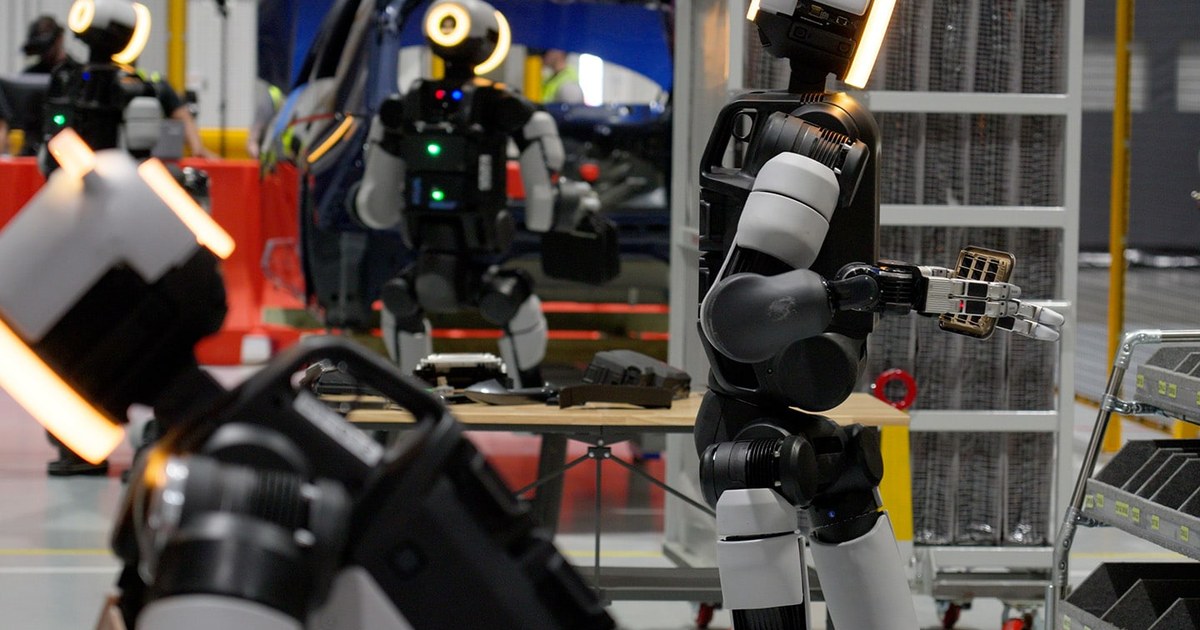
Boston Dynamics on Sept. 21, 2026, opened the Robotics Metaplant Application Center (RMAC) at Hyundai Motor Group Metaplant America near Savannah, Ga., saying the first phase is operational as a testbed for integrating Atlas into automotive manufacturing. The center matters because the Hyundai-owned lab is shifting Atlas from CES-stage demos into a permanent factory-side loop where parts-sequencing skill and training data volume will decide whether multi-thousand-unit deployment plans become plant reality.
RMAC is a training and application center, not a claim that tens of thousands of Atlas units already staff the Metaplant. Near-term work, the company says, focuses on logistics and sequencing automotive parts before they reach the line. Component assembly is targeted by 2030, with repetitive and strenuous work such as heavy lifting later. Axios Boston reported that a Boston Dynamics spokesperson declined to say how many robots are already operating at RMAC, and that a handful of Waltham staff have moved to Georgia to support the training.
Separately, Boston Dynamics attributes Group-scale manufacturing plans to Hyundai Motor Group: beginning with 25,000 Atlas units at Hyundai Motor and Kia global plants over the next few years, plus a new U.S. production facility capable of producing 30,000 robots annually. Those figures are deployment and manufacturing-capacity targets across the Group network. They are not RMAC occupancy counts.
The Robot Report independently covered the opening and, in an interview, quoted chief product and technology officer Zack Jackowski describing RMAC as a permanent "Robot Behavior Factory" that combines real parts, fixtures, and workcells with Atlas robots and skilled pilots to produce behavior-training data. Jackowski told the outlet Atlas is learning from teleoperation, reinforcement learning in simulation, and Universal Manipulation Interface devices, and that teams are learning as much about fixture and packaging redesign for humanoids as about the robot hardware itself.
Next year, Boston Dynamics says operations will move into a new building at the Georgia Metaplant that expands RMAC to about 10 times its current size, and the company plans to explore non-automotive use cases with existing Spot and Stretch customers in sectors such as aerospace, semiconductors, logistics, food and beverage, and life sciences. What remains open is how many Atlas units are already in the Georgia room, whether sequencing policies hold under plant tempo, and whether the 25,000-unit global plan tracks the training cadence rather than the press calendar.