
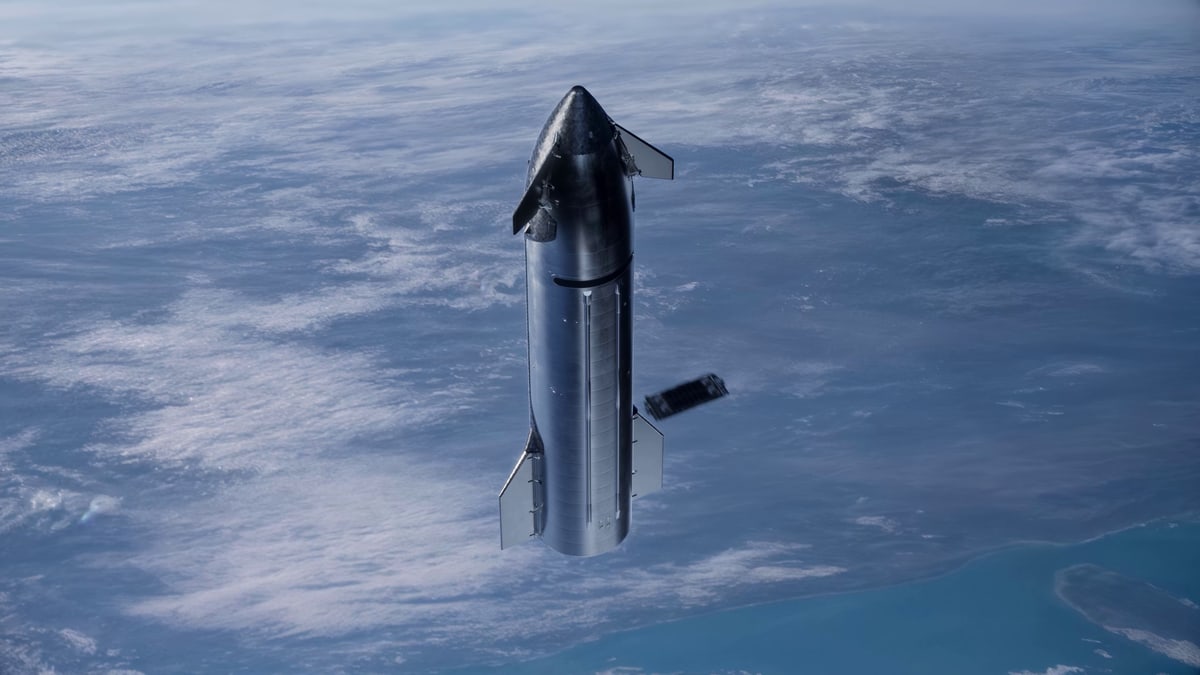
The Federal Communications Commission, the U.S. agency that licenses the use of radio signals, on Wednesday, Nov. 25, approved, with conditions, SpaceX's plan for Starmind: up to 1 million satellites that would each work as a data center in orbit. A data center is a large collection of computers, usually housed in a building, of the kind that trains and runs AI chatbots. The FCC calls it the first approval in U.S. history for a group of data centers in space. The decision came from the FCC's space office, not a vote of the full commission. Earthjustice, an environmental law group, says there are 15,000 satellites in orbit today.
SpaceX, which has bought the artificial intelligence company xAI, argues that AI's growing need for electricity cannot be met on the ground, even in the near term, without hurting communities and the environment. It says the satellites would run on near-constant sunlight. FCC Chairman Brendan Carr said the decision "opens a bold new frontier for the computing infrastructure needed to power America's leadership and growth."
The FCC's say over satellites comes from its control of the airwaves: the license grants the satellites' radio links, and the agency sets its launch deadlines and space junk rules through that grant. SpaceX would use those radio links only for backup and emergency control if its main links, beams of light between satellites, including its Starlink internet satellites, fail. Even then the radio links get no protection, and SpaceX must stop at once if they are reported to cause harmful interference to other systems. The satellites would fly between about 500 and 1,000 kilometers up, roughly 310 to 620 miles.
The approval comes with deadlines. SpaceX must have one satellite working by Nov. 25, 2033, a tenth of them by 2035, half by 2038 and all of them by 2040, or the license becomes void. The FCC found SpaceX's plan for avoiding space junk meets its rules for satellites flying below 600 kilometers, about 370 miles. Above that height, SpaceX wants to retire satellites by moving them into other orbits around Earth or around the Sun, instead of letting them burn up in the atmosphere. The FCC put off that request, saying SpaceX had not given enough information to show those methods meet its rules; SpaceX has promised more. Before SpaceX launches any satellite above 600 kilometers, it must apply to change its license and file a final plan for dealing with space junk. The FCC also waived its usual rule that a company post a bond to guarantee it will build out.
Amazon's satellite internet business, the satellite company Viasat and the American Astronomical Society had asked the FCC to reject the plan, and the agency turned them down. It did no environmental review, saying activity in space happens outside U.S. territory and so is not covered by the federal law that requires such reviews. It said rocket launch effects are for the Federal Aviation Administration to review, and it called worries about how satellites burning up would affect the atmosphere speculative. It said its rules do not cover harm to astronomy with telescopes that see visible light, and that SpaceX's promise to work with the National Science Foundation was enough. A senior attorney at Earthjustice said the FCC "has ignored the law so blatantly and tried to mask the fact with a holiday filing." The decision came out the day before Thanksgiving.
Some people told the FCC that data centers in orbit would be hard to keep cool, less efficient than ones on the ground, or not worth the cost. The agency said those were questions for SpaceX to judge, not the government, so its approval is no judgment on whether the idea will work. SpaceX has until Dec. 25 to turn down the license with its conditions; if it says nothing, it has accepted them. The FCC says it is still reviewing other proposals for data centers in space.